Supreme Court Seeks Centre’s Response on Legal Measures to Address Health Risks of Close-Relative Marriages
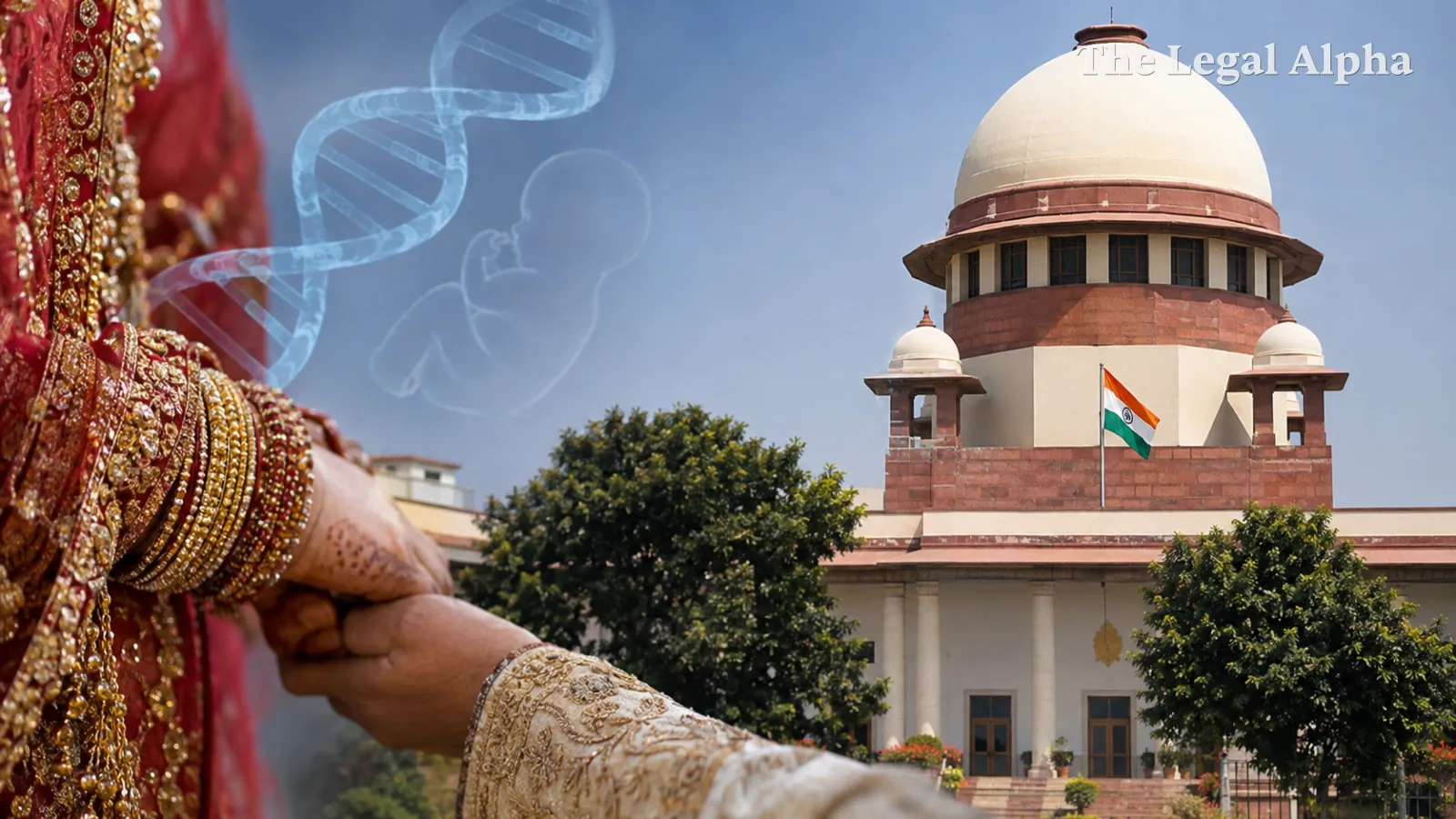
The Supreme Court of India has sought the Union Government’s response on whether legislative measures or nationwide awareness programmes should be considered to address the potential genetic health risks associated with marriages between close blood relatives.
A three-judge Bench comprising Chief Justice of India Surya Kant and Justices Joymalya Bagchi and V. Mohana issued limited notice while hearing a public interest litigation filed by Charvi S., a Bengaluru-based law student who has challenged the legal and customary acceptance of consanguineous marriages.
The proceedings have brought questions of public health, individual liberty, customary practices and legislative responsibility before the Court. However, the Bench clarified that regulating such marriages through social reform legislation falls within the legislature’s domain.
What Happened?
The petition raises concerns about the possible hereditary consequences of marriages between close biological relatives, particularly first cousins. The petitioner, who was born to parents in a first-cousin marriage, suffers from inherited eye disorders, including cone dystrophy and retinitis pigmentosa, which have caused significant visual impairment.
The petitioner has sought government intervention through appropriate legal safeguards, genetic counselling, voluntary screening and public education.
During the hearing on November 20, 2026, the Supreme Court considered whether the Centre should examine the need for suitable legislation or introduce wider public awareness initiatives, including educational programmes in schools and colleges.
Legal Topic
Area of Law: Constitutional Law and Family Law
Sub-topic: Marriage Laws, Customary Practices, Public Health and Fundamental Rights
Core Legal Issue
The central legal question is whether statutory and customary exceptions permitting marriages between close blood relatives should continue without adequate public health safeguards, despite concerns about the increased possibility of inherited genetic disorders.
The proceedings also raise questions about the constitutional balance between an individual's freedom to choose a marriage partner, the protection of public health and the legislature's authority to introduce social reform measures.
What Did the Supreme Court Decide?
The Bench issued limited notice to the Union Government, asking it to consider whether suitable legislation or public awareness measures are necessary to address the concerns raised in the petition.
The Court suggested that awareness could be promoted through different channels, including:
-
Introducing relevant information into school and college curricula.
-
Promoting scientific understanding of the potential genetic consequences.
-
Using Anganwadi workers and panchayats to reach communities.
-
Considering wider publicity about the health implications of consanguineous marriages.
Justice Joymalya Bagchi emphasised that marriage remains a matter of personal choice and that individuals should be able to make informed decisions.
The Bench also clarified that introducing social reform legislation to regulate customary marriage practices is a matter for the legislature.
What remains pending: The Court has not declared such marriages illegal, struck down any statutory provision or directed the Centre to introduce a new law. The government's response and further proceedings remain awaited.
Key Legal Points
-
Legislative authority: Regulation of customary marriage practices through social reform legislation falls within Parliament's domain.
-
Personal liberty: Individuals retain the freedom to choose their marriage partners, making informed decision-making an important consideration.
-
Public health: The petition raises concerns about the possible transmission of inherited genetic conditions among children born to closely related parents.
-
Customary exceptions: Existing marriage laws recognise certain exceptions where established customs permit marriages within otherwise prohibited relationships.
-
Public awareness: Educational institutions, local governance bodies and community-level workers could play a role in communicating scientific information.
Relevant Law
Hindu Marriage Act, 1955
-
Section 5(iv): Restricts marriages within prohibited degrees of relationship, subject to the applicable customary exception.
-
Section 5(v): Restricts marriages between sapindas, unless the governing custom permits such a marriage.
Special Marriage Act, 1954
- Section 4(d): Provides an exception concerning prohibited relationships where a recognised custom governing at least one party permits the marriage.
Constitution of India
-
Article 14: Equality before the law.
-
Article 21: Protection of life and personal liberty.
-
Article 15(3): Permits special provisions for women and children.
-
Article 25(2)(b): Recognises the State's power to make laws concerning social welfare and reform.
-
Article 47: Directs the State to improve public health and nutrition.
The petitioner has relied on these constitutional provisions to support the argument that public health concerns require appropriate safeguards.
Arguments of the Parties
Petitioner – Charvi S.
The petitioner argued that marriages between close blood relatives can increase the possibility of hereditary disorders in children. She relied on her personal medical experience and research concerning genetic risks associated with consanguineous marriages.
Her petition challenged the customary exceptions under the Hindu Marriage Act and Special Marriage Act and sought measures including:
-
Premarital genetic counselling.
-
Voluntary genetic screening in areas with higher prevalence.
-
Nationwide public awareness programmes.
-
Appropriate legislative safeguards or reconsideration of existing statutory exceptions.
The petition also clarified that the proposed measures should not criminalise existing marriages or retrospectively disturb their legal status.
Respondent – Union of India
The Centre's detailed response was not available in the reports reviewed at the time of writing. The Supreme Court has issued limited notice to obtain its position on the desirability of legislation and public awareness measures.
Why Does It Matter?
The proceedings raise an important question about how Indian law should balance customary marriage practices, individual freedom and public health concerns.
The matter could have implications for communities where marriages between cousins or other close relatives are recognised through established customs. Greater access to genetic counselling and scientifically accurate information could help prospective couples understand potential hereditary risks before making marriage-related decisions.
It also highlights the importance of distinguishing between prohibiting a marriage and ensuring that individuals have sufficient information to make personal decisions.
For lawmakers, the case places renewed attention on whether existing statutory exceptions adequately address contemporary public health concerns. However, any legislative change would require consideration by the competent lawmaking authority.
Legal Takeaway
The Supreme Court has not prohibited marriages between close blood relatives. Instead, it has sought to sensitise the Union Government about the possible need for legislative consideration and wider public awareness.
The central legal question remains how to balance individual freedom and customary practices with the State's responsibility to promote public health and informed decision-making.
Sources
Primary Source:
- Supreme Court proceedings in Charvi S. v. Union of India, Diary No. 23903/2026. The underlying court order was not independently available in the sources reviewed.
Additional Sources: