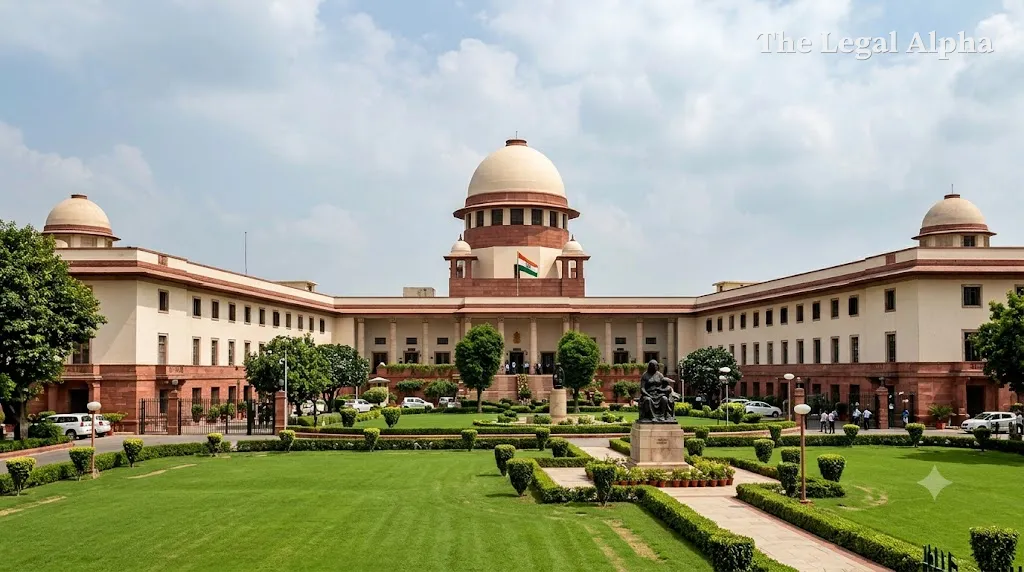
Supreme Court Rejects Bhupesh Baghel’s Plea on Election Petition, Directs Patan Trial to Proceed Without Delay
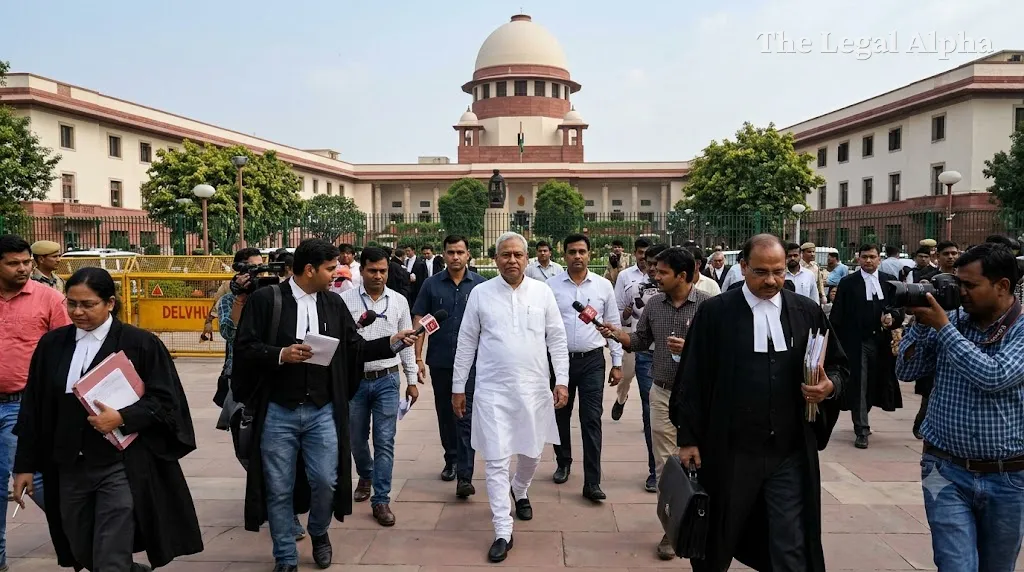
The Supreme Court dismissed a petition filed by former Chhattisgarh Chief Minister Bhupesh Baghel challenging a High Court order that refused to decide the maintainability of an election petition as a preliminary issue.
The underlying dispute stems from the 2023 Chhattisgarh Legislative Assembly elections, where Baghel won the Patan constituency. Bharatiya Janata Party (BJP) candidate Vijay Baghel subsequently filed an election petition challenging the outcome, alleging that the former Chief Minister took out a campaign procession during the mandatory 48-hour pre-polling silence period. After the Chhattisgarh High Court declined to frame a preliminary issue on whether the petition was barred by limitation, Bhupesh Baghel approached the Supreme Court seeking intervention. A three-judge Bench headed by Chief Justice Surya Kant rejected the challenge, emphasizing that election trials cannot be stalled by protracted interlocutory disputes.
Legal Topic
Area of Law: Election Law / Civil Procedure
Sub-topic: Election Petitions / Preliminary Issues & Limitation under Representation of the People Act, 1951
Core Legal Issue
The legal question before the Supreme Court was whether the High Court erred in refusing to frame and adjudicate the question of statutory limitation as a preliminary issue before proceeding to a full trial. Specifically, the Court considered whether objections regarding compliance with the 45-day limitation period under Section 81 of the Representation of the People Act, 1951, constituted a pure question of law fit for summary disposal, or a mixed question of fact and law requiring evidentiary proof at trial.
What Did the Court Decide?
The Bench comprising Chief Justice Surya Kant, Justice Joymalya Bagchi, and Justice V. Mohana dismissed Bhupesh Baghel's petition and affirmed the High Court’s order, clearing the way for the trial to continue.
The Court expressed strong displeasure over attempts to delay the adjudication of election petitions, underscoring that election disputes must be resolved within a reasonable timeframe. The Bench observed that the limitation challenge raised by Baghel involved mixed questions of fact and law that require evidence rather than summary disposal as a preliminary issue. Although the Court considered imposing costs on the petitioner for delaying proceedings, it refrained from doing so following submissions by senior counsel.
Key Legal Points
-
Mixed Questions of Fact and Law: Statutory limitation objections cannot automatically be treated as preliminary issues when the dates of filing, affidavits, or curing of registry defects depend on factual inquiry and evidence.
-
Pleading Discipline in Civil Procedure: A party cannot insist on framing an issue without laying a foundation in its primary pleadings; where an objection is absent from the original written statement, it cannot be sprung as a preliminary bar without proper amendment.
-
Expeditious Adjudication Mandate: The apex court reiterated the statutory objective under the Representation of the People Act, 1951, that election trials must proceed expeditiously rather than get derailed by piecemeal interlocutory challenges.
Relevant Law
-
Representation of the People Act, 1951:
-
Section 81: Specifies the presentation of election petitions and sets a mandatory 45-day limitation period from the date of election of the returned candidate.
-
Section 86: Mandates the trial of election petitions and empowers High Courts to dismiss petitions that do not comply with Sections 81, 82, or 117.
-
Section 126: Prohibits public meetings, processions, and campaigning during the 48-hour period ending with the conclusion of the poll.
-
-
Code of Civil Procedure, 1908 (CPC):
-
Order XIV, Rule 2: Pertains to the disposal of a suit on a preliminary issue, restricting such determination primarily to issues of law touching jurisdiction or a statutory bar.
-
Order VII, Rule 11: Deals with the rejection of plaints.
-
Arguments of the Parties
Petitioner (Bhupesh Baghel)
Senior advocates Kapil Sibal and Vivek Tankha, representing Bhupesh Baghel, argued that the election petition was filed beyond the strict 45-day window prescribed by Section 81(1) of the 1951 Act. They pointed out that while the election result was announced on December 3, 2023—setting the deadline at January 17, 2024—the supporting affidavit filed by the election petitioner was dated January 22, 2024. The petitioner contended that an election petition lacking a timely, verified affidavit is incomplete in law, rendering it barred by limitation and liable to be rejected at the threshold as a preliminary issue.
Opposing Party (Vijay Baghel / High Court Stand Upheld)
The respondent's position, accepted in effect by the High Court and affirmed by the apex court, maintained that the petition itself had been lodged within the statutory period, and subsequent verifications or registry defect curations do not automatically render the entire action void at the threshold. Consequently, whether procedural compliances were met within time involves disputed questions of fact that must be tested during the trial itself rather than shutting out the petition at a preliminary stage.
Why Does It Matter?
This decision reinforces judicial discipline against the tactical delay of election trials in India. Elected representatives frequently utilize procedural applications under Order VII Rule 11 or Order XIV Rule 2 of the CPC to postpone trial proceedings, sometimes until their legislative term has nearly run its course. By declining to fragment the trial into preliminary legal skirmishes over dates and filings, the Supreme Court has signaled that election courts should prioritize composite, time-bound trials over protracted procedural objections.
Legal Takeaway
An objection concerning limitation cannot be decided as a preliminary issue if it entails mixed questions of fact and law requiring evidentiary proof. In election disputes, statutory mandates favoring expeditious trials will generally outweigh attempts to secure threshold dismissals based on disputed filing timelines.
Sources
Primary Source:
-
Supreme Court of India: Order dated November 3, 2026, in the Special Leave Petition arising out of Election Petition proceedings before the High Court of Chhattisgarh (Bhupesh Baghel v. Vijay Baghel), Bench of CJI Surya Kant, Justice Joymalya Bagchi, and Justice V. Mohana.
Additional Sources:
-
High Court of Chhattisgarh at Bilaspur: Interim Orders in Election Petition No. 04 of 2024 (Vijay Baghel v. Bhupesh Baghel & Ors.).
-
Representation of the People Act, 1951 (Act No. 43 of 1951), Sections 81, 86, and 126.