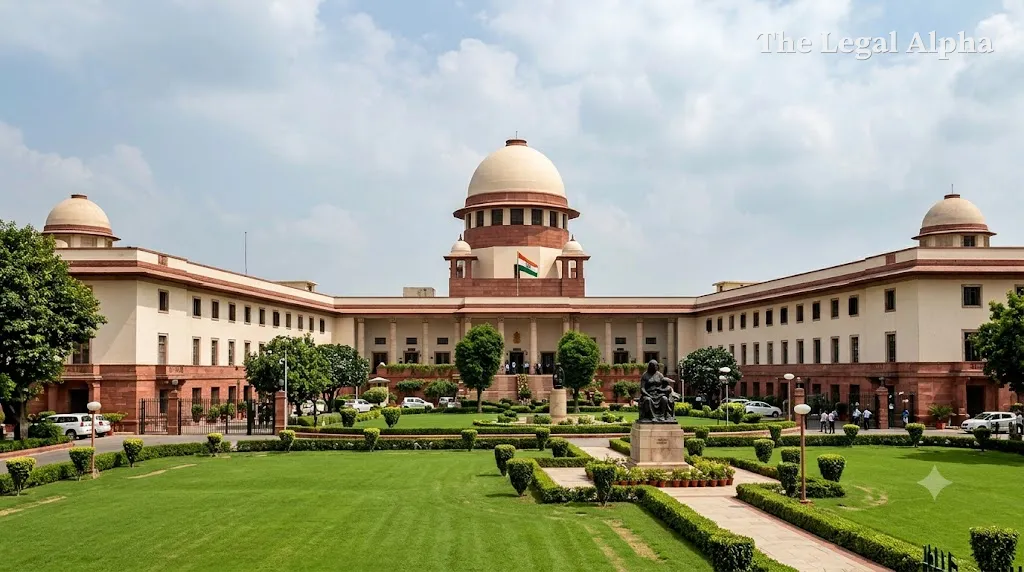
Supreme Court Issues Notice on Oil India Plea Challenging Forest Clearance Denial for Extended Reach Drilling Near Dibru-Saikhowa National Park
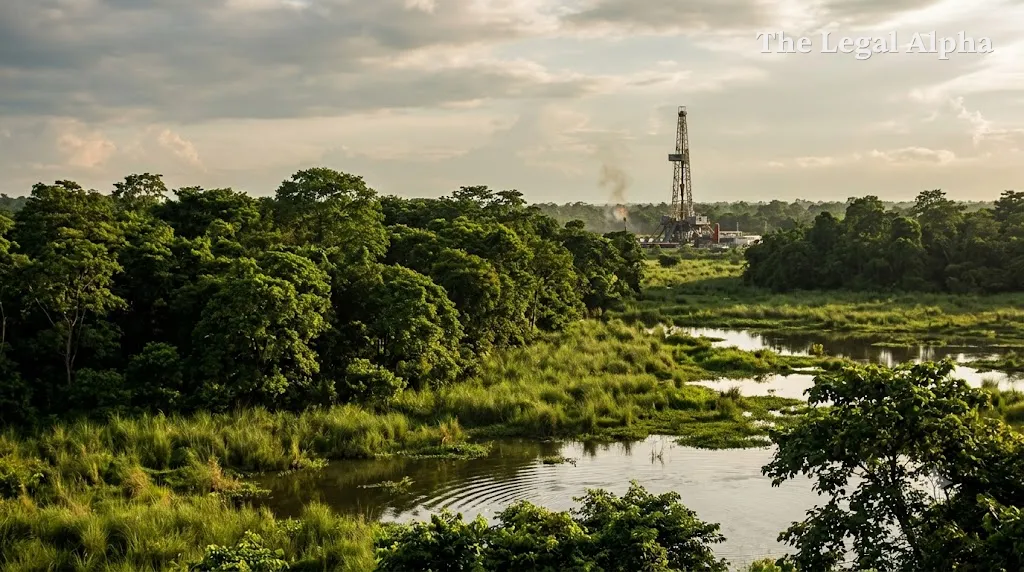
The Supreme Court of India has sought responses from the Central Government and the State Government of Assam regarding a petition filed by public sector undertaking Oil India Limited. The state-run energy major approached the apex court after the Union Ministry of Environment, Forest and Climate Change rejected its forest clearance proposal to divert 0.069 hectares of forest land in the Tinsukia Wildlife Division.
Oil India intends to deploy Extended Reach Drilling technology to access hydrocarbon reserves situated deep beneath the Dibru-Saikhowa National Park from surface locations situated outside the protected boundary. The company argues that statutory authorities misapplied blanket judicial prohibitions on mining, thereby stalling exploration in an area estimated to hold approximately three percent of India's domestic hydrocarbon reserves.
Legal Topic
Area of Law: Environmental Law Sub-topic: Forest Diversion, Eco-Sensitive Zones, and Wildlife Conservation
Core Legal Issue
The principal question before the court is whether directional sub-surface hydrocarbon extraction using Extended Reach Drilling—where the surface entry point, well pad, and infrastructure remain entirely outside the protected area—falls under the judicial prohibition against mining inside national parks, wildlife sanctuaries, and their designated Eco-Sensitive Zones.
The dispute also focuses on whether the statutory refusal under Section 2(1)(ii) of the Van (Sanrakshan Evam Samvardhan) Adhiniyam, 1980 was legally sound, given prior wildlife board recommendations and sub-surface clearance precedents.
What Did the Court / Authority Decide?
A three-judge bench comprising Chief Justice Surya Kant, Justice Joymalya Bagchi, and Justice V. Mohana issued formal notice to the respondents, seeking their response to the writ petition.
The court did not grant interim relief or overturn the rejection at this preliminary stage. The bench observed that it may consider permitting the hydrocarbon exploration work subject to technical research and development evaluations submitted by competent authorities, including the Ministry of Environment, Forest and Climate Change. The broader matter remains pending for substantive adjudication.
Key Legal Points
-
Clarification of whether directional hydrocarbon extraction executed thousands of metres beneath ground level constitutes prohibited "mining" within the meaning of prevailing conservation directives.
-
Judicial review of an administrative decision taken by the Ministry of Environment, Forest and Climate Change based on recommendations of its Forest Advisory Committee.
-
The operational scope and strictness of the Supreme Court's April 26, 2023 order banning commercial mining within a 1-kilometre buffer of protected zones.
-
Harmonisation between energy security imperatives and mandatory statutory compliance under forest conservation statutes.
Relevant Law
-
Van (Sanrakshan Evam Samvardhan) Adhiniyam, 1980 (Forest Conservation Act): Section 2(1)(ii), regulating the diversion and de-reservation of forest land for non-forest purposes.
-
Wild Life (Protection) Act, 1972: Provisions governing developmental and industrial activities within national parks, sanctuaries, and adjoining conservation belts.
-
Environment (Protection) Act, 1986: Environmental clearance frameworks and statutory Eco-Sensitive Zone notifications.
-
Supreme Court Precedent: The April 26, 2023 ruling restricting mining operations within protected reserves and within the 1-kilometre perimeter of their boundaries.
Arguments of the Parties
Petitioner (Oil India Limited): Oil India argued that the regulatory authorities erroneously relied on the Supreme Court's 2023 order banning conventional mining to block the project. Senior counsel appearing for the PSU submitted that Extended Reach Drilling involves sinking vertical shafts outside the national park boundaries, which then turn horizontally beneath the surface at depths of around 4,000 metres without disturbing surface ecosystems. The company contended that requisite clearances—including environmental clearance in May 2020 and prior recommendations from the Standing Committee of the National Board for Wildlife—had already recognised this distinction.
Respondents (Union of India & State of Assam): The regulatory agencies rejected the land-use proposal on August 2, 2024, following the Forest Advisory Committee’s minutes dated July 4, 2024, on the grounds that non-forestry use of forest land adjacent to sensitive biodiversity zones violates overarching conservation mandates and precautionary directives prohibiting extraction in ecologically fragile areas.
Why Does It Matter?
This litigation addresses a critical regulatory boundary between physical surface mining and modern horizontal or directional drilling techniques. If the Supreme Court determines that sub-surface hydrocarbon exploitation beneath protected territories falls outside the strict definition of open-cast or conventional mining, public sector and private energy entities could leverage directional drilling across other ecologically sensitive frontiers.
Conversely, if the court holds that sub-surface extraction is subject to the same blanket bars as surface mining, energy infrastructure projects near declared sanctuaries will encounter stricter regulatory thresholds, affirming conservation over non-invasive resource extraction.
Legal Takeaway
The proceedings will formally establish whether deep-strata directional drilling constitutes "mining" under environmental conservation jurisprudence. For infrastructure and extraction enterprises, the final decision will clarify the precise legal boundaries governing modern non-surface technological interventions adjacent to protected ecological corridors.
Sources
Primary Source: Record of Proceedings / Order dated November 3, 2026, Supreme Court of India, Oil India Limited v. Union of India & Ors. (Bench: Surya Kant, C.J., Joymalya Bagchi, J., V. Mohana, J.).
Additional Sources:
-
Minutes of the Forest Advisory Committee, Ministry of Environment, Forest and Climate Change (Meeting dated July 4, 2024).
-
Rejection Order, Ministry of Environment, Forest and Climate Change (Dated August 2, 2024).
-
Gazette Notification S.O. 423(E), Eco-Sensitive Zone around Dibru-Saikhowa National Park (January 2020).