Supreme Court Demands Comprehensive Centre Report on Missing Bangladeshi National Amid Diplomatic and Police Contradictions
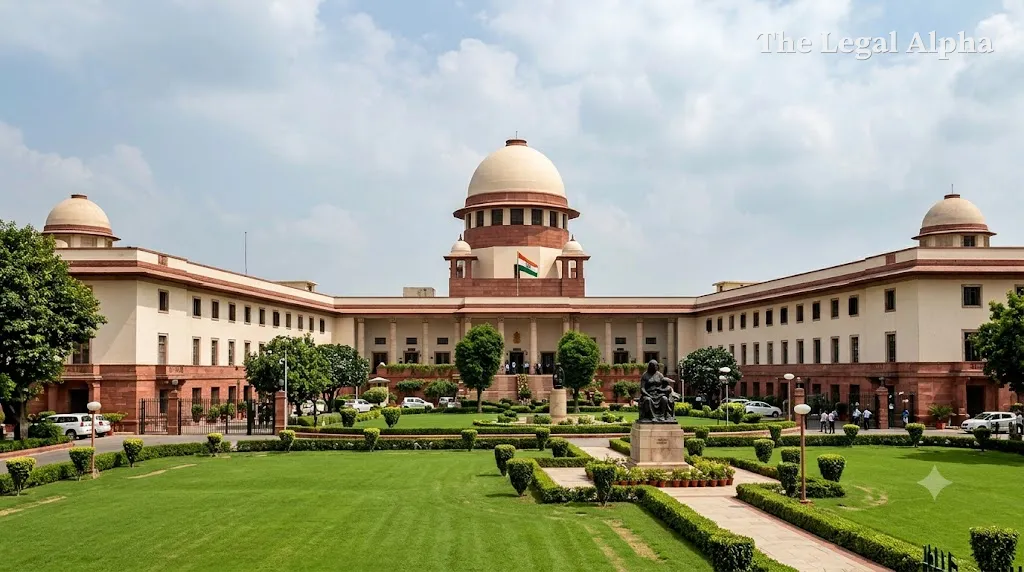
The Supreme Court of India intervened in a cross-border missing person mystery after a Bangladeshi citizen vanished while visiting India on a medical visa in March 2025. Bipul Chandra Barman, a resident of Panchagarh district in Bangladesh, travelled to Siliguri, West Bengal, for medical care before visiting an ashram in Deoghar, Jharkhand, where he was last heard from.
His wife approached the Supreme Court with a habeas corpus petition seeking his production and release after diplomatic communications between India and Bangladesh indicated potential official detention. However, the Union government told the court that it had never detained, arrested, or deported him, prompting the bench to demand a comprehensive status report on his whereabouts.
Legal Topic
-
Area of Law: Constitutional Law / Criminal Procedure
-
Sub-topic: Habeas Corpus / Rights of Foreign Nationals / Inter-State Police Coordination
Core Legal Issue
The principal issue is the extent of the State’s constitutional obligation under Article 21 to trace and account for a foreign national who entered the country lawfully and went missing under conflicting circumstances.
The court must resolve whether apparent diplomatic paper trails confirming detention impose an affirmative duty on the Union government to investigate inter-state leads, or whether the matter strictly remains an ordinary missing person investigation governed by state police jurisdiction.
What Did the Court Decide?
A three-judge bench comprising Chief Justice of India Surya Kant, Justice Joymalya Bagchi, and Justice V. Mohana directed the Union government to examine all leads presented in the petition along with investigative findings submitted by West Bengal and submit a detailed status report.
The bench declined to treat the petition as an ordinary missing person grievance, pressing the Union government to explain specific diplomatic notes exchanged between the two nations. The petition remains pending awaiting the Centre's investigative report.
Key Legal Points
-
Habeas Corpus and Foreign Nationals: The fundamental guarantee of personal liberty under Article 21 applies to non-citizens within Indian territory, allowing foreign nationals and their families to seek judicial intervention if unlawful state detention is suspected.
-
Rebuttal of State Action: When the State categorically denies custody or deportation, the burden shifts toward active tracing mechanisms across state police jurisdictions.
-
Cross-Border Diplomatic Evidentiary Value: Internal and consular communications regarding identity verification cannot be brushed aside simply by relying on domestic jurisdictional boundaries.
-
Zero FIR Procedure: Where a missing person crosses multiple state lines, procedural hurdles cannot impede investigation, requiring coordination among multiple state police departments.
Relevant Law
-
Article 21, Constitution of India: Guarantee of life and personal liberty to all persons, including foreign nationals.
-
Article 32, Constitution of India: Writ jurisdiction of the Supreme Court, specifically the writ of habeas corpus.
-
Section 173(8) / Section 154, Code of Criminal Procedure, 1973 (and corresponding BNSS provisions): Mechanism of Zero FIRs and multi-jurisdictional missing persons investigations.
-
Foreigners Act, 1946: Provisions governing the arrival, presence, detention, and deportation of foreign nationals in India.
Arguments of the Parties
Petitioner (Barman's Wife)
Counsel for the petitioner argued that official correspondence pointed to state custody. It was submitted that in June 2025, the Bangladesh High Commission in Kolkata initiated verification for a person detained in India under Barman's name following communication from the Ministry of External Affairs (MEA). Furthermore, Bangladesh's foreign ministry confirmed his nationality and clean record to the Indian Ministry of Home Affairs in August 2025, suggesting Indian authorities held information about his whereabouts.
Union of India
Additional Solicitor General Archana Pathak Dave submitted that the MEA has not detained, arrested, or deported Barman. The Centre maintained that he is classified as a missing person rather than a detainee, adding that central authorities had not initiated detention communications with Bangladesh. The Union argued that the appropriate legal remedy was for his relatives to register a Zero FIR with the Jharkhand Police in Deoghar.
State of West Bengal
The State counsel placed technical investigative leads on record, noting that call detail records (CDR) traced Barman's last verified physical location to a temple in Matigara near Siliguri, while his active mobile connection was subsequently detected in use by another person at Barh in Bihar.
Why Does It Matter?
This case highlights the constitutional protections available to foreign visitors who disappear within Indian borders, ensuring that cross-border missing person inquiries do not stall between bureaucratic departments. Because foreign nationals lack local domestic networks, families often face severe jurisdiction disputes between state police departments and central ministries.
By holding the Union accountable for unexplained consular paper trails while coordinating multi-state police agencies, the Supreme Court reinforces the principle that habeas corpus petitions cannot be dismissed on mere jurisdictional formalities when potential state custody remains unresolved.
Legal Takeaway
Article 21 guarantees that any foreign national lawfully on Indian soil retains protection against unaccounted custody, enabling families to seek writs of habeas corpus. When diplomatic records and executive claims of non-detention contradict each other, the Supreme Court will mandate an active, coordinated status report rather than leaving foreign families stranded between separate state jurisdictions.
Sources
-
Primary Source: Supreme Court of India, Proceedings before the Bench of CJI Surya Kant, Justice Joymalya Bagchi, and Justice V. Mohana (Hearing dated November 2, 2026).
-
Additional Sources: Status report filings submitted by the State of West Bengal; Representations filed through the Ministry of External Affairs and Ministry of Home Affairs; Reportage by The Times of India and NewsBytes.