Supreme Court Refuses to Restore Karnataka’s Bike Taxi Ban, Allows Services to Continue
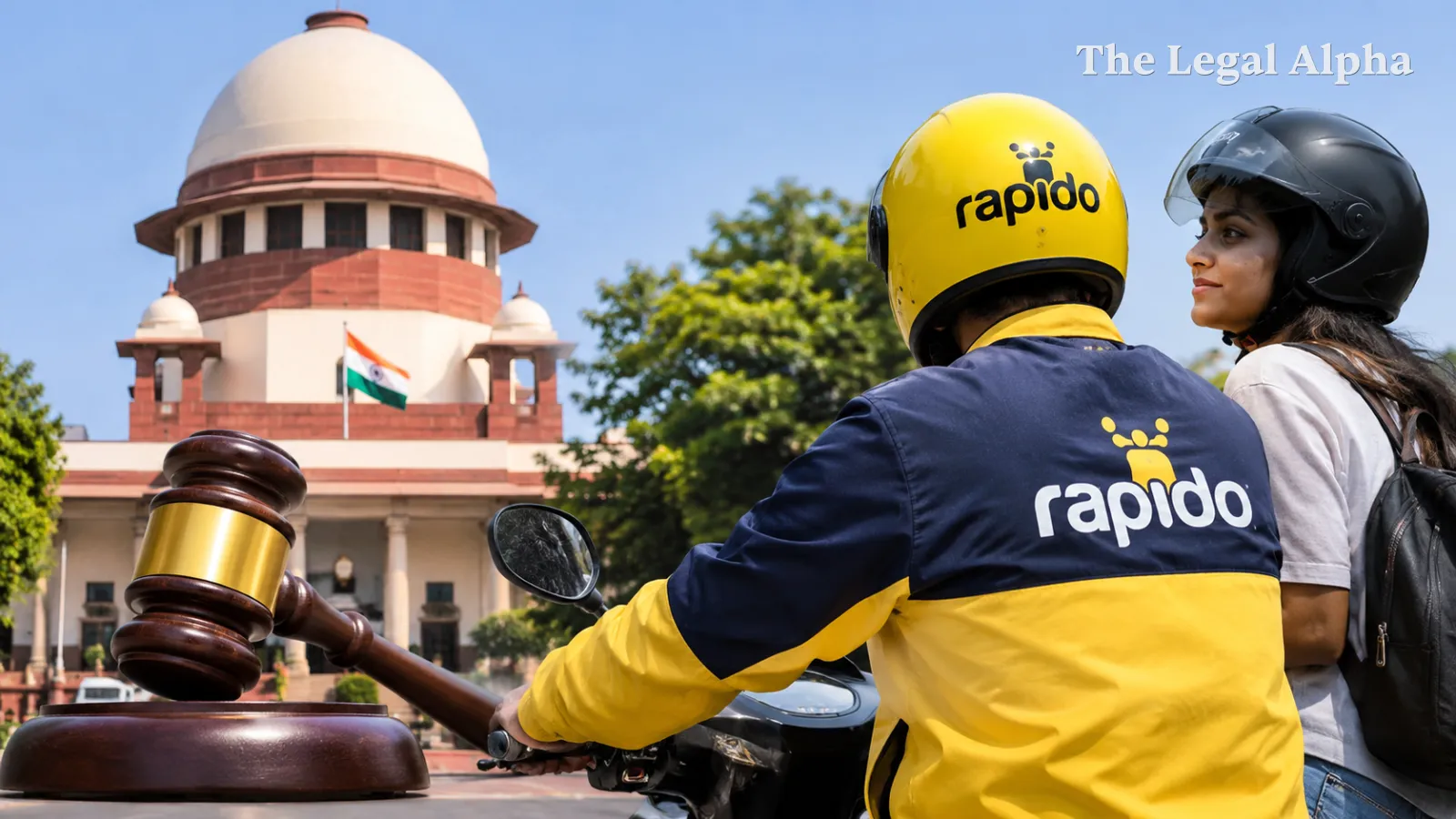
The Supreme Court of India has dismissed the Karnataka government's challenge to a Karnataka High Court judgment permitting bike taxi services in the state. The decision clears the way for app-based bike taxi operators, including Rapido, Ola and Uber, to continue pursuing their services in Karnataka, subject to applicable registration, permit and regulatory requirements.
A Bench comprising Justice Satish Chandra Sharma and Justice N. Kotiswar Singh passed the order on November 20, 2026, refusing to interfere with the High Court's January 23, 2026 judgment.
The dispute concerns whether motorcycles can legally be registered and operated as transport vehicles for carrying passengers for hire or reward. The State had opposed the services, citing passenger safety, insurance concerns and the absence of an adequate regulatory framework.
Area of Law
Motor Vehicles Law
Sub-topic
Regulation of Bike Taxis, Transport Vehicle Registration and Aggregator Services
Core Legal Issue
The central legal question was whether motorcycles could be recognised as transport vehicles and granted contract carriage permits for operating as bike taxis under the Motor Vehicles Act, 1988.
The dispute also involved the extent of the State government's regulatory powers over app-based transport services and whether the absence of a specific state policy could justify a blanket prohibition on bike taxi operations.
What Did the Supreme Court Decide?
The Supreme Court dismissed the Karnataka government's appeal against the High Court's decision, leaving the January 23, 2026 judgment undisturbed.
The Karnataka High Court Division Bench, comprising Chief Justice Vibhu Bakhru and Justice C.M. Joshi, had earlier set aside a single-judge order that prohibited bike taxi operations until the State introduced the necessary regulatory framework.
The High Court had directed transport authorities to:
-
Consider applications by motorcycle owners seeking registration of their vehicles as transport vehicles.
-
Consider applications for contract carriage permits to operate motorcycles as bike taxis.
-
Examine applications in accordance with the applicable legal framework.
-
Avoid rejecting applications merely on the ground that motorcycles cannot be registered as transport vehicles or operated as contract carriages.
-
Allow regional transport authorities to impose appropriate conditions under Section 74(2) of the Motor Vehicles Act, 1988.
The Supreme Court's dismissal means these directions remain in force.
During the hearing, Justice Sharma also observed that regulating bike taxis would be preferable to imposing a blanket ban. He referred to their affordability, GPS-based tracking facilities and usefulness for women commuters.
However, the detailed Supreme Court order was awaited in the available reports. The oral observations should not be treated as a separate, comprehensive regulatory framework.
Background of the Dispute
The controversy began when Karnataka's single-judge bench ruled on April 2, 2025, that aggregators such as Ola, Uber and Rapido could not operate bike taxi services without the relevant state guidelines under Section 93 of the Motor Vehicles Act and corresponding rules.
The court directed the operators to discontinue their services, with the deadline subsequently extended until June 15, 2025.
The aggregators, motorcycle owners and bike taxi associations challenged the decision before a Division Bench of the Karnataka High Court.
On January 23, 2026, the Division Bench allowed their appeals and set aside the earlier prohibition, holding that motorcycle owners could apply for transport vehicle registration and contract carriage permits.
The Karnataka government subsequently approached the Supreme Court, seeking to challenge the High Court's decision.
Key Legal Points
-
Motorcycle registration: Motorcycles can be considered for registration as transport vehicles, subject to the applicable statutory requirements.
-
Contract carriage permits: Motorcycle owners can apply for permits to operate their vehicles as bike taxis.
-
Regulatory powers: Regional transport authorities retain the power to impose appropriate conditions under Section 74(2) of the Motor Vehicles Act.
-
Aggregator regulation: App-based operators must comply with applicable statutory and regulatory requirements.
-
Blanket prohibition: The High Court's ruling prevents authorities from rejecting applications solely on the ground that motorcycles cannot operate as transport vehicles or contract carriages.
Relevant Law
Motor Vehicles Act, 1988
-
Section 2(47): Defines a transport vehicle.
-
Section 67: Deals with the State Government's powers to control road transport and issue directions concerning transport.
-
Section 74: Governs the grant of contract carriage permits, including conditions that may be imposed by the transport authorities.
-
Section 93: Deals with licensing and regulation of agents and aggregators.
The High Court's January 2026 judgment specifically referred to Section 74(2) while recognising the authority of regional transport authorities to impose appropriate conditions on bike taxi operations.
Arguments of the Parties
Karnataka Government
The State government opposed bike taxi operations, raising concerns relating to passenger safety, insurance coverage, traffic management and the absence of adequate safeguards.
It also argued that motorcycles should not automatically be treated as passenger transport vehicles and questioned whether the existing regulatory framework adequately covered bike taxi services.
Bike Taxi Aggregators
Companies including Ola, Uber and Rapido argued that motorcycles could legally be registered as transport vehicles and used for passenger transportation under the Motor Vehicles Act.
They maintained that the State could impose reasonable regulatory conditions but should not prohibit the services altogether when the statutory framework provided a route for registration and permits.
Auto and Taxi Associations
Several traditional transport associations also opposed the High Court's decision, arguing that allowing bike taxis without comparable regulatory obligations could adversely affect conventional taxi and auto-rickshaw operators.
Why Does It Matter?
The Supreme Court's decision has significant implications for Karnataka's urban transport sector.
For commuters: Bike taxis offer an additional and relatively affordable transportation option, particularly for short-distance journeys and last-mile connectivity.
For women passengers: GPS tracking and other safety mechanisms were specifically discussed during the Supreme Court hearing. However, appropriate safety regulations remain important.
For motorcycle owners: The High Court's ruling provides a legal route for eligible motorcycle owners to seek commercial registration and contract carriage permits.
For aggregators: Companies operating bike taxi platforms have greater legal clarity following the dismissal of the State's challenge. They must nevertheless comply with applicable registration, licensing and regulatory requirements.
For the State Government: The decision places greater importance on developing an appropriate regulatory framework rather than relying on a blanket prohibition. Passenger safety, insurance, driver verification and operational standards remain important considerations.
The Karnataka government has indicated that it is considering regulatory measures, including GPS devices, insurance requirements and verification of driver documents.
Legal Takeaway
The Supreme Court's dismissal of Karnataka's appeal leaves the High Court's judgment permitting the consideration of bike taxi registrations and permits intact. The decision reinforces the importance of regulating emerging transport services through the statutory framework rather than relying on a blanket prohibition. However, bike taxi operations must still satisfy applicable registration, permit and safety requirements.
Sources
Primary Source:
-
Supreme Court order dated November 20, 2026 – detailed order awaited in the available reporting.
-
Karnataka High Court Division Bench judgment dated January 23, 2026.
Additional Sources: