Supreme Court Rebukes Subordinate Judge Over Unsolicited Advice on Bail Discretion, Emphasising Judicial Discipline
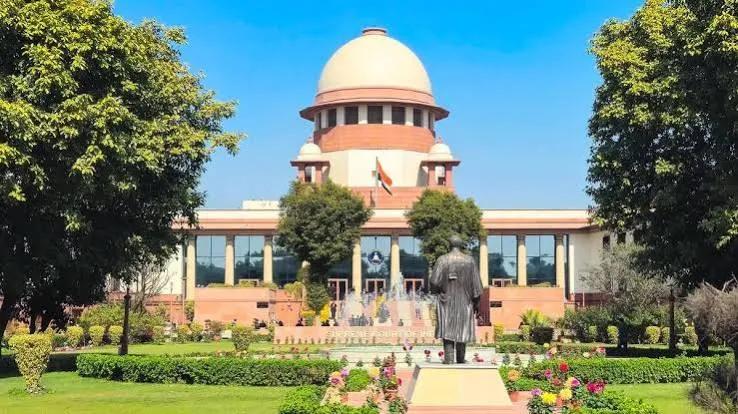
The Supreme Court of India expressed strong disapproval after a subordinate judicial officer inserted unsolicited commentary into an order, effectively advising the apex court on when and how it should exercise its discretion to grant bail.
While examining the proceedings arising from the trial court's decision, the bench noticed that the judge had strayed beyond the merits of the case to remark upon superior court bail jurisprudence. The apex court took serious exception to these extraneous observations, emphasizing that trial judges must adhere to institutional discipline rather than tendering uncalled-for guidance to constitutional courts.
Legal Topic
-
Area of Law: Criminal Law & Judicial Administration
-
Sub-topic: Judicial Discipline / Subordinate Judiciary Conduct / Bail Jurisprudence
Core Legal Issue
The primary legal issue was whether a trial court judge, while adjudicating a bail application or criminal proceeding, may incorporate personal opinions, strictures, or advisory comments regarding how superior constitutional courts exercise their appellate and discretionary powers.
The matter raised critical questions concerning the boundaries of judicial propriety, institutional hierarchy, and the obligation of subordinate judicial officers to maintain restraint when authoring judicial orders.
What Did the Court Decide?
The Supreme Court firmly censured the approach taken by the trial judge, ruling that subordinate judicial officers must strictly confine their orders to the dispute before them and refrain from offering homilies to higher judicial forums.
The bench observed that while lower courts are free to evaluate the facts and apply the law independently, passing gratuitous remarks on the bail discretion of the Supreme Court or High Courts violates established norms of judicial decorum. The apex court made it clear that such observations have no place in a judicial record, cautioning the officer against repeating such indiscipline and reinforcing the sanctity of the judicial hierarchy.
Key Legal Points
-
Subordinate courts are bound by strict canons of judicial discipline and must never offer unsolicited advice or pass homilies regarding the jurisdiction of superior courts.
-
Bail determinations must be grounded solely in statutory provisions, the factual record, and binding precedents rather than individual philosophy or institutional grievances.
-
Judicial propriety requires judges at all tiers to maintain dignified restraint in their language and avoid making personal or extraneous remarks in official orders.
-
Unwarranted strictures directed at constitutional courts undermine the hierarchical structure and institutional harmony of the judiciary.
Relevant Law
-
Article 141 of the Constitution of India: Establishes that the law declared by the Supreme Court is binding on all courts within India, anchoring the principle of judicial hierarchy.
-
Code of Criminal Procedure, 1973 / Bharatiya Nagarik Suraksha Sanhita, 2023: Statutory frameworks governing the exercise of bail jurisdiction and the requirement to record reasoned, relevant judicial orders.
-
Principles of Judicial Decorum and Propriety: Established Supreme Court jurisprudence governing judicial restraint, decorum of language, and the expunction of gratuitous remarks made by lower courts.
Arguments of the Parties
Petitioner / Applicant The petitioner submitted that the trial court failed to evaluate the bail plea on its statutory merits and instead allowed unwarranted preconceptions to dictate the outcome. It was argued that the trial judge exceeded their legitimate authority by penning sermonizing observations on superior court bail practices rather than determining the applicant's custody strictly within the four corners of the law.
Respondent / State The State focused primarily on the gravity of the underlying offenses to justify the denial of relief on the merits. On the issue of the trial judge's extraneous remarks, it was acknowledged that subordinate courts must remain within the bounds of judicial decorum and avoid offering unsolicited guidance to constitutional benches.
Why Does It Matter?
The Supreme Court’s intervention reinforces the structural stability of the common-law hierarchy in India. The administration of justice relies on mutual institutional respect, where subordinate courts faithfully apply the law laid down by superior courts without expressing institutional resentment or public disagreement through case orders.
When judicial officers use their orders as a platform to voice personal grievances against appellate trends, it introduces legal ambiguity and erodes public confidence in the judicial process. This development serves as a firm reminder to the subordinate judiciary that reasoned adjudication must never be conflated with judicial overreach or indiscipline.
Legal Takeaway
Trial judges must decide matters strictly on their legal merits and statutory tests without offering unsolicited advice or criticism to superior courts. Maintaining judicial discipline, measured language, and institutional decorum is mandatory across all levels of the judiciary.
Sources
-
Primary Source: Supreme Court of India Order / Judgment concerning judicial propriety and subordinate court bail observations.
-
Additional Sources: LiveLaw Court Report on trial court bail remarks and apex court observations on judicial discipline.