Supreme Court Permits Karthigai Deepam Lighting at Thiruparankundram Hill as One-Time Measure
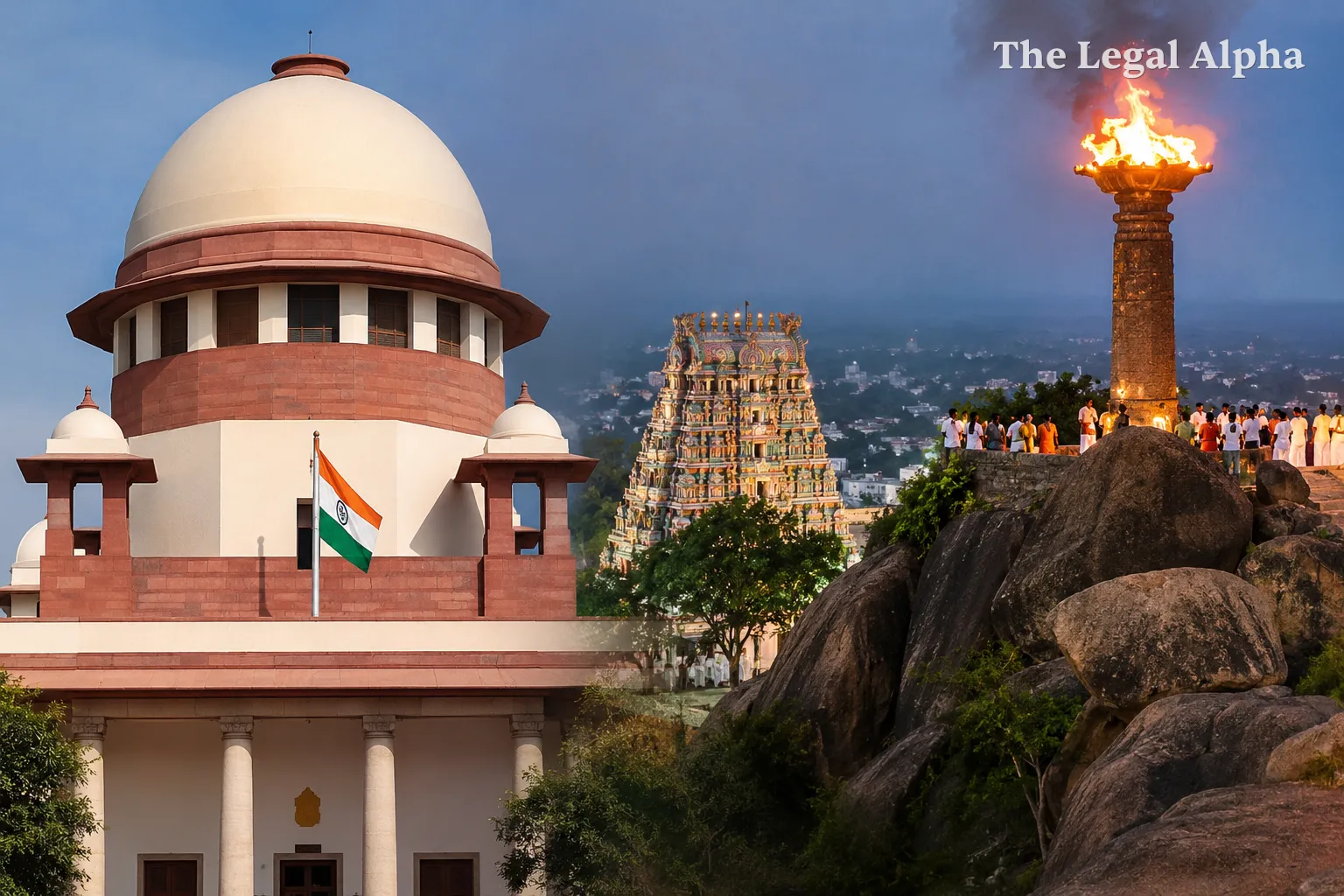
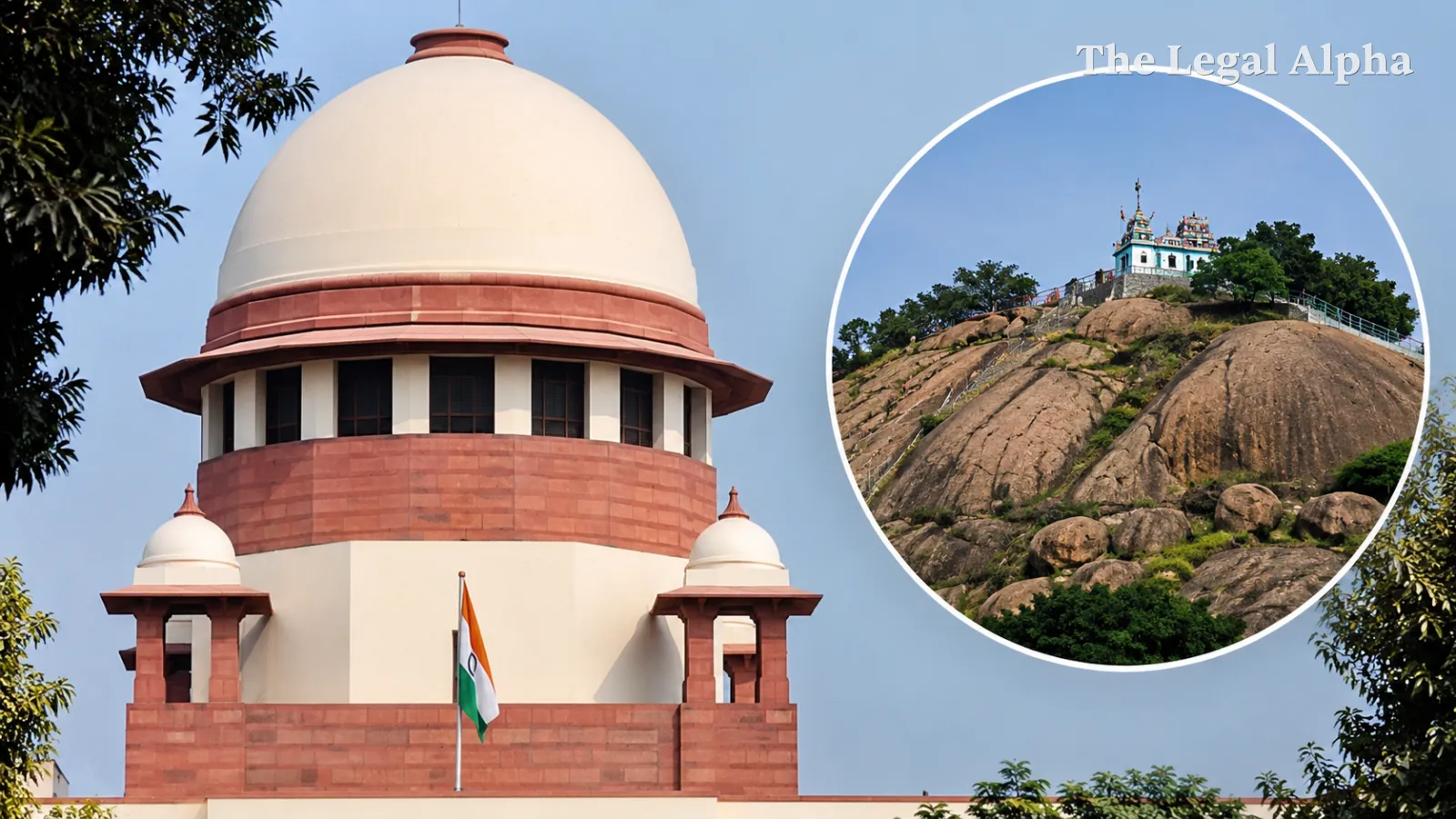
The Supreme Court of India has permitted the lighting of the traditional Karthigai Deepam lamp at the Deepathoon, a stone pillar situated atop Thiruparankundram Hill in Madurai, Tamil Nadu, on November 24, 2026.
The order, passed on November 20 by a Bench comprising Justices Aravind Kumar and Vipul M. Pancholi, allows the ceremony strictly as a one-time arrangement subject to specific conditions.
The decision comes amid a dispute concerning the location of the religious ceremony, the alleged customary right to light the lamp at the stone pillar and competing claims concerning the hilltop near the Hazrat Sultan Sikandar Badusha Auliya Dargah.
The Supreme Court has also stayed the relevant findings of the Madras High Court judgment under challenge, keeping the larger legal questions open for further consideration.
Legal Topic
Area of Law: Constitutional Law
Sub-topic: Freedom of Religion, Religious Practices, Property Rights and Judicial Review
Core Legal Issue
The central legal question concerns whether the traditional Karthigai Deepam ceremony can be performed at the disputed Deepathoon and whether the claimed religious custom gives the temple administration or devotees an enforceable right to conduct the ceremony at that particular location.
The dispute also raises questions concerning the scope of religious freedom under Articles 25 and 26 of the Constitution, the rights of religious institutions and the extent to which courts can regulate access to a disputed religious site while balancing public order and the rights of different communities.
What Did the Supreme Court Decide?
The Supreme Court permitted the ceremonial lamp to be lit at the Deepathoon on November 24, 2026, but expressly limited the permission to this year's festival.
The Bench clarified that the interim arrangement does not recognise or establish any customary, religious or proprietary right over the disputed location. It also cannot be used as evidence of an established religious practice or as a basis for seeking similar permission in subsequent years.
The Court imposed several safeguards:
-
Only an authorised team organised by the Devasthanam, along with necessary government officials, may access the location.
-
The Madurai District Collector will coordinate the arrangements in consultation with the Temple Executive Officer, Archaeological Survey of India and the Commissioner of Police.
-
The district administration will determine the timing, access route and duration of the ceremony.
-
No public congregation, procession, demonstration or slogan-raising will be permitted.
-
Adequate security arrangements must be maintained, with additional security deployment if necessary.
-
No excavation, permanent construction or structural alteration will be permitted at the disputed location.
-
The authorised team must leave the site immediately after completing the ceremony.
The Court further directed the District Collector to submit a compliance report within three days after the festival.
Importantly, the Bench stayed the relevant findings contained in paragraphs 1 to 140 of the Madras High Court Division Bench judgment dated January 6, 2026, insofar as they relate to the issues raised in the Supreme Court proceedings.
The Court clarified that the lawful access to the adjoining dargah and mosque, as well as worship at customary sites, must continue without interference.
Key Legal Points
- Interim permission does not establish customary rights: The one-time permission cannot be treated as judicial recognition of an established religious practice at the Deepathoon.
- Religious freedom remains under consideration: The scope of Articles 25 and 26 of the Constitution has been raised but has not been finally determined.
- Property and ownership disputes remain open: The Court has not settled the competing claims concerning title, possession or control of the disputed hilltop.
- Public order and security safeguards: The ceremony has been permitted subject to restricted access and administrative supervision.
- No precedent for future ceremonies: The temporary arrangement cannot independently establish a right to conduct the ceremony at the same location in future years.
Relevant Law
Constitution of India
-
Article 25: Guarantees freedom of conscience and the right to freely profess, practise and propagate religion, subject to constitutional limitations.
-
Article 26: Protects the rights of religious denominations to manage their religious affairs, subject to public order, morality and health.
The Supreme Court has not yet finally interpreted these provisions in the context of the disputed Deepathoon ceremony.
Arguments of the Parties
Tamil Nadu Government and Authorities
The State opposed the Madras High Court's directions and questioned the existence of an established custom of lighting the lamp at the Deepathoon.
The State's representatives argued that the traditional ceremony was performed at the Deepa Mandapam near the Uchipillaiyar Temple and disputed the claim that the stone pillar was a customary location for the ritual.
Concerns were also raised regarding the potential consequences of recognising disputed survey pillars as places having religious significance.
Temple-Side Petitioners
The petitioners seeking permission to light the lamp argued that the Deepathoon was distinct from the area occupied by the dargah and that performing the ceremony there would not interfere with the rights of the dargah.
They relied on photographs and earlier judicial findings to support their position concerning the location of the stone pillar and the claimed religious practice.
Dargah Representatives
The representatives of the Hazrat Sultan Sikandar Badusha Auliya Dargah opposed the proposed ceremony and raised objections concerning ownership and the rights associated with the disputed hilltop.
They also questioned the claimed customary entitlement to conduct the ritual at the Deepathoon.
Why Does It Matter?
The Supreme Court's order is significant because it separates temporary religious relief from the final determination of legal rights.
By permitting the ceremony for one occasion without recognising an established custom, the Court has sought to address the immediate festival-related situation without conclusively deciding the competing claims.
The matter also raises important constitutional questions about religious freedom, the management of religious institutions and the protection of different communities' rights at locations where religious and property-related interests overlap.
For religious institutions, the order highlights that permission to conduct a particular ceremony does not automatically establish a permanent legal entitlement. Such claims must ultimately be examined on the basis of evidence, applicable law and established judicial principles.
The Court's restrictions also underline the importance of public safety, administrative coordination and preventing interference with existing religious activities while disputes remain pending.
The broader questions concerning the nature of the Deepathoon, ownership of the disputed land and the existence of any enforceable customary right will be considered during further proceedings.
Legal Takeaway
The Supreme Court has allowed Karthigai Deepam lighting at Thiruparankundram Hill on November 24, 2026, strictly as a one-time interim arrangement. The permission does not establish a customary religious right, determine ownership or create an entitlement for future ceremonies. The constitutional and property-related questions remain open for final adjudication.
Sources
Primary Source: Supreme Court interim order dated November 20, 2026. The text of the signed order was not independently available in the sources reviewed.
Additional Sources: