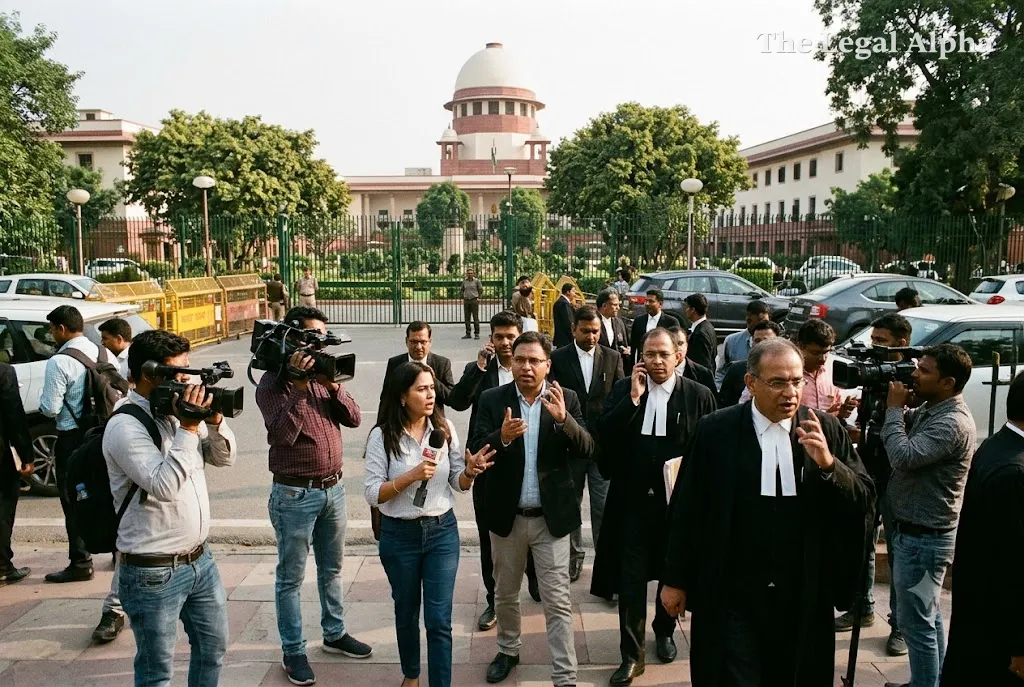
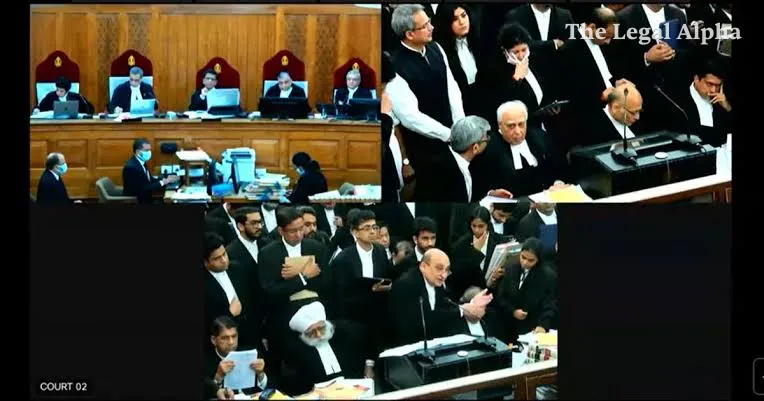
Supreme Court Mulls Constitutional Guidelines for Compulsory Rural Medical Service Across India
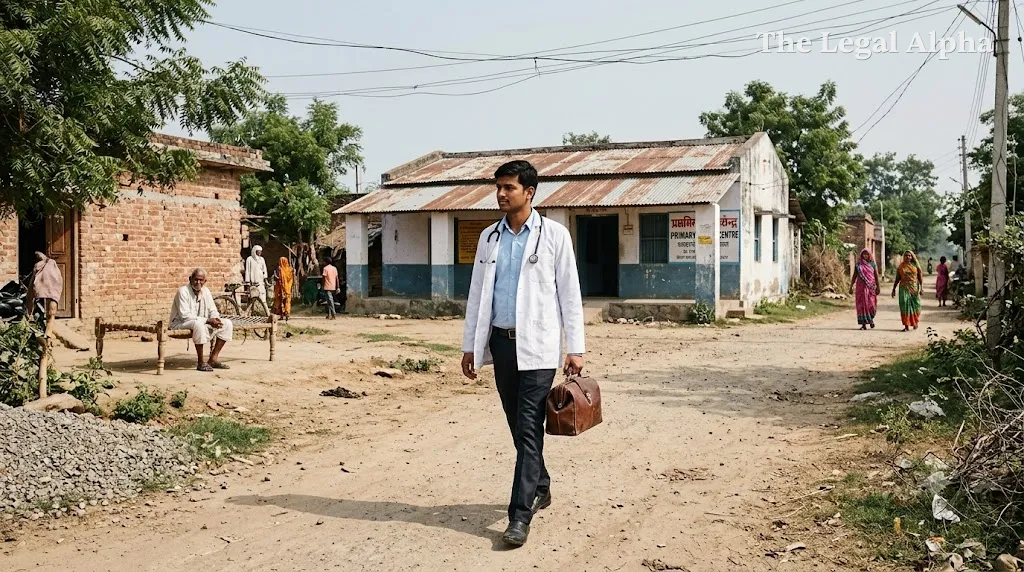
The Supreme Court of India has indicated that it may lay down broad constitutional guiding principles to govern mandatory rural service for medical graduates across the country.
A bench comprising Justices P.S. Narasimha and Alok Aradhe took up the issue while hearing a writ petition filed by medical graduates challenging Karnataka's regulations. These state rules mandate one year of compulsory rural service before candidates can secure permanent registration with the state medical council.
Rather than confining the question to an isolated state-level dispute, the bench highlighted the absence of a coherent national policy. The court emphasized that the ongoing shift toward private healthcare delivery makes it critical to examine whether ensuring medical access in rural regions constitutes a binding constitutional principle tied to the fundamental right to health.
Legal Topic
-
Area of Law: Constitutional Law / Healthcare & Medical Education Law
-
Sub-topic: Right to Health, Article 14 Equality, and State-Imposed Service Conditions for Professional Registration
Core Legal Issue
The fundamental legal question before the top court is whether the State can legitimately compel medical graduates—including those enrolled in private and deemed medical institutions paying full fees—to undergo mandatory rural public service as a prerequisite for statutory medical registration.
Beneath this regulatory friction lies a deeper constitutional question: How should the judicial system balance an individual doctor's occupational freedom under Article 19(1)(g) against the State's constitutional duty under Article 21 to safeguard public health and ensure basic medical care for underserved rural populations?
What Did the Court Decide?
The Supreme Court did not issue a final binding writ or strike down existing state enactments; rather, it signaled its intention to frame overarching guiding principles.
Key aspects of the proceedings include:
-
Guiding Principles, Not a Blanket Mandate: The bench clarified that it is not seeking to unilaterally dictate an inflexible judicial mandate. Instead, it intends to formulate constitutional guidelines anchored to the right to health, leaving individual states and statutory authorities room to calibrate operational frameworks.
-
Call for Policy Reflection: The court urged the Union Government and medical education regulators to treat rural healthcare requirements as an integral part of national health policy.
-
Current Status: The substantive dispute remains pending before the bench, with the central authorities asked to deliberate on the feasibility of a harmonized nationwide mechanism.
Key Legal Points
-
Right to Health as a Constitutional Foundation: The bench observed that the right to health, firmly read into Article 21 of the Constitution, gives rise to state obligations that can justify regulatory policies requiring newly trained doctors to serve in rural areas.
-
Scrutiny of Private Healthcare Expansion: The court observed that as general hospital access increasingly migrates toward private commercial setups, state policy must actively prevent rural areas from being left completely devoid of medical personnel.
-
Rejection of Blanket Private Exemptions: The bench maintained that medical professionals form a vital national resource, expressing skepticism toward the claim that private college graduates should automatically be exempt from public service obligations merely because they paid higher tuition.
-
Need for Inter-State Harmonization: The disparate mesh of state bond penalties, varying durations, and inconsistent service conditions requires national-level guiding principles to ensure fairness and uniformity.
Relevant Law
-
Constitution of India:
-
Article 21: Right to Life and Personal Liberty (encompassing public health and access to medical care).
-
Article 14: Equality before the law and equal protection of laws (invoked in comparing state-subsidized students with private candidates).
-
Article 19(1)(g): Fundamental right to practice any profession or carry on any occupation.
-
Article 47: Directive Principle obligating the State to improve public health.
-
-
State Legislation: Karnataka Compulsory Service Training by Candidates Completed Medical Courses Act, 2012, and the Karnataka Compulsory Service Training Rules, 2015.
-
Judicial Precedent: Association of Medical Super Speciality Aspirants and Residents v. Union of India (2019), where the Supreme Court previously upheld the validity of compulsory rural service bonds while suggesting a uniform central framework.
Arguments of the Parties
The Petitioners (Medical Graduates)
The petitioners submitted that:
-
The state government cannot arbitrarily condition permanent medical registration on mandatory government service, especially for candidates who completed their medical education in private institutions without state subsidization.
-
Subjecting full-fee-paying private students to identical compulsory service conditions creates an unreasonable classification under Article 14.
-
State medical councils have a statutory duty to issue permanent registration upon qualification and should not withhold credentials by demanding rural clearances.
The Respondents (State and Union Authorities)
The State authorities contended that:
-
Compulsory service conditions are enacted in public interest to address severe rural medical shortages and protect the general public's fundamental right to healthcare.
-
Medical training relies heavily on broader clinical infrastructure, public patient exposure, and state-regulated healthcare ecosystems, creating a civic responsibility toward public health that applies irrespective of private seat status.
-
The State holds regulatory competence to establish prerequisites for professional practice to serve rural and impoverished communities.
Why Does It Matter?
For decades, compulsory rural service in India has functioned as a fragmented patchwork of state legislation, administrative executive orders, and varying bond forfeiture penalties. Some states enforce multi-year bonds with penalties running into tens of lakhs, while others maintain minimal or non-existent mandates.
If the Supreme Court crystallizes broad constitutional guidelines, the ruling will:
-
Establish National Predictability: Provide a standard legal baseline for all MBBS and postgraduate medical qualifiers across India regarding when, how long, and under what conditions rural service can be mandated.
-
Clarify Private Institution Status: Resolve the legal debate over whether students admitted under non-subsidized private and deemed university quotas can be treated differently from government college graduates.
-
Reconcile Competing Rights: Formally define the extent to which public health obligations can condition professional registration without running afoul of the constitutional right to practice a profession.
Legal Takeaway
The Supreme Court's push underscores that the constitutional right to health under Article 21 can justify state-mandated rural service for medical practitioners. As judicial scrutiny broadens beyond individual state bond rules, the creation of uniform guiding principles is set to define how medical graduates balance their professional registration with public healthcare obligations across India.
Sources
-
Primary Source: Supreme Court of India, Ashish Redu & Ors. v. Government of Karnataka & Ors. (W.P.(C) No. 332/2024; Bench: Justices P.S. Narasimha and Alok Aradhe).
-
Additional Sources: Supreme Court Daily Cause List (dated October 27, 2026); Association of Medical Super Speciality Aspirants and Residents v. Union of India (2019) 8 SCC 607; Karnataka Compulsory Service Training by Candidates Completed Medical Courses Act, 2012.