Supreme Court Lays Down Relief Framework for Pearls City Plot Buyers After Decade-Long Dispute
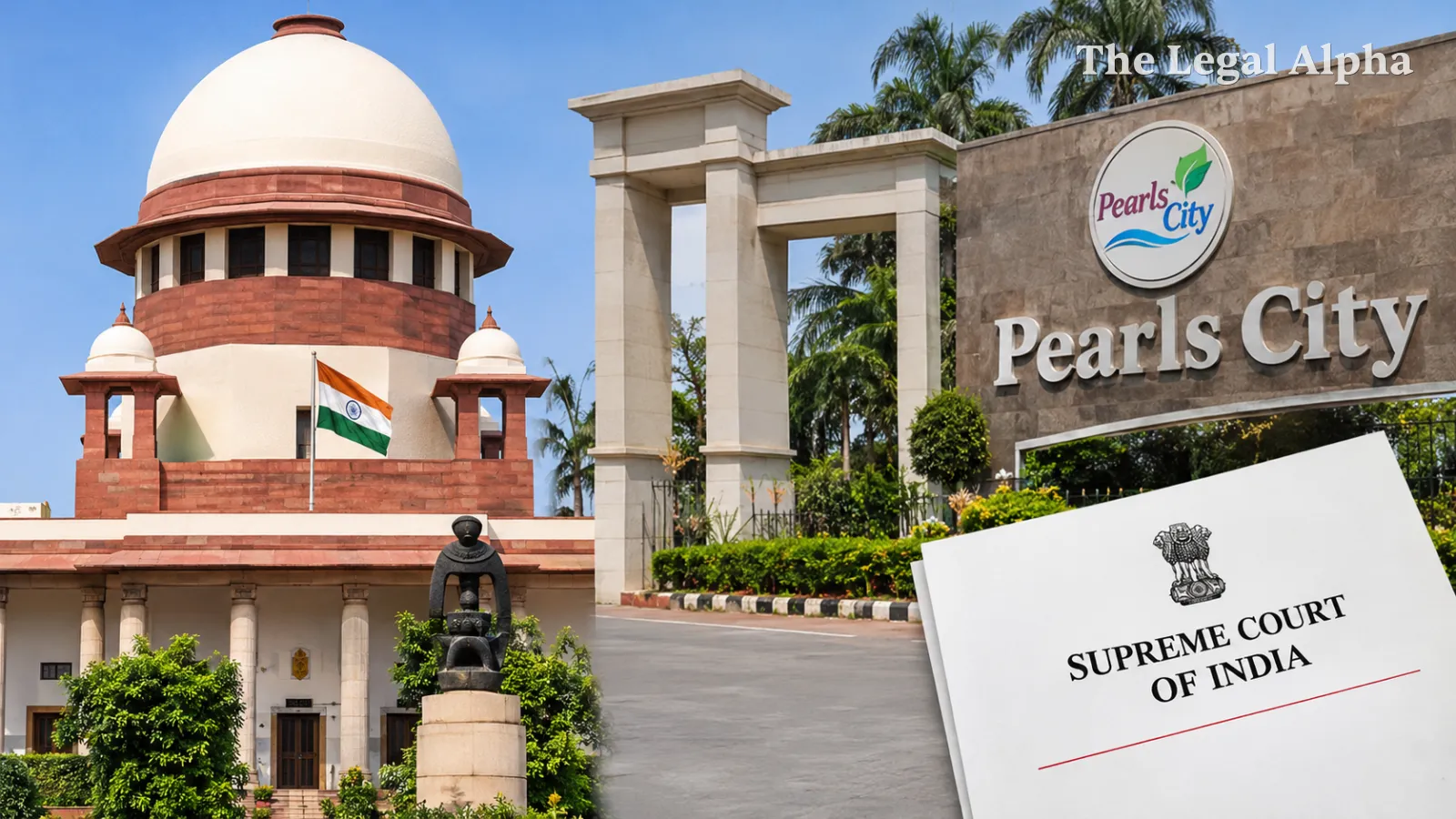
The Supreme Court of India has laid down a framework for resolving the claims of eligible plot allottees in Pearls City, Mohali, bringing clarity to a property dispute that remained unresolved for nearly a decade following action against Pearls Agrotech Corporation Limited (PACL).
The November 19, 2026 decision provides different forms of relief depending on the amount paid by the allottees, the mode of payment and the verification of their claims. The framework covers residential projects in Mohali and Bathinda.
What Happened?
The Supreme Court has accepted the categorisation recommended by the Justice (Retd.) R.M. Lodha Committee, which was constituted to oversee the liquidation of PACL's assets and facilitate the recovery and distribution of money.
The dispute concerns buyers who had booked residential plots in Pearls City's Sectors 100 and 104 in Mohali. Their property claims remained unresolved after PACL's assets became subject to legal proceedings.
The Court's latest directions distinguish genuine plot purchasers with verifiable banking records from other claimants. Depending on their payment history, eligible allottees may receive sale certificates, complete their outstanding payments or obtain refunds with interest.
Legal Topic
Area of Law: Property Law and Securities Law
Sub-topic: Property Ownership Rights, Asset Liquidation and Investor Restitution
Core Legal Issue
The principal legal question was how residential plot allottees should be treated when the developer's assets have been attached during proceedings concerning an alleged investment scheme.
The Court had to consider whether genuine purchasers with documented payments could be given relief separately from other investors and how their claims could be settled without compromising the process of recovering and distributing PACL's assets.
What Did the Supreme Court Decide?
A bench comprising Justice Pamidighantam Sri Narasimha and Justice Atul S. Chandurkar delivered the order on November 19, 2026, in Subrata Bhattacharya v. Securities and Exchange Board of India & Ors., Civil Appeal Nos. 13301 and 13394 of 2015.
The Court accepted the Lodha Committee's five-category classification and issued the following directions:
-
Category I – Full payment: Allottees who paid the entire consideration through banking channels must receive sale certificates or NOCs within eight weeks. Those who have not received possession certificates must also be given the necessary documents.
-
Category II – More than 50% payment: Allottees who paid more than half the consideration through banking channels must deposit the outstanding contractual amount and their contribution towards internal development works. The Committee must provide the payment statement within eight weeks, and payment must be made within 30 days of receiving it. After payment, the sale certificate or NOC must be issued within eight weeks.
-
Category III – Less than 50% payment: These allottees will receive refunds of their verified payments with 8% interest. The refund must be completed within three months of the successful auction of the concerned plot.
-
Category IV – Cash payments: Claims seeking allotment or refunds based on cash payments were rejected. However, the Court clarified that such claimants may approach the appropriate civil court for recovery or declaration.
-
Category V – Previously transferred allotments: Buyers who transferred their allotments during the proceedings will receive treatment according to the category to which their original allotment would have belonged.
The Court also directed the Committee to examine additional applications from allottees seeking inclusion in Category I, subject to any approval or objection from SEBI.
Importantly, the Court did not grant ownership rights to every claimant. Relief remains dependent on the category, documentary verification and compliance with the prescribed conditions.
Key Legal Points
-
The Supreme Court recognised the distinction between verified residential plot purchasers and other claimants in the PACL proceedings.
-
Banking-channel transactions and audited payment records form the basis for determining eligibility under the five categories.
-
Allottees who have paid more than 50% of the consideration have an opportunity to complete their payments and obtain the relevant ownership documents.
-
Buyers who paid less than 50% are entitled to an 8% interest refund after the concerned plot is successfully auctioned.
-
Cash-payment claimants retain the liberty to pursue appropriate civil remedies, although their requests for allotment or refund under the Committee's process were rejected.
Relevant Law
Securities and Exchange Board of India Act, 1992
- Section 28A: Provides the statutory framework for recovery of amounts, including through the Recovery Officer. The Supreme Court specifically directed the issuance of sale certificates and NOCs through the Recovery Officer under this provision.
SEBI (Collective Investment Schemes) Regulations, 1999
These regulations form part of the underlying dispute concerning PACL's alleged operation of an unregistered collective investment scheme.
Supreme Court's Orders in the PACL Proceedings
The order dated February 2, 2016, established the Justice R.M. Lodha Committee to oversee the liquidation of PACL's land assets and the equitable refund of investor funds. The subsequent orders provided the framework for verification of the residential plot claims.
Arguments of the Parties
Plot Allottees and Residents' Associations
Certain allottees argued that genuine residential purchasers should not be treated in the same manner as investors in PACL's collective investment schemes. Some sought the opportunity to pay outstanding amounts, obtain sale certificates or have their claims assessed through further verification.
Category IV claimants also challenged the classification of their transactions, arguing that possession, payment acknowledgements and individual circumstances should be considered.
SEBI and the Committee's Position
The Committee's recommendations relied on audited records and classified claimants according to the mode, extent and timing of their payments. It proposed treating certain plots as unsold inventory and auctioning them, with refunds for eligible claimants.
The Court considered the Committee's recommendations, the submissions of the parties and the suggestions made by the assisting senior counsel before issuing its directions.
Why Does It Matter?
The decision has considerable significance for residential property buyers whose transactions become entangled in proceedings against a developer or financial entity.
For Pearls City allottees, the judgment establishes a structured route towards obtaining ownership documents or recovering verified payments. It also reduces uncertainty by specifying the conditions and timelines applicable to different categories of purchasers.
The ruling is particularly important because it recognises that the interests of genuine property purchasers require separate consideration within proceedings involving the liquidation of corporate assets.
At the same time, the Court has prioritised the recovery and return of verified funds rather than allowing the proceedings to develop into prolonged disputes over the specific performance of every original property transaction.
Legal Takeaway
The Supreme Court's decision establishes a clear mechanism for resolving verified residential plot claims arising from the PACL proceedings. It balances the interests of genuine purchasers with the broader objective of recovering investor funds, while making clear that ownership documents, refunds and other relief depend on verified payments and compliance with the Court's directions.
Sources
Primary Source: Supreme Court of India, Subrata Bhattacharya v. Securities and Exchange Board of India & Ors., 2026 INSC 1247, Order dated November 19, 2026.
Read the Supreme Court's November 19, 2026 order (PDF).
Additional Sources: