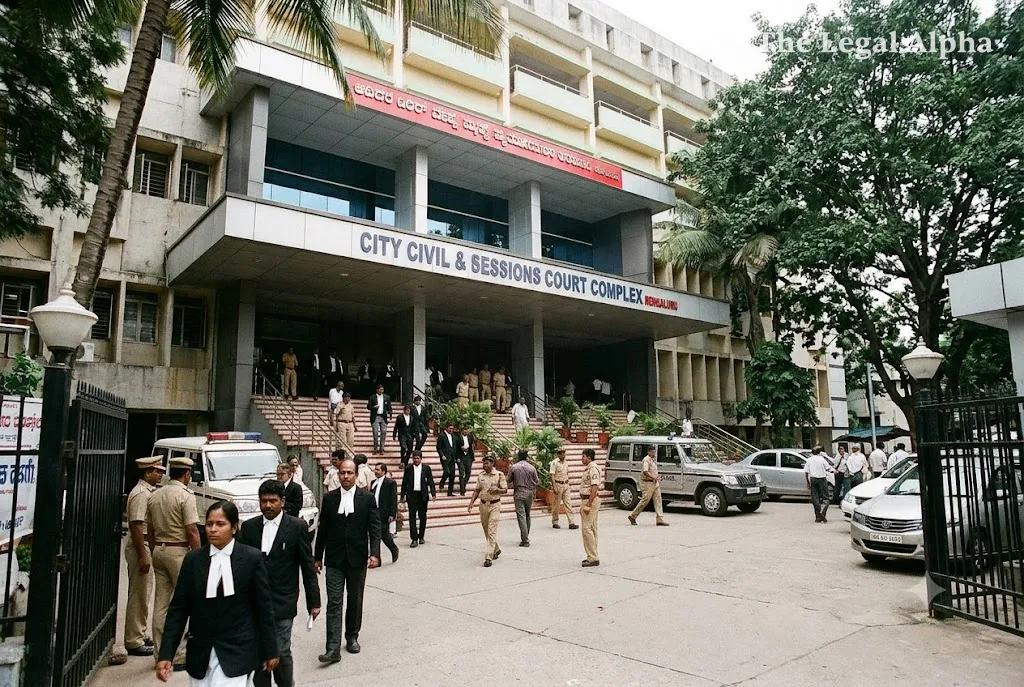
Supreme Court Invalidates Karnataka Legislation Resurrecting Tainted 2011 Civil Service Recruitment

The Supreme Court of India declared unconstitutional a 2022 Karnataka statute enacted to validate the appointments of 362 Group A and Group B gazetted probationers selected via the 2011 Karnataka Public Service Commission (KPSC) examination.
The recruitment drive had been marred by widespread findings of corruption, nepotism, and mark tampering uncovered during a Criminal Investigation Department (CID) probe, prompting the state executive to originally scrap the selection process. However, in 2022, the Karnataka legislature intervened by passing a retrospective validation Act to protect the appointments despite earlier court orders endorsing the cancellation. Setting aside the legislative measure, the top court ruled that lawmaking bodies cannot enact statutes simply to bypass judicial findings or resurrect selection lists tainted by systemic fraud.
Legal Topic
-
Area of Law: Constitutional Law & Administrative Law
-
Sub-topic: Separation of Powers / Public Employment & Legislative Competence
Core Legal Issue
The fundamental legal question before the Supreme Court was whether a state legislature can enact a validation law to override conclusive findings of systemic corruption in a public recruitment process and nullify previous judicial verdicts upholding the cancellation of that selection drive.
At its core, the issue centers on the limits of legislative power: while a legislature has the authority to cure defects in an existing statute retrospectively, it cannot exercise judicial power to directly overturn judicial determinations or grant legal immunity to a selection process fundamentally corrupted by fraud.
What Did the Court Decide?
The Supreme Court struck down the Karnataka Civil Services (Validation of Selection and Appointment of 2011 Batch Gazetted Probationers) Act, 2022 in its entirety.
The bench held that a recruitment process systematically compromised by malpractices cannot be cured through an act of the legislature. By validating a selection that had already been quashed on grounds of fraud and upheld through prior litigation, the legislature overstepped its constitutional boundaries and violated the separation of powers doctrine. Consequently, the validation conferred upon the 362 candidates stands annulled.
Key Legal Points
-
Limits of Validation Statutes: A legislature may remove the underlying basis of a judicial decision by altering applicable legal grounds, but it cannot directly sit in appeal or invalidate a final court finding declaring a process illegal due to fraud.
-
Fraud Vitiates All Administrative Acts: Broad-scale manipulation, arbitrary interview scoring, and bribery dismantle the constitutional guarantee of fairness in public employment under Articles 14 and 16, rendering the entire selection unsustainable.
-
Separation of Powers: The enactment of retrospective legislation aimed solely at protecting beneficiaries of a vitiated competitive test constitutes an impermissible encroachment on judicial functions.
-
Sanctity of Merit in Public Service: The court reiterated that public posts cannot be distributed via compromised recruitment channels, irrespective of the passage of time or subsequent legislative interventions.
Relevant Law
-
Articles 14 and 16 of the Constitution of India: Guarantee of equality before the law and equal opportunity in public employment.
-
Articles 245 and 246 of the Constitution of India: Extent and distribution of legislative powers between Parliament and State Legislatures.
-
Karnataka Civil Services (Validation of Selection and Appointment of 2011 Batch Gazetted Probationers) Act, 2022: The state enactment struck down by the court.
-
Judicial Precedents on Validating Acts: Settled jurisprudence establishing that validating laws must address the legal basis of a judgment rather than attempt a legislative overruling of judicial findings.
Arguments of the Parties
Petitioners (Challengers to the Validation Act) The petitioners submitted that the 2011 KPSC selection was fundamentally rotten, citing the CID's detailed findings of manipulated answer scripts and corrupt interview panels. They contended that the state legislature acted ultra vires by enacting the 2022 Act to shield beneficiaries of established malpractice, thereby bypassing earlier binding court decisions and violating the basic structure of the Constitution regarding the separation of powers.
Respondents (State of Karnataka & Appointed Candidates) The State and selected candidates argued that the legislature possessed the constitutional competence to pass retrospective legislation to regularize appointments in the interest of administrative stability and candidate welfare. They maintained that many candidates were innocent of wrongdoing and that the statute was intended to settle a decade-long dispute and prevent institutional disruption.
Why Does It Matter?
This ruling enforces strict constitutional boundaries against political or legislative circumvention of anti-corruption findings in public service recruitment. It sends a clear warning to state governments that validation acts cannot be deployed as political tools to protect compromised appointment drives once investigative agencies and courts have established institutional malpractice. For millions of civil service aspirants, the judgment reinforces that merit and integrity in public examinations cannot be sidestepped through retrospective legislation.
Legal Takeaway
Legislatures cannot use validation laws to breathe life into public recruitment exercises vitiated by proven fraud and judicial cancellation. While a legislature can cure technical statutory defects, it cannot override judicial decrees or institutionalize illegality under the guise of legislative competence.
Sources
Primary Source:
-
Supreme Court Judgment / Final Order striking down the Karnataka Civil Services (Validation of Selection and Appointment of 2011 Batch Gazetted Probationers) Act, 2022 (Srinivasa T & Ors. v. State of Karnataka & Ors.).
Additional Sources:
-
High Court of Karnataka Record of Proceedings in the 2011 KPSC recruitment disputes.
-
Investigation reports of the Criminal Investigation Department (CID), Karnataka.