Hostile Turn by Key Witness at Pattanagere Shed Tests Prosecution in Renukaswamy Murder Trial
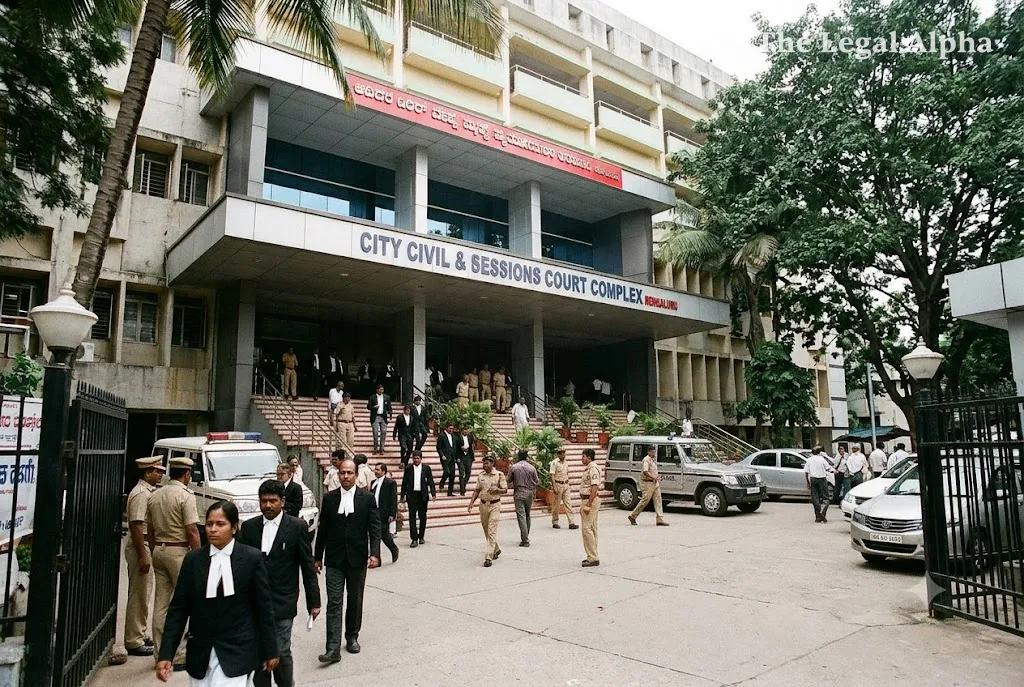
During ongoing trial proceedings before the 59th Additional City Civil and Sessions Court in Bengaluru, Puneeth M.J., an employee at the Pattanagere shed where 33-year-old Renukaswamy was allegedly assaulted and killed, resiled from his earlier statements. Testifying in court, the witness claimed that he was unaware of any assault, failed to identify the accused persons, and stated he learned about the death only after seeing news broadcasts days later.
Because his deposition directly contradicted his previous account provided during the police investigation, the prosecution declared him hostile and subjected him to cross-examination. Kannada film actor Darshan Thoogudeepa, co-accused Pavithra Gowda, and other co-accused attended the hearing via video conferencing from prison.
Legal Topic
Area of Law: Criminal Law / Law of Evidence
Sub-topic: Hostile Witnesses and Evidentiary Weight of Retracted Statements
Core Legal Issue
The central legal question before the court is whether the prosecution can sustain charges of murder and conspiracy against the accused when an alleged eyewitness departs from his earlier investigative statements.
Under Indian evidence law, the court must assess the extent to which a hostile witness's deposition can still be credited, and whether remaining circumstantial, forensic, and corroborative evidence is legally sufficient to establish guilt beyond reasonable doubt.
What Did the Court / Authority Decide?
The trial court permitted the Special Public Prosecutor to treat Puneeth as a hostile witness and cross-examine him regarding his prior statements. The court did not discard the deposition in its entirety at this stage, as evidentiary evaluation is reserved for the final judgment. The court recorded the witness's testimony and the prosecution's cross-examination before adjourning proceedings for further examination of remaining witnesses.
Key Legal Points
-
Testimony Not Automatically Discarded: Under Indian criminal jurisprudence, turning hostile does not render a witness's entire statement inadmissible; courts may rely on portions corroborated by other independent evidence.
-
Prosecution Cross-Examination: The prosecution is entitled to confront its own witness with prior statements under statutory evidence provisions when the witness deviates from the initial narrative.
-
Burden of Proof Remains on the State: A witness turning hostile places heavier reliance on technical, forensic, and circumstantial links—such as CDR analysis, forensic medical findings, and location data.
-
Limited Value of Police Statements: Statements recorded under Section 161 of the Code of Criminal Procedure (or Section 180 of the Bharatiya Nagarik Suraksha Sanhita) are not substantive evidence and serve only to contradict or impeach the witness during trial.
Relevant Law
-
Section 154, Indian Evidence Act, 1872 / Section 145, Bharatiya Sakshya Adhiniyam, 2023: Discretion of the court to allow a party to cross-examine its own witness.
-
Section 145, Indian Evidence Act, 1872 / Section 148, Bharatiya Sakshya Adhiniyam, 2023: Cross-examination of a witness as to previous statements in writing to establish contradiction.
-
Section 302 / Section 120B, Indian Penal Code, 1860: Substantive offences concerning murder and criminal conspiracy.
-
Sat Paul v. Delhi Administration (1976) and Neeraj Dutta v. State (2023): Settled Supreme Court precedents affirming that the testimony of a hostile witness does not wash away entirely and acceptable portions can be used by either the prosecution or the defence.
Arguments of the Parties
Prosecution
The State, represented by the Special Public Prosecutor, contended that the witness deliberately reneged on factual assertions previously provided to investigating authorities. The prosecution argued that the retraction was an attempt to shield influential accused persons, seeking permission to cross-examine the witness to expose contradictions and preserve the narrative established by the chargesheet.
Defence
Counsel representing Darshan and co-accused maintained that the witness spoke the truth in court under oath, demonstrating that earlier investigative records were either concocted or extracted under police coercion. The defence argued that without direct eyewitness identification placing the accused at the scene of the alleged torture, the State's narrative fails to connect them directly to the crime.
Why Does It Matter?
Hostile witnesses remain one of the most persistent hurdles in high-profile criminal trials involving influential personalities in India. When eyewitnesses retract crucial details regarding the scene of crime and identification of perpetrators, judicial outcomes shift almost entirely onto scientific and forensic documentation.
This development highlights the ongoing reliance on digital footprints, CCTV records, call logs, and forensic pathology to secure convictions when ocular testimony collapses under pressure or extraneous influences.
Legal Takeaway
A witness turning hostile does not result in an automatic collapse of the prosecution's case. While it weakens ocular testimony, the court is legally empowered to accept credible parts of the statement and weigh them alongside independent forensic and circumstantial evidence.
Sources
-
Primary Source: Proceedings before the 59th Additional City Civil and Sessions Court, Bengaluru (Case arising from Crime No. 408/2024, Kamakshipalya P.S., concerning the murder of Renukaswamy).
-
Additional Sources: Sessions Court trial updates; Police Report and Chargesheet filings, Bengaluru City Police.