Supreme Court Halts October 30 Cut-off for Delhi Electoral Roll Revision, Flags Exclusions of Over 4.3 Million Voters
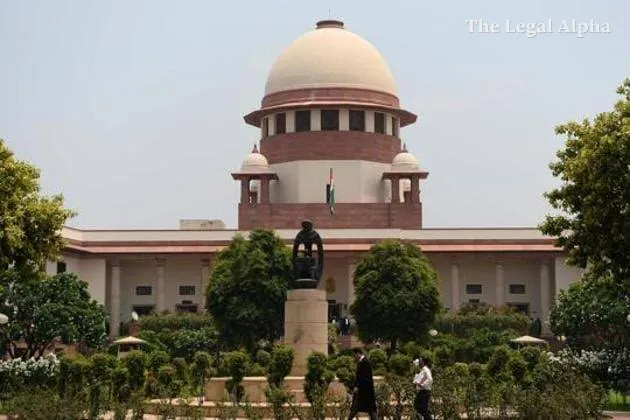
The Supreme Court stepped in to prevent the immediate disenfranchisement of approximately 4.3 million (43 lakh) voters who were removed from Delhi's draft electoral rolls. The exclusions occurred during the Election Commission of India’s (ECI) Special Intensive Revision (SIR) exercise, largely under the classification of voters having "permanently shifted out" of their registered constituencies.
Hearing a challenge against the process, a three-judge bench questioned the poll body’s procedural handling—specifically demanding to know why citizens already registered as voters were being directed to submit Form 6 (meant for first-time electors) rather than corrective forms. The bench directed the ECI to keep the registration window open beyond the proposed October 30 cut-off, ensuring that claims, objections, and enumeration forms continue to be received.
Legal Topic
-
Area of Law: Constitutional & Election Law
-
Sub-topic: Electoral Rolls / Voter Registration & De-duplication Procedures
Core Legal Issue
The primary legal issue is whether the Election Commission can mandate existing registered electors—whose names were struck off during an intensive revision—to apply as first-time electors under Form 6, rather than facilitating restoration or inter-constituency transfers under statutory mechanisms like Form 8.
A secondary legal question centers on administrative fairness: whether setting a rigid deadline for claims and objections meets the constitutional threshold of due process when over four million citizens face summary removal from voter lists in a non-election period.
What Did the Court / Authority Decide?
The Supreme Court did not quash the revision exercise entirely, but issued crucial interim instructions and listed the matter for further examination after two weeks:
-
Extension of Deadlines: The Court instructed the ECI not to treat October 30 as a final cut-off date for updating voter lists in Delhi, directing the poll body to continue distributing and accepting forms.
-
Form Flexibility: The bench suggested that voters excluded from the draft lists should not be restricted strictly to Form 6; the ECI should allow them to submit Form 8 or standard enumeration forms through Booth Level Officers (BLOs).
-
Reasoned Transparency: The Court recommended publishing the names of all deleted electors along with the specific ground of deletion against each entry.
-
Response Sought: The ECI was asked to submit a formal response within two weeks detailing its verification framework and addressing the court's procedural queries.
Key Legal Points
-
Preservation of the Franchise: The Court emphasized that the primary objective of revision drives must be the inclusion of genuine voters and the reduction of the 4.3 million figure, not administrative convenience.
-
Distinction Between Form 6 and Form 8: Form 6 is designed for fresh voter registration, whereas Form 8 covers shifting, corrections, and updating of existing particulars; using Form 6 for previously enrolled electors disrupts statutory classification and verification standards.
-
Absence of Electoral Urgency: Because general or state elections are not imminent in the National Capital Territory, arbitrary procedural deadlines must not override substantive voting rights.
-
Rebuttal of Summary Deletions: Massive purges under subjective metrics like "logical discrepancies" or "permanently shifted" status require clear publication of reasons so affected individuals have an opportunity to respond.
Relevant Law
-
Constitution of India: Article 324 (superintendence, direction, and control of elections vested in the Election Commission) and Article 326 (elections based on adult suffrage).
-
Representation of the People Act, 1950: Sections 21 and 22 (preparation, revision, and correction of entries in electoral rolls).
-
Registration of Electors Rules, 1960: Rule 13 (application for inclusion of names), Rule 26 (correction of entries and transposition of names), Form 6 (application for new electors), Form 7 (objection to inclusion/deletion), and Form 8 (shifting, correction, and replacement of EPIC).
Arguments of the Parties
The Petitioners The petitioners contended that the deletion of 4.3 million electors without adequate notice or procedural safeguards threatens the voting rights of a vast cross-section of Delhi residents. They argued that asking established voters to re-register under Form 6 treats them as non-citizens or first-time electors, introducing bureaucratic friction and stripping them of electoral continuity.
The Election Commission of India Appearing for the ECI, counsel submitted that the revision was conducted systematically to remove bogus entries, duplicate registrations, and individuals who have permanently moved away. Counsel argued that the Commission established over one lakh awareness camps across Delhi to assist residents in verifying their details and that the allegations in court exaggerated the real-world impact. The Commission maintained that statutory remedies remain accessible to any genuine elector whose name was omitted.
Why Does It Matter?
This intervention has significant implications for how electoral data integrity is managed in India. Mass digital revision algorithms and verification campaigns can inadvertently disenfranchise genuine, mobile, or transient populations in major metropolitan cities if administrative timelines are rigid. By questioning the procedural barrier of using Form 6 instead of Form 8, the Supreme Court has signaled that the burden of bureaucratic correction cannot simply be shifted entirely onto the voter without transparent, published grounds for removal.
Legal Takeaway
Electoral rolls cannot be purged through summary administrative deadlines when no immediate election timeline compels hasty closure. The Election Commission is bound to provide transparent grounds for exclusion and maintain accessible channels—such as Form 8—so legitimate citizens are not forced through the hurdle of registering afresh.
Sources
Primary Source:
-
Supreme Court of India: Proceedings and Interim Directives in the Delhi Electoral Roll Deletion / Special Intensive Revision (SIR) Challenge.
Additional Sources:
-
The Representation of the People Act, 1950 and Registration of Electors Rules, 1960.
-
Official filings and submissions on behalf of the Election Commission of India.