Ministry of Corporate Affairs Has Hijacked NCLT Administration, Supreme Court Observes

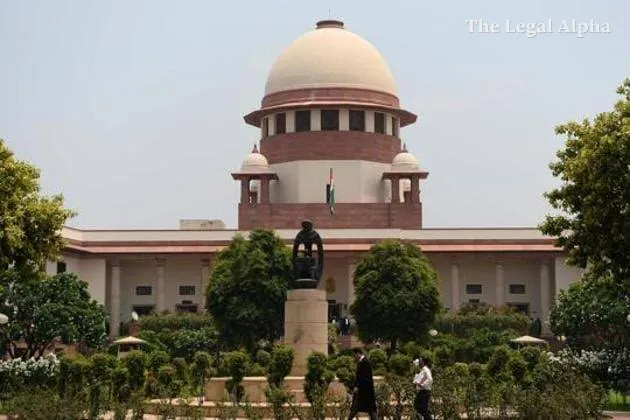
The Supreme Court of India expressed sharp disapproval over the Union Ministry of Corporate Affairs' (MCA) direct administrative oversight and hiring practices within the National Company Law Tribunal (NCLT). During hearings on chronic vacancies, crumbling infrastructure, and staffing shortages, a three-judge bench led by Chief Justice of India Surya Kant orally remarked that the administration of the tribunal has been "completely hijacked" by the MCA, directly undermining the institution's judicial independence and operational autonomy.
The Bench voiced serious alarm after learning that out of 320 sanctioned administrative posts across NCLT benches, only 67 are regularly staffed, leaving 253 positions vacant or filled via informal ad-hoc arrangements. Coupled with reports of collapsing physical facilities at the Principal Bench in New Delhi, the apex court insisted that administrative and recruitment authority must vest directly in the Tribunal’s President rather than the executive ministry.
Legal Topic
-
Area of Law: Corporate & Insolvency Law / Constitutional Law
-
Sub-topic: Tribunal Autonomy, Institutional Administration, and Judicial Infrastructure
Core Legal Issue
The fundamental legal question before the court is whether executive ministry oversight over administrative staffing, recruitment procedures, and day-to-day facilities compromises the constitutional separation of powers and the institutional autonomy required for an independent adjudicatory body.
Specifically, the court examined whether the Ministry of Corporate Affairs can dictate staffing and resort to contractual hiring in an adjudicatory forum, or whether administrative appointment powers must strictly reside with the head of the tribunal—the NCLT President.
What Did the Court Decide?
-
The Bench made oral observations calling the MCA’s pervasive administrative grip "unfortunate" and held that statutory recruitment powers should rest with the NCLT President.
-
It declined to grant blanket protection or regularisation to contractual employees who bypassed competitive recruitment, refusing to "tie down" the NCLT President's discretion.
-
The court suggested an interim mechanism where experienced government officials could be inducted via deputation while systematic, phased regular recruitment is undertaken.
-
To resolve long-standing logistical shortfalls, the Supreme Court called for direct proposals from the Presidents of the NCLT and the National Company Law Appellate Tribunal (NCLAT) regarding land, permanent buildings, and staff requirements.
-
The broader suo motu proceeding remains pending for concrete administrative and infrastructure roadmaps.
Key Legal Points
-
Institutional Separation from Executive Control: Tribunals exercising judicial power require functional and administrative independence from administrative parent departments to maintain public confidence and impartially decide disputes involving the State.
-
Integrity of Tribunal Secretariats: Replacing formal cadre recruitment with outsourced contractual workers creates operational instability and security risks, with the court noting incidents where judicial files went missing and led to criminal complaints.
-
Presidential Primacy in Internal Appointments: Staff appointments and administrative staffing must originate under the authority of the NCLT President rather than being run through ministry-controlled tenders.
-
Infrastructure Deficits Impairing IBC Mandates: Physical and human resource starvation directly frustrates the statutory requirement for time-bound corporate insolvency resolution under the Insolvency and Bankruptcy Code (IBC).
Relevant Law
-
Section 418(1) of the Companies Act, 2013: Pertains to the central government providing staff and officers to the NCLT in consultation with the President of the Tribunal.
-
The Insolvency and Bankruptcy Code, 2016 (IBC): Sets strict timelines for the resolution of stressed assets, which depend entirely on functioning NCLT benches.
-
Article 50 of the Constitution of India: Separation of the judiciary from the executive.
-
Binding Supreme Court Precedents: Madras Bar Association v. Union of India series, establishing that tribunals must enjoy financial, administrative, and institutional independence distinct from their sponsoring nodal ministries.
Arguments of the Parties
NCLT Bar Association
Senior Advocate Sanjiv Sen, appearing for the bar, highlighted the decrepit conditions of the Principal Bench in Delhi, stating that courtrooms operate under collapsing roofs, two entire floors have had to be shut down, and tribunals operate at half strength amidst acute member and staff vacancies. The Bar argued that administrative stagnation and ministerial apathy are crippling dispute resolution.
Contractual Staff
Senior Advocate Meenakshi Arora, representing contractual employees facing displacement, pressed for protective directions, contending that contractual staff have kept the registry and benches operational for years in the complete absence of regular recruitment by the MCA.
Union Government / MCA
Attorney General R. Venkataramani noted ongoing efforts to streamline tribunal logistics and indicated that member selection exercises had factored in anticipated vacancies, maintaining that phased institutional upgrades and appointments are being actively pursued.
Why Does It Matter?
The NCLT adjudicates thousands of crores in corporate debt, insolvency resolutions, and complex mergers. When benches operate at partial capacity due to structural neglect or unverified contractual staff, resolution timelines stretch far past statutory limits, eroding enterprise value and damaging the credit ecosystem. By asserting that the NCLT President must hold primary appointment authority, the Supreme Court reaffirmed the long-standing constitutional rule that judicial tribunals cannot be treated as administrative subordinate directorates of an executive ministry.
Legal Takeaway
Administrative and secretarial staff recruitment for judicial tribunals cannot be outsourced or monopolised by executive ministries without impinging on judicial autonomy. The administration, infrastructure proposals, and day-to-day governance must flow through the President of the Tribunal to preserve the integrity of tribunal adjudications.
Sources
Primary Source:
-
In Re: Appointment of Judicial and Technical Members and Inadequate Infrastructure in National Company Law Tribunal (NCLT) and Ancillary Issues, Suo Motu Writ Petition (Civil) No. 16/2026, Supreme Court of India (Bench comprising CJI Surya Kant, Justice Joymalya Bagchi, and Justice V. Mohana; proceedings dated October 29, 2026).
Additional Sources:
-
Section 418, Companies Act, 2013.
-
Madras Bar Association v. Union of India [(2021) 7 SCC 369].