Supreme Court Declines to Reopen Takiya Masjid Demolition Case, Dismisses Review Petition
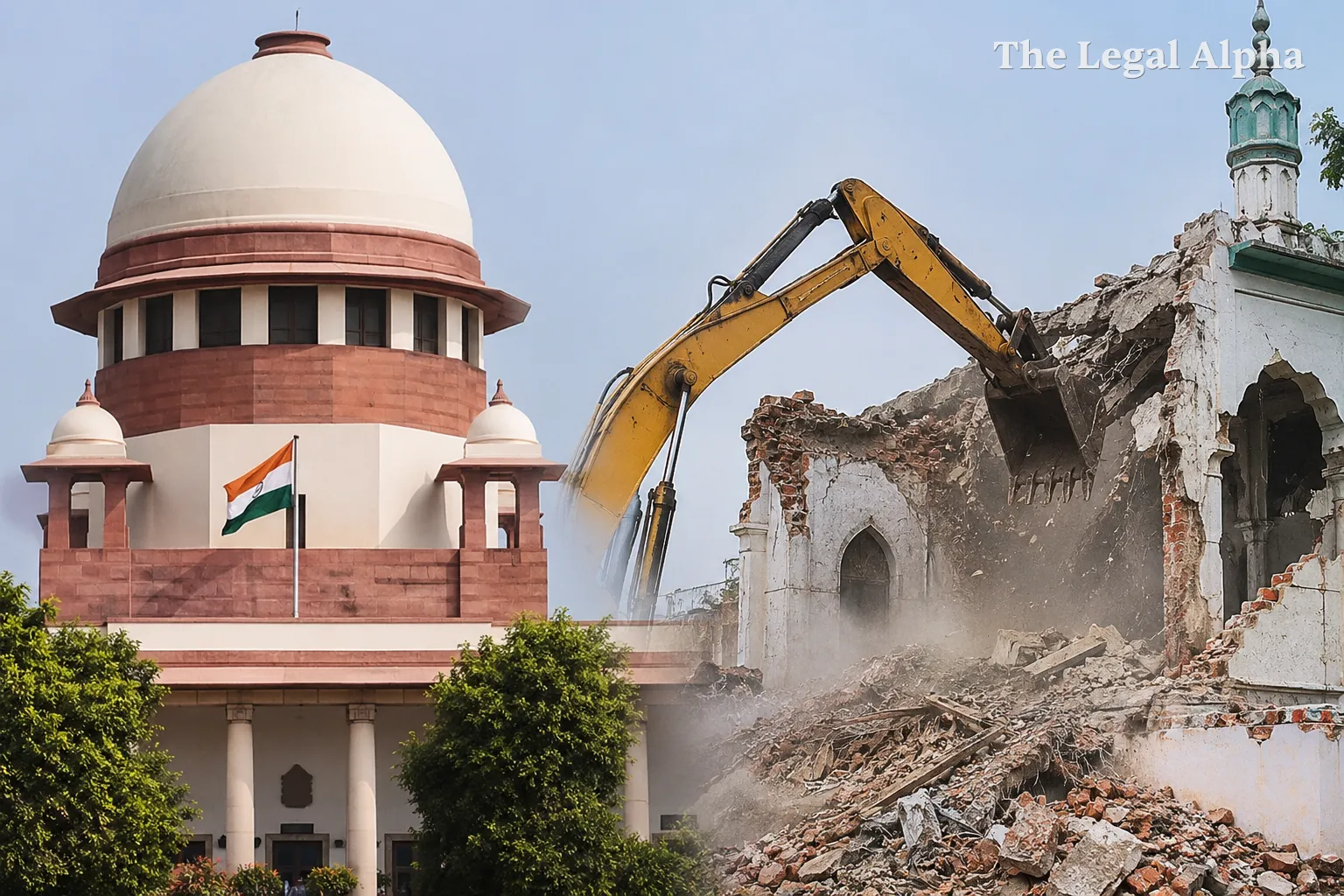
The Supreme Court of India has refused to reconsider its earlier decision concerning the demolition of Takiya Masjid in Ujjain, Madhya Pradesh, dismissing a review petition filed by residents who had challenged the demolition.
A Bench comprising Justice Vikram Nath and Justice Sandeep Mehta held that the earlier order did not suffer from any apparent error requiring reconsideration. The Court also rejected the petitioners' request for an open-court hearing of the review petition.
What Happened?
The review petition arose from the demolition of the approximately 200-year-old Takiya Masjid in Ujjain in January 2025. The mosque's demolition followed the acquisition of the land by the Madhya Pradesh Government for the expansion of parking facilities adjoining the Mahakal Temple complex.
Thirteen residents who regularly offered namaz at the mosque had challenged the State's action, alleging that the demolition was unlawful and that the acquisition proceedings suffered from procedural irregularities.
After the Madhya Pradesh High Court rejected their challenge, the petitioners approached the Supreme Court. However, their original challenge was dismissed on November 7, 2025. They subsequently sought a review of that decision, which has now also been rejected.
Area of Law and Sub-topic
Area of Law: Constitutional Law and Land Acquisition Law
Sub-topic: Judicial Review, Review Jurisdiction and Acquisition of Religious Property
Core Legal Issue
The central legal issue was whether the Supreme Court's earlier decision dismissing the challenge to the demolition of Takiya Masjid contained an error apparent on the face of the record that justified exercising its review jurisdiction.
The matter also involved allegations concerning the acquisition of Waqf property, the legality of the demolition and the rights of worshippers affected by the removal of the religious structure.
What Did the Supreme Court Decide?
The Supreme Court examined the review petition and the grounds advanced in support of reconsideration. It concluded that the earlier order dated November 7, 2025, did not contain any apparent error warranting review.
In its order dated November 17, 2026, the Bench observed that it was not persuaded to reopen the matter. The Court also declined the request for an open-court hearing.
Consequently, the review petition was dismissed, leaving the Supreme Court's earlier decision undisturbed.
Key Legal Points
-
Limited scope of review: A review petition is not an opportunity to reargue an entire case merely because a party disagrees with the earlier decision.
-
No apparent error found: The Supreme Court found no error in its November 7, 2025 order that justified reconsideration.
-
Waqf property dispute: The petitioners maintained that the mosque had been notified as Waqf property in 1985.
-
Compensation dispute: The petitioners alleged that compensation had been paid to unauthorised occupants rather than the rightful beneficiaries.
-
Earlier proceedings: The original challenge had already been rejected by the Madhya Pradesh High Court and subsequently by the Supreme Court.
Relevant Legal Provisions
Constitution of India
- Article 137: Empowers the Supreme Court to review its judgments and orders, subject to applicable laws and rules.
Places of Worship (Special Provisions) Act, 1991
- The petitioners invoked the Act in challenging the demolition, alleging violations concerning the protection of religious places.
Waqf Act, 1995
- The petitioners relied on the Waqf legislation to support their claim concerning the mosque's status as Waqf property.
Right to Fair Compensation and Transparency in Land Acquisition, Rehabilitation and Resettlement Act, 2013
- Relevant to the acquisition proceedings and the petitioners' objections concerning compensation and procedural compliance.
These statutes formed part of the petitioners' allegations. The dismissal of the review petition should not be treated as a separate adjudication of every statutory allegation.
Arguments of the Parties
Petitioners
The thirteen residents maintained that Takiya Masjid was a historic religious structure that had been used for worship for approximately 200 years. They alleged that the State demolished it to facilitate the expansion of parking facilities for the adjoining Mahakal Temple complex.
They also questioned the acquisition proceedings and claimed that compensation had been distributed to unauthorised occupants.
State of Madhya Pradesh
In the earlier proceedings, the State maintained that the land had been acquired through the prescribed legal process and that compensation had been paid. The acquisition proceedings had also been upheld by the Madhya Pradesh High Court.
The Supreme Court's review order did not reopen these competing submissions.
Why Does It Matter?
The decision highlights the limited nature of the Supreme Court's review jurisdiction. Once the Court has examined a challenge and delivered its decision, a party seeking reconsideration must establish a legally recognised ground for review rather than simply repeat its earlier arguments.
The case also illustrates the distinction between challenging the legality of land acquisition and pursuing a separate remedy concerning compensation. The petitioners' allegations regarding compensation and Waqf property should be considered separately from the question decided in the review proceedings.
For litigants challenging government acquisition, the case underscores the importance of raising legal objections through appropriate proceedings and within the applicable procedural framework.
Legal Takeaway
The Supreme Court has declined to reopen its earlier decision concerning the demolition of Takiya Masjid, finding no apparent error justifying review. The dismissal brings the review proceedings to an end, without converting every allegation raised by the petitioners into a separately adjudicated legal finding.
Sources
Primary Source:
- Supreme Court order dated November 17, 2026, in Mohammed Taiyab v. State of Madhya Pradesh & Ors. (as reported and linked in the case coverage).
Additional Sources: