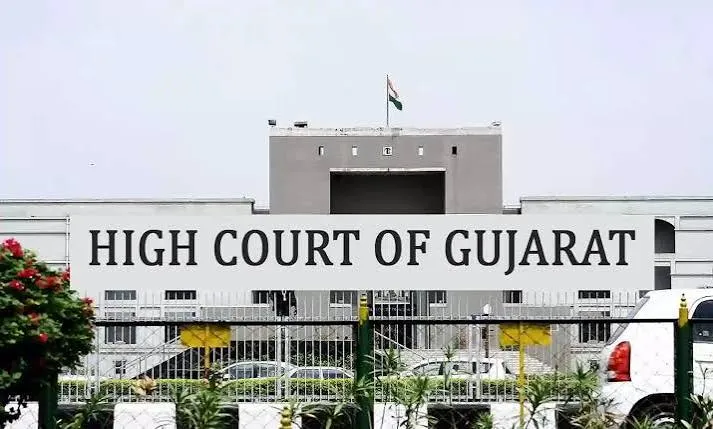
Supreme Court Collegium Proposes Gujarat High Court Chief Justice Sunita Agarwal for Apex Court Bench
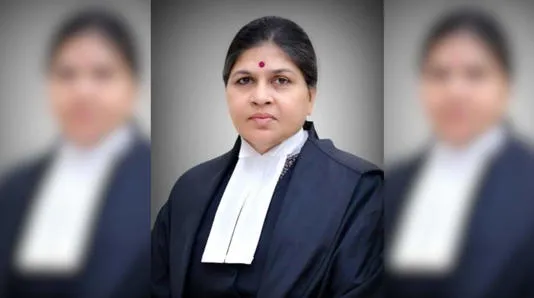
The Supreme Court Collegium, headed by Chief Justice of India Surya Kant, has recommended the elevation of Gujarat High Court Chief Justice Sunita Agarwal as a judge of the Supreme Court of India. The resolution, cleared alongside recommendations for two other High Court Chief Justices—Justice Devendra Kumar Upadhyaya of the Delhi High Court and Justice Aparesh Kumar Singh of the Telangana High Court—now awaits formal clearance and presidential notification from the Union Ministry of Law and Justice.
Justice Agarwal has presided over the Gujarat High Court since July 2023 after serving for more than a decade at her parent bench, the Allahabad High Court. Her prospective appointment marks a key moment for judicial diversity, positioning her to become the third serving woman judge on the Supreme Court bench.
Legal Topic
-
Area of Law: Constitutional Law
-
Sub-topic: Higher Judicial Appointments and Collegium Administration
Core Legal Issue
The constitutional process turns on the exercise of the Collegium’s primacy under Article 124(2) of the Constitution of India in recommending suitable candidates for the highest judicial forum.
The primary administrative-legal question is how the Collegium harmonises all-India seniority, merit, institutional integrity, High Court representation, and demographic inclusivity—particularly gender diversity—when proposing High Court Chief Justices for apex court elevation.
What Did the Court / Authority Decide?
The five-member Collegium unanimously resolved to recommend Justice Sunita Agarwal for appointment to the Supreme Court bench.
The decision is currently an administrative recommendation transmitted to the Union Executive. Under the established Memorandum of Procedure, the Union Government must now process the proposal and advise the President of India to issue the formal warrant of appointment.
Once formally notified, Justice Agarwal will serve on the Supreme Court until April 2031, when she reaches the constitutional retirement age of 65. The Collegium’s resolution completes the judicial consultative stage, leaving the formal presidential warrant pending.
Key Legal Points
-
Consultative Primacy: The Collegium acted under its constitutional prerogative to curate elevations to the apex court, selecting sitting High Court Chief Justices to fill judicial vacancies.
-
Seniority and Parent Bench Equities: Having joined the bench in November 2011, Justice Agarwal brings substantial judicial seniority alongside fellow recommendee Justice D.K. Upadhyaya, maintaining Allahabad High Court's institutional standing.
-
Augmenting Gender Representation: Justice Agarwal’s prospective appointment marks the second recommendation of a woman judge by the Collegium in 2026, bringing the apex court's female representation to three sitting judges.
-
Administrative Distinction: The Collegium resolution constitutes an executive-judicial proposal rather than an operative decree; constitutional effect occurs only upon executive notification and the presidential warrant.
Relevant Law
-
Constitution of India: Article 124(2) (appointment mechanism for Supreme Court judges) and Article 124(3) (prescribed qualifications for apex court judges).
-
Judicial Precedents: Supreme Court Advocates-on-Record Association v. Union of India (1993) (Second Judges Case) and Special Reference No. 1 of 1998 (Third Judges Case), establishing Collegium consultation and institutional primacy.
-
Administrative Framework: Memorandum of Procedure (MoP) governing the appointment of Supreme Court Judges.
Arguments of the Parties
Because judicial elevations are conducted through in-camera institutional deliberations rather than adversarial court proceedings, there are no litigation parties or competing pleadings.
-
The Collegium's Institutional Position: The Collegium assesses candidates by balancing combined inter-se seniority of High Court judges, professional conduct, legal acumen, regional representation of parent High Courts, and diversity on the constitutional bench.
-
The Executive's Role: The Union Government reviews the recommendations against background verifications and security inputs before tendering advice to the President. By constitutional convention affirmed in the Second and Third Judges cases, reiterated recommendations are binding on the Union Executive.
Why Does It Matter?
This development addresses critical institutional priorities within India’s higher judiciary. First, it strengthens female representation on a Supreme Court bench that has historically seen only a small fraction of women judges since its inception. Alongside Justice B.V. Nagarathna and Justice V. Mohana, Justice Agarwal’s presence provides institutional continuity for gender diversity in constitutional adjudication.
Second, the elevation continues a robust administrative tradition for the Gujarat High Court, which has frequently seen its Chief Justices elevated to the apex court bench.
Third, filling these seats helps the Supreme Court maintain sufficient judge strength to manage a growing docket of constitutional references, civil appeals, and special leave petitions, directly addressing systemic delays across the appellate hierarchy.
Legal Takeaway
The Collegium’s recommendation of Justice Sunita Agarwal reinforces the constitutional doctrine that judicial elevations must balance merit, all-India seniority, and diverse bench representation. Her elevation represents a vital step toward augmenting apex court capacity and gender inclusivity, subject to final executive notification under Article 124(2).
Sources
-
Primary Source: Supreme Court Collegium Resolution and Statement on Higher Judicial Appointments (dated 28 September 2026).
-
Additional Sources: Gujarat High Court Official Judicial Profile (Justice Sunita Agarwal); Supreme Court Observer Judicial Appointment Tracker.