State Cannot Appoint Pontiffs: Madras High Court Mandates Six-Month Timeline for Srirangam Mutt Succession
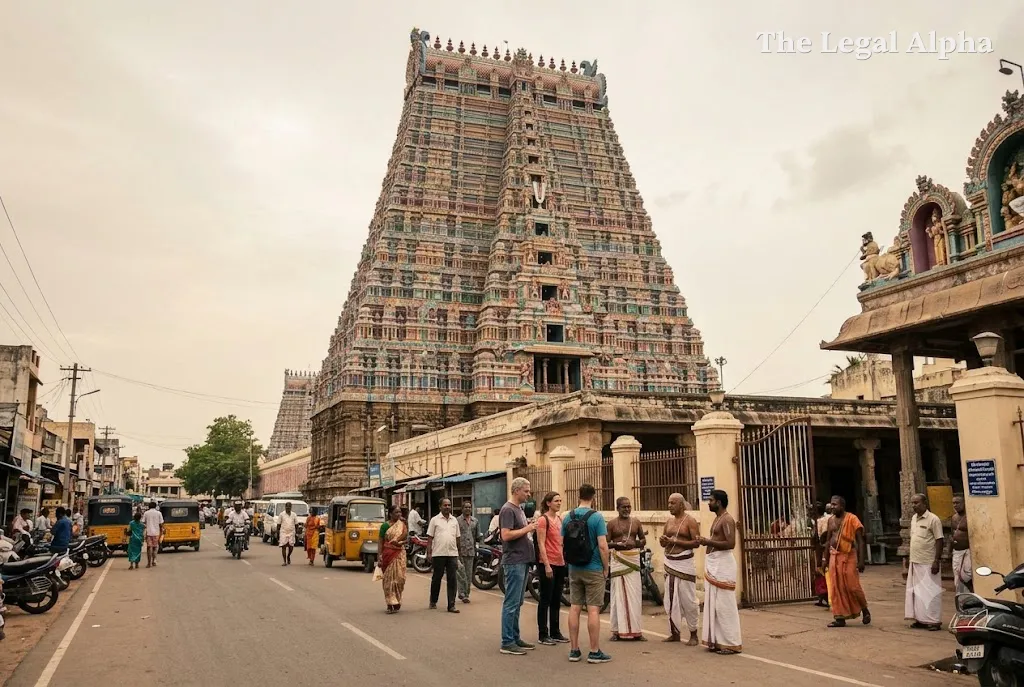
The Madurai Bench of the Madras High Court directed the hereditary functionaries of Sri Ranganathaswamy Temple in Srirangam to select a successor for the vacant Sri Ranganarayana Jeeyar Mutt within six months. The religious headship has remained unfilled since the demise of the 50th Jeeyar in 2018, as he passed away without nominating a designated successor.
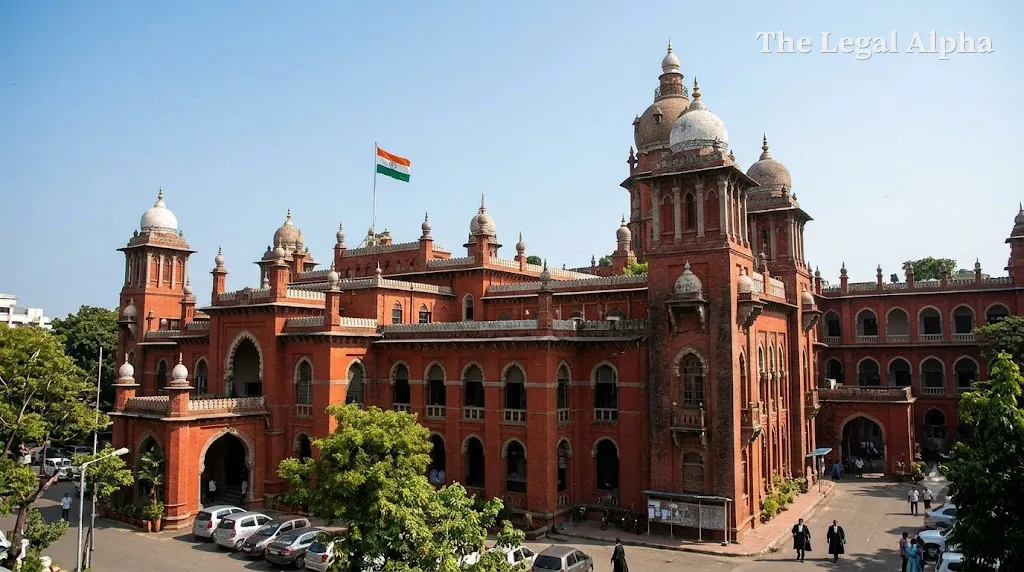
Hearing a writ petition brought by devotee S. Veeraraghavan highlighting how the absence of a pontiff disrupted crucial spiritual and ceremonial duties at the shrine, a division bench of Justice G.R. Swaminathan and Justice P. Murugan held that filling a monastic seat is a strictly religious matter. The bench expressly prohibited Tamil Nadu’s Hindu Religious and Charitable Endowments (HR&CE) Department from appointing or selecting the spiritual head, instructing the administration to confine its role solely to formal administrative acknowledgment of the candidate chosen by tradition.
Legal Topic
Area of Law: Religious & Charitable Endowments Law / Constitutional Law
Sub-topic: Autonomy of Monastic Institutions / Temple Customs and Freedom of Religion
Core Legal Issue
The primary question before the High Court was whether the selection of a monastic head (Jeeyar/Pontiff) constitutes an administrative appointment under the statutory oversight of the HR&CE Department, or a purely spiritual function governed exclusively by institutional custom and tradition.
Connected to this was the issue of whether indefinite inaction by hereditary electors—leaving a spiritual seat vacant for years—violates the freedom of religion guaranteed to disciples and devotees under Article 25 of the Constitution.
What Did the Court Decide?
The High Court established that appointing a religious head can never be categorized as a secular or bureaucratic act. The bench rejected any statutory presumption treating the mutt head as an employee or appointee under Section 55(1) of the Tamil Nadu HR&CE Act, 1959.
Key directions issued by the Court:
-
Strict Timeline: The traditional electors (the Sthalattars and Bhattars) must initiate and conclude the selection of the next pontiff within six months.
-
Administrative Nudge Only: The Joint Commissioner of the HR&CE Department in Tiruchirappalli was ordered to convene a meeting of the Sthalattars to jumpstart the process, but the department was explicitly barred from vetting, selecting, or directly installing the candidate.
-
Judicial Warning: The bench cautioned that if the traditional authorities fail to elect a successor within the stipulated timeframe, the Court will not hesitate to intervene and enlist renowned Vaishnavite scholars to ensure succession is completed.
Key Legal Points
-
Non-Secular Nature of Pontifical Succession: The selection of a monastic leader is an integral religious practice and cannot be exercised by statutory state officers as an administrative exercise.
-
Rejection of Employee Status: A mutt head or spiritual pontiff is not a salaried temple employee subject to ordinary appointment mechanisms under the Tamil Nadu HR&CE Act.
-
Custom Governs Vacancies: Where a deceased pontiff has left no nominated successor, established religious custom—specifically election by hereditary stakeholders (Sthalattars)—remains the sole legitimate procedure.
-
Constitutional Protections for Disciples: Leaving a monastic seat vacant indefinitely prejudices the community of followers, directly infringing upon their fundamental freedom of religion under Article 25.
Relevant Law
-
Constitution of India: Article 25 (Freedom of conscience and free profession, practice, and propagation of religion).
-
Tamil Nadu Hindu Religious and Charitable Endowments Act, 1959: Section 55(1) (Appointment of office-holders and servants in religious institutions).
Arguments of the Parties
The Petitioner:
The petitioner argued that the prolonged vacancy since 2018 had halted necessary religious rituals and oversight vested in the Jeeyar Peetham. It was contended that the prolonged inaction of the local temple functionaries was leaving devotees without their spiritual guide and depriving the shrine of its established ritual governance.
The State & Temple Administration:
The Additional Advocate General appearing for the State submitted that the authorities intended to resolve the matter and offered an assurance that the department would facilitate and conclude the succession process within a six-month window.
Why Does It Matter?
The ruling draws a clear operational line between the state's secular regulatory authority over religious endowments and the strictly autonomous core of spiritual leadership. In several South Indian temples and mutts, state endowment boards have historically expanded supervisory authority into areas touching upon ritual selection. By asserting that a Jeeyar cannot be treated as an administrative employee, the High Court reined in bureaucratic encroachment while refusing to tolerate prolonged institutional paralysis by hereditary trustees.
The judgment also addresses institutional conflict of interest. The bench observed that when a seat remains vacant, peripheral functionaries who absorb the pontiff’s duties have little incentive to pick a new head. By framing this delay as a violation of the devotees' Article 25 rights, the High Court established that community religious rights supersede administrative or traditional inertia.
Legal Takeaway
The selection of a spiritual pontiff is an essential religious function governed by custom, placing it outside the appointment powers of state endowment authorities. While the state may coordinate administrative timelines, it cannot step into the pulpit or treat monastic heads as secular staff.
Sources
Primary Source:
Order of the Madras High Court (Madurai Bench) in S. Veeraraghavan v. State of Tamil Nadu & Others (Bench comprising Justice G.R. Swaminathan and Justice P. Murugan).
Additional Sources:
-
Tamil Nadu Hindu Religious and Charitable Endowments Act, 1959.
-
High Court Proceedings Reportage, The New Indian Express & Bar and Bench (October 2026).