Orissa High Court Seeks Response from Speaker and Lawmakers Over Rajya Sabha Defection Petitions
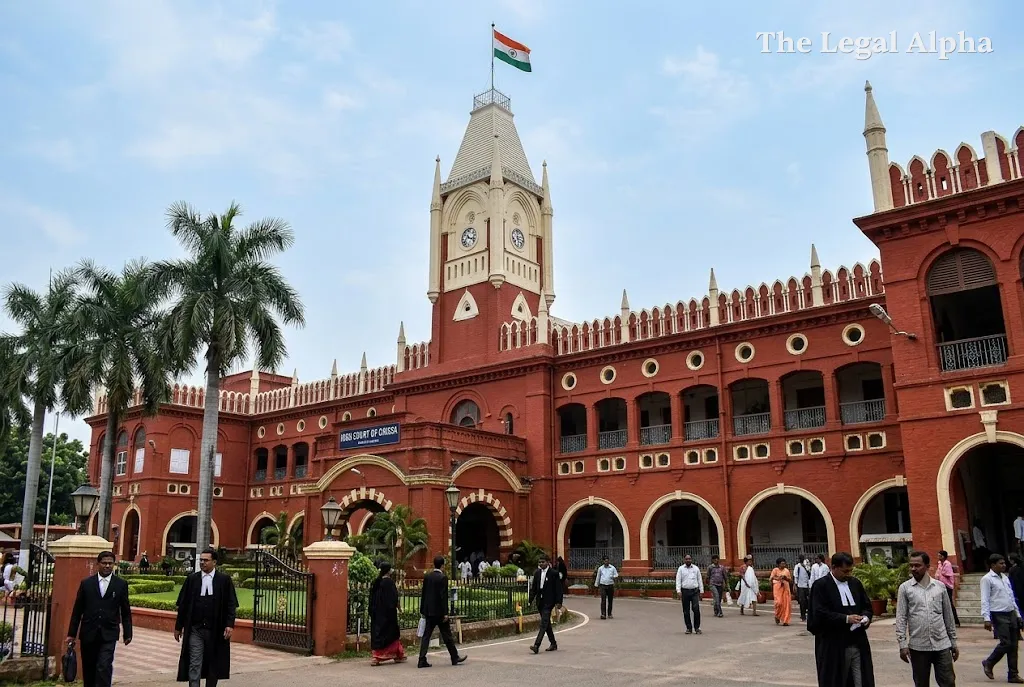
The Orissa High Court has initiated judicial review proceedings by issuing formal notices to the Odisha Legislative Assembly Speaker and five legislators belonging to the Biju Janata Dal (BJD). The dispute stems from the Rajya Sabha biennial elections held earlier this year, where several opposition lawmakers allegedly defied party lines to vote in favour of a Bharatiya Janata Party (BJP)-backed Independent candidate.
Following the voting outcome, BJD Chief Whip Pramila Mallik petitioned the Assembly Speaker to disqualify the rebel legislators under the anti-defection framework. In June, the Speaker summarily rejected all the disqualification petitions citing procedural non-compliance and defects. The BJD subsequently invoked the writ jurisdiction of the High Court to challenge the Speaker’s dismissal order as arbitrary and devoid of a fair hearing, prompting the court to step in and examine the legality of the tribunal's administrative rejection.
Legal Topic
Area of Law: Constitutional Law
Sub-topic: Anti-Defection Framework / Judicial Review of Speaker Decisions
Core Legal Issue
The primary legal controversy centers on the scope of high court judicial review over an Assembly Speaker acting as a statutory tribunal under the Tenth Schedule. Specifically, the High Court is examining whether a Speaker can dismiss anti-defection petitions purely on preliminary procedural or technical defects without granting the petitioning party an opportunity to cure discrepancies, and whether the Speaker's dismissal order can be remitted for fresh adjudication.
What Did the Court Decide?
Justice M. S. Sahoo of the Orissa High Court took up five connected writ petitions and issued notices to the Odisha Assembly Speaker and the respondent MLAs: Arvind Mohapatra, Sanatan Mahakud, Chakramani Kanhar, Souvic Biswal, and Subasini Jena.
The court issued the following interim directions:
-
The five respondent lawmakers must submit their formal counter-affidavits and replies by December 4.
-
The High Court scheduled the batch of petitions for substantive hearing on its merits on January 11, 2027.
-
The court did not grant any stay or make a final determination on the disqualification itself, keeping all substantive constitutional questions open.
Key Legal Points
-
Judicial review under Article 226 of the Constitution remains maintainable against a final decision of an Assembly Speaker acting as a tribunal, in line with established constitutional parameters.
-
The threshold test in this dispute examines whether the dismissal of disqualification petitions on procedural deficiencies breaches principles of natural justice.
-
The court is addressing the question of whether a Speaker has the power under the Tenth Schedule to review an order already passed, or if the court must issue a writ of mandamus directing reconsideration.
-
Disqualification under Paragraph 2 of the Tenth Schedule in the context of Rajya Sabha open ballot voting requires careful legal scrutiny concerning the mandate of political parties and legislative rules.
Relevant Law
-
Constitution of India — Article 226: Power of High Courts to issue writs for the enforcement of fundamental and legal rights.
-
Constitution of India — Tenth Schedule (Anti-Defection Law): Provisions regarding disqualification on grounds of defection.
-
Odisha Legislative Assembly (Disqualification on Ground of Defection) Rules: Rules prescribing procedure and verification of disqualification petitions filed before the Speaker.
-
Kihoto Hollohan v. Zachillhu (1992): Landmark Supreme Court ruling establishing that the Speaker acts as a tribunal when deciding Tenth Schedule disputes and that such decisions are subject to limited judicial review on grounds of infirmity, perversity, or violation of natural justice.
Arguments of the Parties
Petitioner
Counsel for the BJD contended that the Speaker rejected the disqualification petitions on minor technicalities without affording the party a fair chance to rectify procedural defects. They submitted that the Speaker's rejection deprived the party of substantive consideration under the Tenth Schedule and argued that the matters should be remitted back to the Speaker for proper adjudication.
Respondent / Assembly Secretariat
Odisha Advocate General Pitambar Acharya, representing the Speaker, argued that the petitions filed by the opposition lacked statutory compliance and seriousness, justifying their summary dismissal under assembly rules. The Advocate General submitted that once a final order has been rendered by the Speaker as a tribunal, there is no inherent statutory provision enabling the Speaker to review or recall that decision, opposing any plea to remit the matter or permit withdrawal for fresh filing.
Why Does It Matter?
The proceedings reinforce the crucial checks and balances governing legislative tribunals. While the office of the Speaker enjoys significant autonomy, landmark jurisprudence has established that orders concluding anti-defection disputes are not immune to judicial scrutiny.
If constitutional courts permit disqualification petitions to be dismissed solely on procedural hyper-technicalities without allowing defects to be cured, political parties could face hurdles in enforcing anti-defection provisions against cross-voting. Conversely, if high courts routinely interfere with procedural dismissals, it reinforces strict standards of natural justice upon legislative secretariats. The outcome will offer clarity on how far tribunals can rely on technicalities to dismiss defection pleas without delving into evidentiary merits.
Legal Takeaway
Legislative Speakers adjudicating Tenth Schedule disqualifications act as quasi-judicial tribunals and must adhere strictly to principles of natural justice. A high court will intervene under Article 226 to assess whether an abrupt procedural dismissal without an opportunity to cure technical defects vitiates the tribunal's order.
Sources
Primary Source:
High Court of Orissa, Cuttack — Writ Petitions concerning Pramila Mallik v. Hon'ble Speaker, Odisha Legislative Assembly & Ors. (Orders passed by Justice M. S. Sahoo, October 2026)
Additional Sources:
-
High Court of Orissa Rulings on the Tenth Schedule of the Constitution of India
-
Press Trust of India (PTI) and National Law Reporting Services (October 29–30, 2026)