Second Circuit Reopens Trump’s Bid to Shift Hush Money Conviction to Federal Court
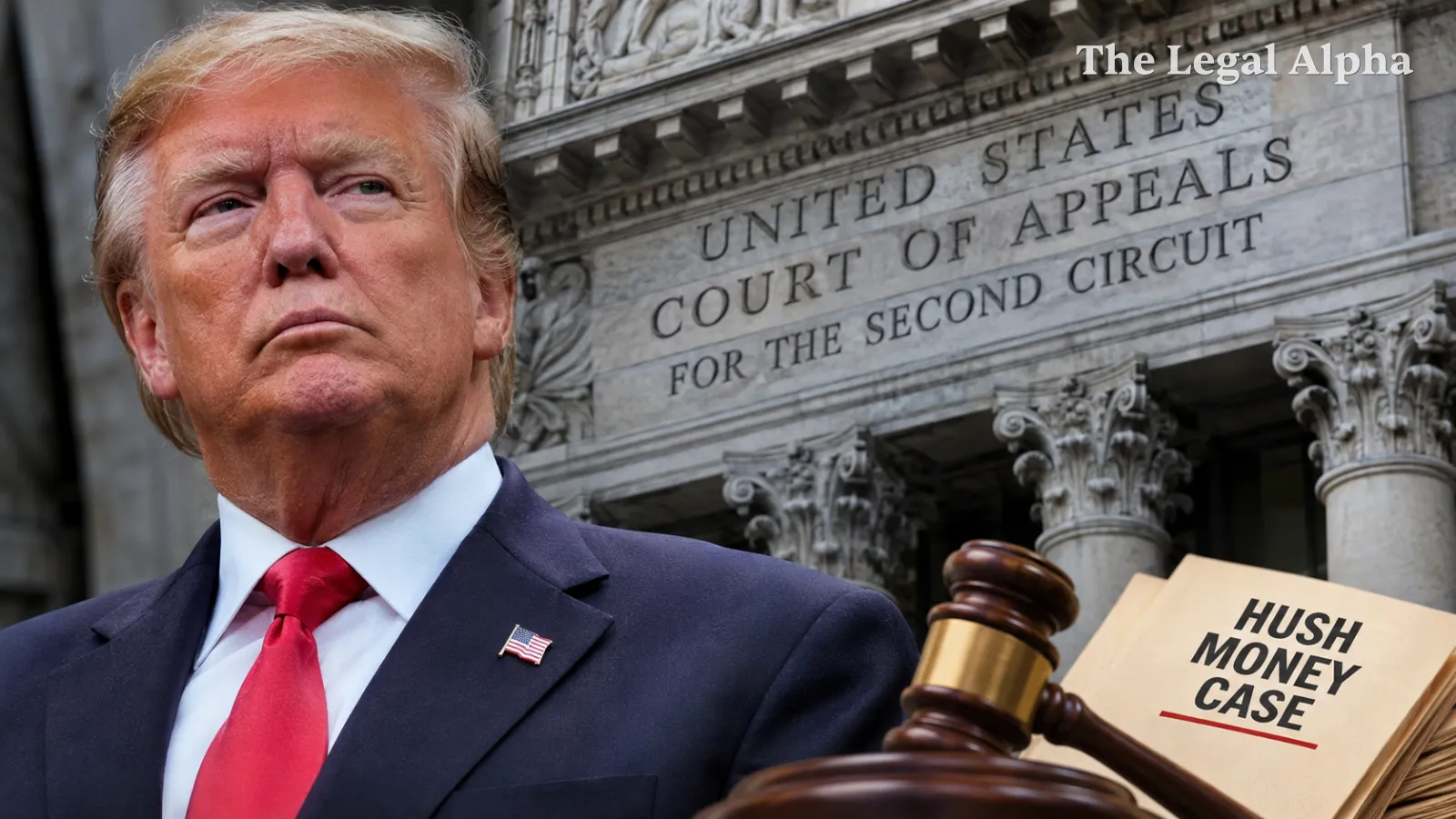
The United States Court of Appeals for the Second Circuit has revived President Donald Trump’s attempt to move his New York hush money criminal case from state court to federal court, overturning an earlier decision by the late US District Judge Alvin Hellerstein.
In an order dated November 23, 2026, a three-judge appellate panel held that the district court had made errors in rejecting Trump's request to transfer the proceedings. The appellate court directed the lower court to reconsider the matter promptly.
The development gives Trump another opportunity to challenge his 2024 criminal conviction by arguing that certain evidence presented during his trial was protected by presidential immunity.
Trump was convicted on 34 felony counts of falsifying business records in connection with a $130,000 payment made to adult film performer Stormy Daniels before the 2016 presidential election.
Importantly, the Second Circuit has not overturned the conviction. It has reopened the question of whether the case can be transferred to federal jurisdiction.
Legal Topic
Area of Law: Constitutional Law and Criminal Law
Sub-topic: Presidential Immunity, Federal Jurisdiction and Removal of Criminal Proceedings
Core Legal Issue
The central legal question concerns whether a criminal prosecution initiated in a state court against a federal officer can be transferred to federal court after conviction, particularly when the accused relies on federal immunity protections.
The court also considered whether Trump had demonstrated sufficient grounds for filing a second notice seeking removal of the criminal proceedings despite the procedural delay.
A further question is whether the conduct underlying the prosecution was sufficiently connected to Trump's official responsibilities as President to attract the protection of federal law.
What Did the Court Decide?
The Second Circuit disagreed with Judge Alvin Hellerstein's August 28, 2026 decision rejecting Trump's latest attempt to transfer the case.
The appellate panel identified errors in the lower court's approach, particularly its conclusion that removal was categorically unavailable after a federal officer had already been convicted in state criminal proceedings.
The court also disagreed with the finding that Trump had failed to establish good cause for submitting a second notice of removal.
The appellate court directed the district court to permit Trump to file the second notice and promptly determine whether the proceedings should be transferred to federal jurisdiction.
The order also requested that further proceedings in the New York state courts be halted while the federal court considers the removal question.
If the district court ultimately permits removal, it must adopt the existing state court judgment. This would allow Trump to pursue his arguments before the federal appellate court.
However, the Second Circuit has not ruled that presidential immunity applies to the conduct underlying the conviction. That issue remains unresolved.
Key Legal Points
- Federal removal jurisdiction: The appellate court rejected the position that a state criminal prosecution becomes categorically ineligible for removal merely because the federal officer has already been convicted.
- Second notice of removal: The court disagreed with the lower court's assessment that Trump had not established good cause for filing another removal notice.
- Presidential immunity: Trump intends to rely on the US Supreme Court's 2024 presidential immunity ruling to challenge the use of certain evidence during his criminal trial.
- State court proceedings: The appellate order seeks to preserve the position of the parties by requesting that further state court proceedings not take place while the federal removal question remains pending.
- Conviction remains in place: The appellate decision does not acquit Trump, vacate his conviction or finally determine whether the case belongs in federal court.
Relevant Law
28 U.S.C. Section 1442 – Federal Officers or Agencies Sued or Prosecuted
This provision allows certain federal officers to transfer civil actions or criminal prosecutions initiated against them in state courts to the appropriate federal district court when the statutory requirements are satisfied.
The provision is central to Trump's argument that his criminal proceedings should be heard in federal court.
28 U.S.C. Section 1455 – Procedure for Removal of Criminal Prosecutions
This provision governs the procedural requirements for removing criminal prosecutions from state courts to federal courts, including the filing of a notice of removal and the treatment of untimely applications.
Trump v. United States, 603 U.S. 593 (2024)
In this landmark decision, the US Supreme Court recognised different levels of presidential criminal immunity for official conduct.
The ruling established absolute immunity for certain exercises of core constitutional powers and presumptive immunity for other official acts. It also held that presidents do not enjoy immunity for unofficial conduct.
Trump relies on this judgment to argue that certain evidence introduced during his trial should not have been used against him.
New York Penal Law Section 175.10
This provision criminalises the falsification of business records in the first degree. It formed the statutory basis for the 34 felony counts on which Trump was convicted.
Arguments of the Parties
President Donald Trump's Position
Trump's legal team argued that the criminal prosecution involved evidence concerning his presidential responsibilities, including discussions, communications and activities connected with the White House.
His lawyers maintained that the Supreme Court's 2024 presidential immunity ruling required reconsideration of the evidence used during the trial.
They also argued that transferring the proceedings to federal court would provide a more direct route for obtaining appellate review of the immunity questions.
Manhattan District Attorney's Position
The Manhattan prosecutors opposed Trump's attempt to transfer the proceedings, arguing that the conviction concerned the falsification of business records rather than conduct undertaken as part of presidential responsibilities.
The prosecution maintained that the case should remain within the New York state judicial system.
The Manhattan District Attorney's Office declined to comment publicly on the latest appellate ruling.
Why Does It Matter?
The decision raises important questions about the relationship between federal and state criminal jurisdiction, particularly when a person holding federal office faces prosecution under state law.
It also demonstrates that presidential immunity arguments can have significant procedural consequences beyond the question of whether a particular prosecution can ultimately succeed.
For Trump's case, a transfer to federal court could provide another opportunity to challenge the conviction using the constitutional protections recognised in the Supreme Court's 2024 ruling.
However, the decision should not be interpreted as a judicial finding that the alleged conduct was an official presidential act. That determination has not yet been made in the present proceedings.
More broadly, the case highlights the importance of distinguishing between a court's decision to reconsider jurisdiction and a final determination on the merits of a criminal conviction.
Legal Takeaway
The Second Circuit's decision reopens Trump's attempt to move his hush money prosecution into federal court, but it does not erase his existing conviction. The central question now is whether the proceedings satisfy the statutory requirements for federal removal and whether Trump's presidential immunity arguments can ultimately succeed.
Sources
Primary Sources:
Additional Sources: