Delhi Court Rejects Bail Plea of Lawyer in Satya Niketan Building Collapse Case
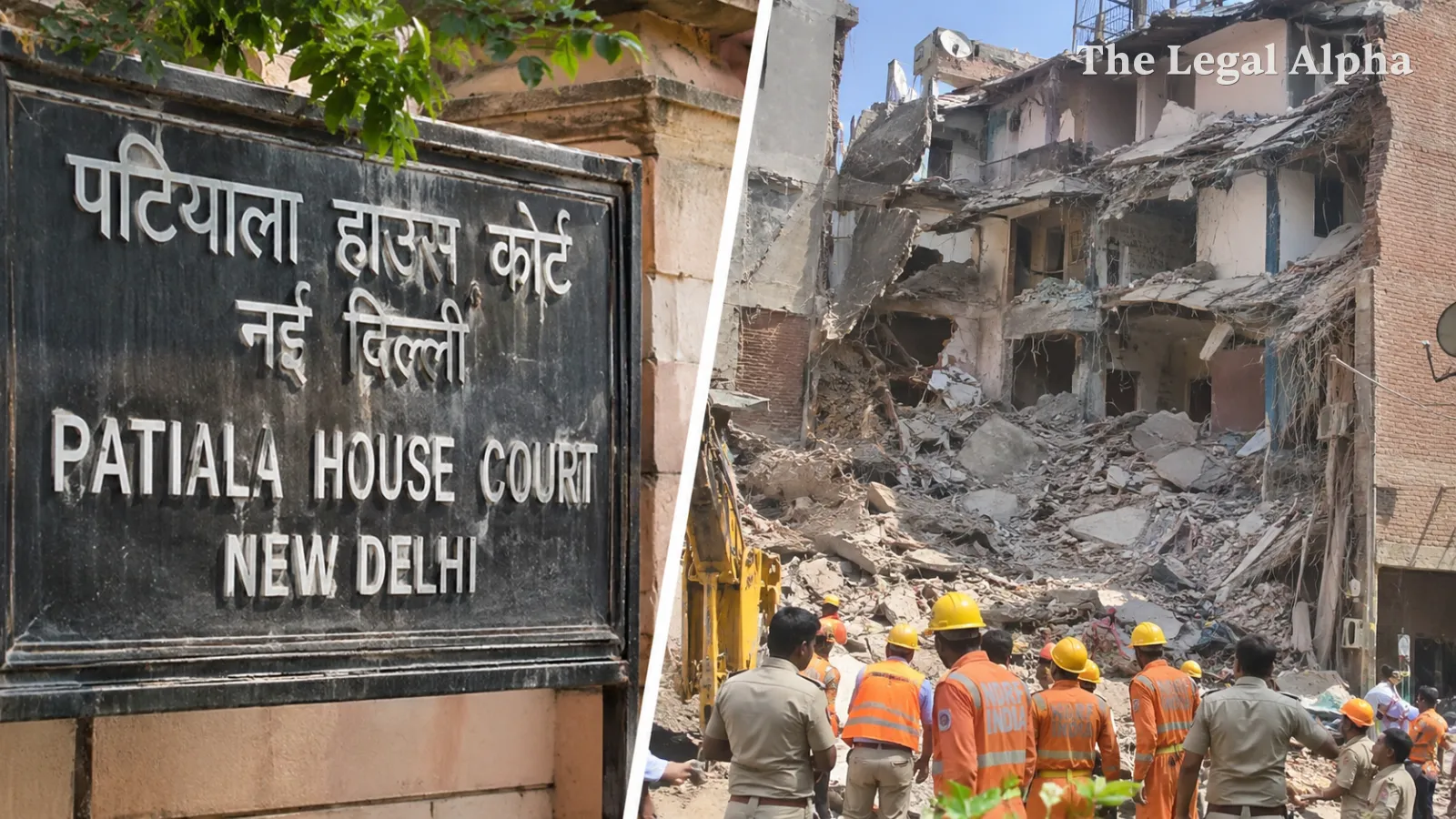
A Delhi court has refused regular bail to advocate Shubham Tyagi, accused in the Satya Niketan paying guest accommodation building collapse case that claimed seven lives. The court observed that the accused allegedly failed to protect students and labourers despite being aware of construction activities that posed potential safety risks.
The decision highlights the responsibility of persons operating residential accommodation to take reasonable precautions when construction work creates possible dangers for occupants.
What Happened?
Additional Sessions Judge Dhirendra Rana of Patiala House Courts rejected Tyagi's regular bail application on November 23, 2026.
The case concerns the collapse of a building at Satya Niketan Market, New Delhi, on September 6, 2026. The premises were being operated as a boys' paying guest accommodation under the name Hostel Daze.
The incident resulted in the deaths of five students and two labourers. Five other persons were rescued with injuries.
According to the prosecution, unauthorised construction and structural modifications had been carried out in the building shortly before the collapse, allegedly affecting its load-bearing capacity.
Legal Topic
Area of Law: Criminal Law
Sub-topic: Regular Bail, Criminal Negligence and Liability Arising from Building Collapse
Core Legal Issue
The central question before the court was whether Shubham Tyagi, one of the operators of the paying guest accommodation, should be granted regular bail despite allegations that he failed to ensure the safety of residents while construction and structural alteration work was underway.
The court also considered whether his alleged lack of direct control over the construction activities absolved him of responsibility for taking precautions to protect the students staying at the premises.
What Did the Court Decide?
The court rejected Shubham Tyagi's regular bail application, holding that no sufficient grounds had been established to grant him relief.
Judge Dhirendra Rana observed that Tyagi was in occupation and control of the property under a rent agreement. Even if the construction was not being carried out under his instructions, he was expected to ensure that the premises were vacated while potentially dangerous work continued.
The court also took note of allegations that students had complained about construction activities and were threatened with eviction when they raised objections.
It observed that Tyagi could have anticipated the danger arising from the construction activities but allegedly prioritised financial interests over the safety of students and labourers.
The court further emphasised that bail requires balancing the personal liberty of an accused against the wider interests of society.
It also considered that the trial was at an initial stage and several public witnesses were yet to be examined. The possibility of the accused threatening witnesses if released was another factor in rejecting bail.
However, the court clarified that its observations in the bail order would not amount to findings on the merits of the case.
Key Legal Points
- Responsibility of PG operators: Persons operating residential accommodation are expected to take reasonable precautions to protect occupants from foreseeable safety risks.
- Knowledge of construction activities: The court considered the allegations that Tyagi was aware of ongoing construction and that residents had raised objections.
- Duty to protect occupants: The judge observed that even if construction was outside Tyagi's direct control, he should have ensured that occupants were protected during the work.
- Balancing liberty and societal interest: The court considered the seriousness of the allegations and the loss of seven lives while examining the bail application.
- Protection of witnesses: The early stage of the trial and the possibility of influencing public witnesses weighed against granting bail.
Relevant Law
The case arises from FIR No. 153/2026 registered at South Campus Police Station, New Delhi.
The relevant provisions mentioned in the court order include:
-
Section 105, Bharatiya Nyaya Sanhita, 2023: Punishment for culpable homicide not amounting to murder.
-
Section 290, Bharatiya Nyaya Sanhita, 2023: Negligent conduct with respect to pulling down or repairing buildings.
-
Section 125(a), Bharatiya Nyaya Sanhita, 2023: Causing hurt by an act endangering life or personal safety.
-
Section 115(2), Bharatiya Nyaya Sanhita, 2023: Punishment for voluntarily causing hurt.
-
Section 324(2) and 324(4), Bharatiya Nyaya Sanhita, 2023: Provisions concerning mischief.
-
Section 483, Bharatiya Nagarik Suraksha Sanhita, 2023: Special powers of the High Court and Court of Session regarding bail.
The court also referred to the Supreme Court's decisions in Varinder Kumar v. State of Himachal Pradesh and Mansab Ali v. Irsan and Another while discussing the balance between individual liberty and societal interests.
Arguments of the Parties
Accused Shubham Tyagi
The defence argued that Tyagi had been falsely implicated and was merely a tenant of the second and third floors of the building.
His counsel submitted that the rent agreement did not authorise him to undertake structural alterations or modifications. It was further argued that the basement and ground floor were under the exclusive control of the building owner.
The defence also pointed out that the investigation had been completed and the chargesheet had already been filed. Therefore, continued custody was unnecessary.
State of Delhi
The prosecution opposed bail, alleging that unauthorised structural alterations had increased the load on the existing building and weakened its structural capacity.
It further submitted that the PG operators had failed to verify the building's structural safety and take adequate precautions despite ongoing construction work.
The prosecution also relied on the statement of an injured student, who alleged that residents had complained about construction activities and were threatened with eviction when they objected.
Why Does It Matter?
The decision draws attention to the responsibilities of individuals operating residential accommodation, particularly where students and other occupants depend on them for safe living conditions.
Operating a paying guest facility involves more than managing rental arrangements. Allegations of unsafe construction, failure to respond to complaints and neglect of occupant safety can become significant considerations in criminal proceedings.
The order also highlights that a person claiming not to have directly undertaken construction work may still face scrutiny over their responsibility towards occupants and their response to foreseeable risks.
For property owners, tenants and accommodation operators, the case reinforces the importance of verifying structural safety, responding to complaints and ensuring that occupants are not exposed to potentially dangerous construction activities.
Legal Takeaway
The Patiala House Court's refusal to grant regular bail to Shubham Tyagi highlights the importance of occupant safety when potentially dangerous construction work is taking place in residential premises. The decision is an order on bail, not a final determination of criminal guilt, and the allegations remain subject to trial.
Sources
Primary Source:
- State of Delhi v. Shubham Tyagi, Bail Matters No. 2847/2026, Order dated November 23, 2026
Additional Sources: