Retired Judges’ Commission Seeks Evidence From Yogi Adityanath Over Claim of 1.27 Crore Missing Hindu Voters in Uttar Pradesh
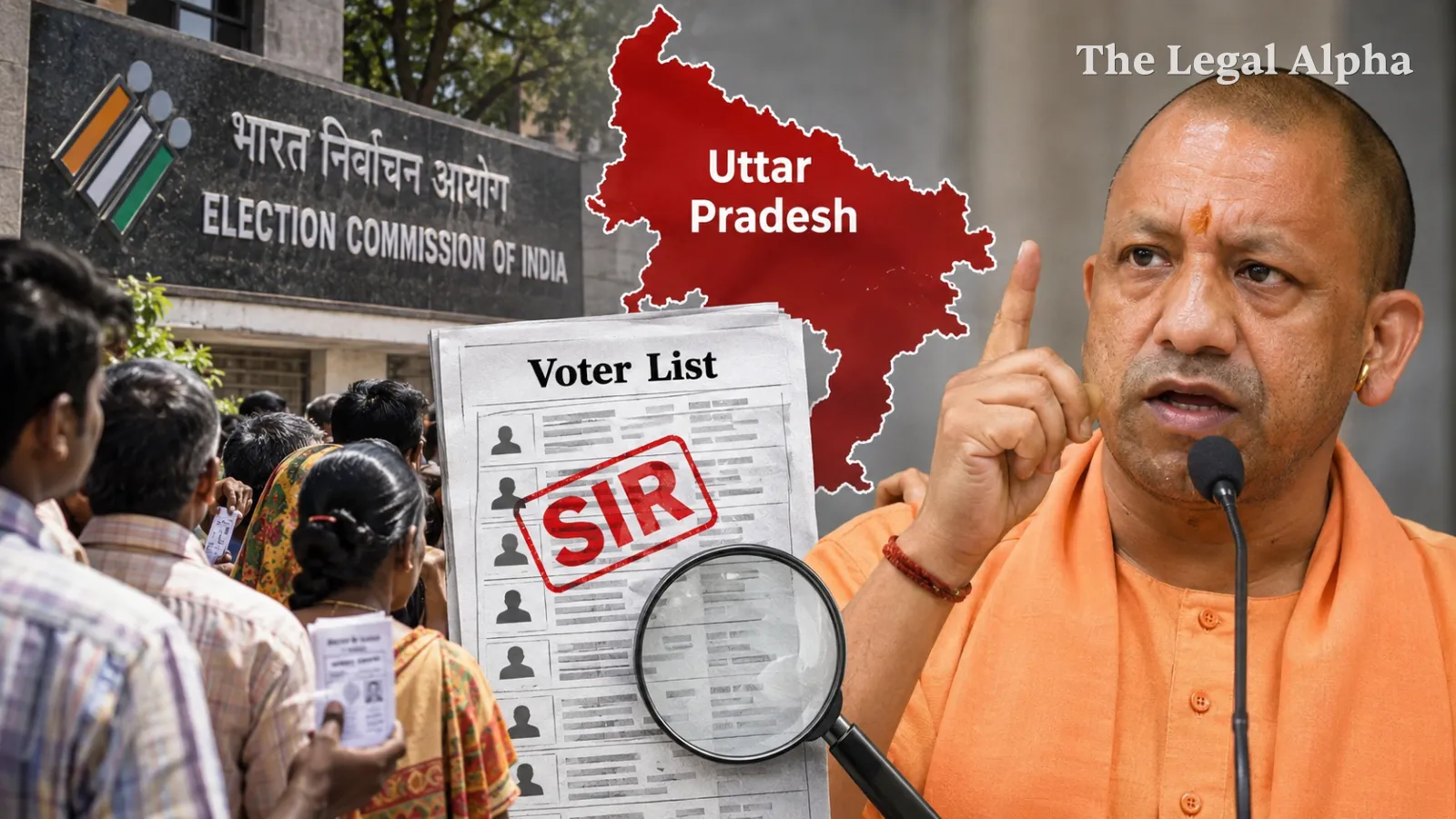
An independent commission comprising former Supreme Court and High Court judges has sought supporting evidence from Uttar Pradesh Chief Minister Yogi Adityanath regarding his reported claim that approximately 1.27 crore Hindu voters were excluded from the state's electoral rolls following the Special Intensive Revision (SIR) exercise.
In a letter dated November 21, 2026, the commission requested that the Chief Minister provide relevant data, documents or other material substantiating his statement. The commission considers the claim significant to its examination of whether eligible voters were improperly removed during the electoral roll revision process.
The commission has been constituted by the Lawyers' Association for Constitution (LAFC) to independently examine the constitutional and statutory validity, methodology and wider impact of the Election Commission of India's SIR exercise.
Legal Topic
Area of Law: Constitutional Law and Election Law
Sub-topic: Electoral Roll Revision, Right to Vote and Protection of Electoral Rights
Core Legal Issue
The central legal issue concerns the fairness and legality of the electoral roll revision process and whether eligible citizens may have been improperly excluded from voter lists.
The commission is also examining whether the methodology adopted during the SIR exercise contained shortcomings that could have resulted in wrongful deletions. The controversy raises questions about electoral transparency, the protection of voting rights and the accountability of authorities responsible for maintaining accurate electoral rolls.
What Did the Commission Decide?
The independent commission has requested supporting evidence from Yogi Adityanath concerning his reported statement about the exclusion of 1.27 crore Hindu voters.
The commission is headed by former Supreme Court Justice Madan B. Lokur. Its other members include former Supreme Court judge Justice A.K. Patnaik and former High Court judges Justice Badar Durrez Ahmad, Justice Rekha Sharma and Justice Anjana Prakash.
The commission has indicated that any information submitted by the Chief Minister will be examined independently and impartially. It has also requested that the material be provided at the earliest, considering the approaching elections and the possibility of eligible citizens losing their voting rights.
Importantly, this is a request for information by an independent commission, not a judicial finding that 1.27 crore Hindu voters were actually deleted. The commission has not issued any final determination on the allegation.
Key Legal Points
-
Protection of Voting Rights: Electoral authorities must maintain voter lists in accordance with constitutional and statutory requirements, ensuring that eligible citizens are not improperly excluded.
-
Transparency in SIR: The methodology used for electoral roll revision is under examination, particularly whether procedural shortcomings could lead to wrongful deletion of voters.
-
Independent Examination: The commission has sought documentary evidence to assess the reported claim rather than treating it as an established fact.
-
Electoral Accountability: The development highlights the importance of transparency and accountability in the preparation and revision of electoral rolls.
-
Pending Examination: The commission's request for information does not amount to a finding against the Election Commission or any other authority.
Relevant Law
Article 326 of the Constitution of India: Provides for elections to the Lok Sabha and State Legislative Assemblies on the basis of adult suffrage, subject to the constitutional conditions.
Representation of the People Act, 1950: Provides the statutory framework governing the preparation and revision of electoral rolls.
Section 21: Deals with the preparation and revision of electoral rolls.
Section 22: Provides for correction of entries and inclusion or deletion of names in electoral rolls in specified circumstances.
Section 23: Deals with the inclusion of names in electoral rolls.
Registration of Electors Rules, 1960: Prescribes procedural requirements concerning the preparation, revision and maintenance of electoral rolls.
Arguments and Positions of the Parties
Position of Uttar Pradesh Chief Minister Yogi Adityanath
The Chief Minister reportedly claimed that approximately 1.27 crore Hindu voters had been excluded from Uttar Pradesh's electoral rolls following the SIR exercise. The commission has now requested supporting material to establish the basis of this statement.
Position of the Independent Commission
The commission considers the reported figure relevant to its examination of possible wrongful deletions. It has requested substantive evidence and information that could indicate shortcomings in the revision methodology.
Position of the Election Authorities
Earlier, Uttar Pradesh Chief Electoral Officer Navdeep Rinwa clarified that the Election Commission's database does not maintain information about voters' religion or caste. He stated that electoral records contain details such as names, age, gender, house numbers and family relationships.
The clarification also indicated that independent analyses based on voters' names should not be confused with official religion-wise electoral data.
Why Does It Matter?
The development raises an important question about the integrity of electoral rolls and the responsibility of authorities to ensure that eligible citizens can exercise their constitutional voting rights.
Electoral roll revisions are essential for removing duplicate, deceased and otherwise ineligible entries while ensuring that genuine voters remain registered. However, any failure in this process could potentially affect citizens' participation in democratic elections.
The commission's examination is particularly relevant because it seeks to assess the methodology behind the SIR exercise rather than relying solely on political statements or competing allegations.
Its findings could contribute to the wider discussion on electoral transparency, procedural safeguards and the need for effective mechanisms to address wrongful voter deletions.
Legal Takeaway
The exclusion of eligible citizens from electoral rolls raises serious concerns under India's constitutional and electoral framework. However, the reported figure of 1.27 crore Hindu voters remains a claim requiring supporting evidence, not an established finding. The commission's request represents an effort to examine the factual basis of the allegation and assess whether the electoral revision process adequately protected eligible voters.
Sources
Primary Source: Lawyers' Association for Constitution (LAFC) press release and the Independent Commission's letter dated November 21, 2026, as reported.
Additional Sources:
-
LiveLaw – Report on the Independent SIR Commission's communication to the Uttar Pradesh Chief Minister.
-
The New Indian Express – Report on the retired judges' panel seeking supporting evidence.
-
NDTV – Report on the Uttar Pradesh Chief Electoral Officer's clarification regarding religion-wise voter data.