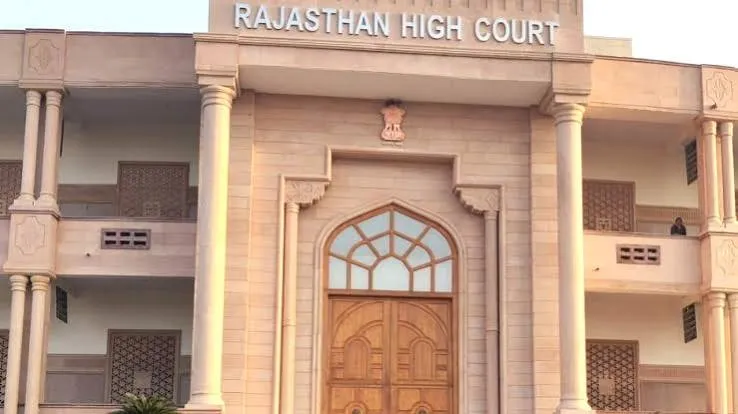
Rajasthan High Court Reiterates Mandatory Three-Prong Test for Temporary Injunctions in Property Disputes

The Rajasthan High Court addressed an interim relief dispute arising from a civil property title and possession suit in Badrilal v. Dhokalram & Ors. The dispute reached the High Court on challenge to an interlocutory order concerning the grant of a temporary injunction and stay of proceedings over disputed immovable property. Evaluating the approach taken by the trial court, the High Court emphasized that interim restraint orders cannot be issued routinely or mechanically without an active demonstration of prima facie entitlement, balance of convenience, and tangible risk of irreparable loss.
Legal Topic
Area of Law: Civil Procedure / Property Law
Sub-topic: Temporary Injunctions and Interim Relief under Order XXXIX CPC
Core Legal Issue
The central legal issue before the High Court was whether the trial court exercised sound judicial discretion in granting interim injunctive relief under Order XXXIX, Rules 1 and 2 read with Section 151 of the Code of Civil Procedure, 1908.
The Court examined whether a subordinate court can impose status quo or restraining directions without recording distinct, reasoned findings that all three classical ingredients for an injunction coexist.
What Did the Court Decide?
The High Court held that the grant of temporary injunction is an equitable and discretionary relief that demands careful judicial scrutiny rather than perfunctory disposal.
The Court observed that subordinate courts cannot issue blanket stay or injunction orders purely on the basis of apprehension without verifying existing possession and legal title. The High Court reiterated that an interim order should not unduly fetter a party’s legitimate property rights when statutory mechanisms, such as the doctrine of lis pendens, already protect the subject matter. The Court set aside or clarified the interim arrangement to ensure that neither party is subjected to unreasoned procedural prejudice pending trial.
Key Legal Points
-
Cumulative Requirement: A party seeking an interim injunction must satisfy all three prongs concurrently—a prima facie case, balance of convenience in their favor, and demonstrable irreparable injury.
-
Speaking Order Mandate: Trial courts must record clear, independent reasons for granting or refusing interlocutory protection rather than passing generic status quo directions.
-
Preserving Status Quo with Caution: An interim stay should preserve the existing state of affairs only when genuine risk of alienation, destruction, or third-party creation is substantiated.
-
Statutory Safeguards: Where statutory protections under property law adequately secure the ultimate outcome of the suit, courts must refrain from imposing oppressive operational restraints.
Relevant Law
-
Code of Civil Procedure, 1908: Order XXXIX, Rules 1 and 2 (Temporary Injunctions); Section 151 (Inherent Powers).
-
Specific Relief Act, 1963: Sections 37 and 38 (Preventive Relief and Injunctions).
-
Transfer of Property Act, 1882: Section 52 (Transfer of Property Pending Suit / Lis Pendens).
Arguments of the Parties
Petitioner: The petitioner argued that the lower court committed a serious procedural error by issuing an interim injunction without establishing a prima facie right in favor of the claimant. It was submitted that lawful enjoyment and possession of the property were being arbitrarily curtailed on speculative claims, causing substantial hardship without meeting the statutory threshold for irreparable loss.
Respondent: The respondents contended that interim protection was indispensable to protect the subject matter of the suit from alteration, transfer, or waste during the pendency of the litigation. They submitted that permitting unrestrained dealings over the land would create third-party interests, multiply litigation, and render the final decree infructuous.
Why Does It Matter?
Interim injunction applications remain among the most contentious stages of civil property litigation across India, often leading to indefinite stalls on land utilization before issues are framed. This ruling reinforces judicial discipline among subordinate courts, making it clear that status quo orders require rigorous fact-finding rather than administrative ease. For property owners and commercial litigants, the decision confirms that property rights cannot be frozen on perfunctory claims of hardship.
Legal Takeaway
A temporary injunction cannot be granted as an automatic interim measure. To obtain an order restraining an opposing party during a civil suit, the applicant must strictly and cumulatively establish a prima facie case, balance of convenience, and injury that cannot be compensated in money.
Sources
-
Primary Source: Rajasthan High Court Judgment in Badrilal v. Dhokalram & Ors. (Civil Miscellaneous Appeal / Revision Petition).
-
Additional Sources: Code of Civil Procedure, 1908; Transfer of Property Act, 1882.