Rajasthan High Court Allows ACB Investigation Against IAS Officer Shikhar Agrawal to Continue
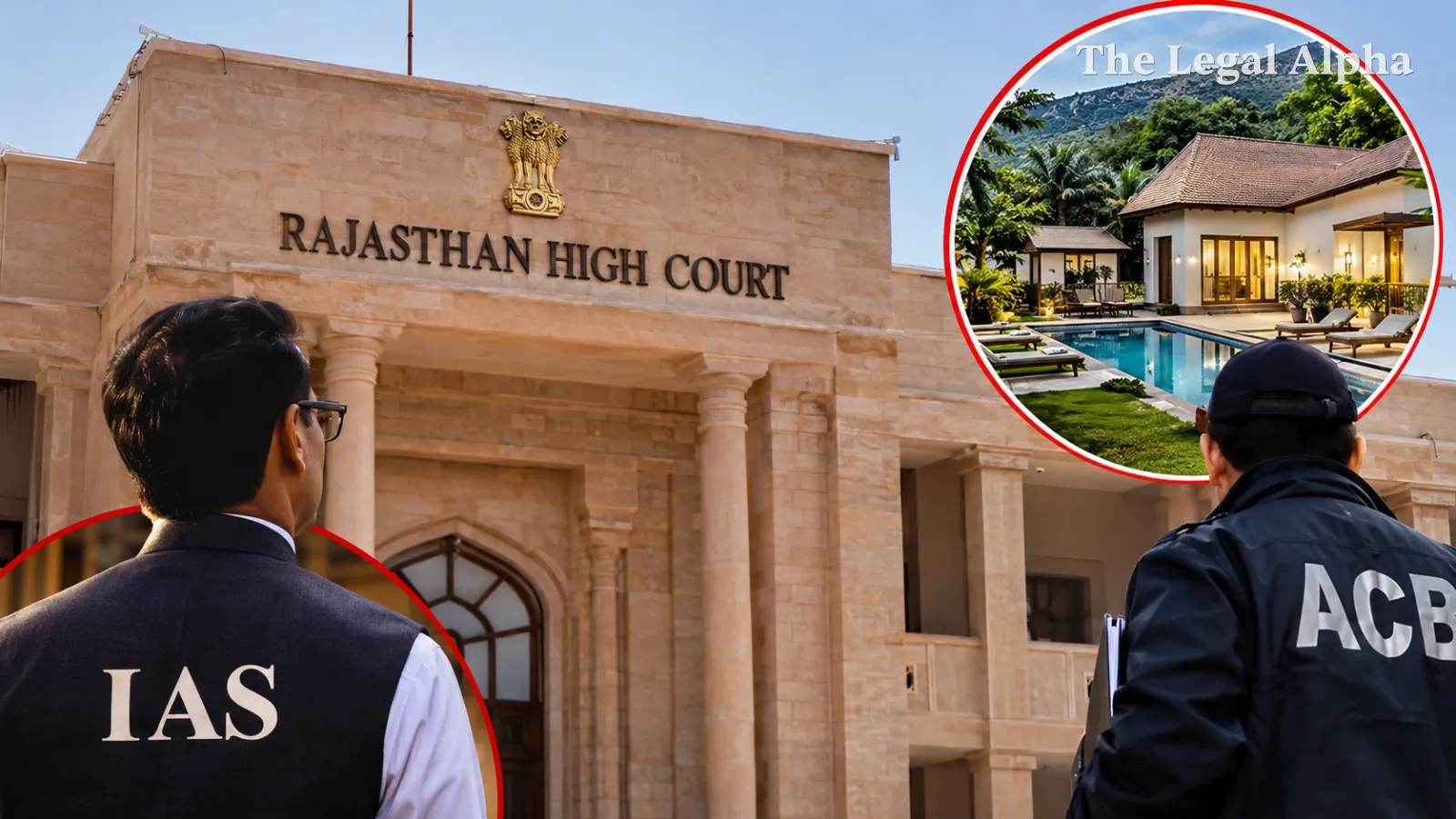
The Rajasthan High Court has declined to grant interim protection to senior IAS officer Shikhar Agrawal, who has challenged an Anti-Corruption Bureau (ACB) investigation into alleged irregularities involving the purchase of luxury villas and cottages from a private resort company.
A single-judge Bench of Justice Anil Kumar Upman issued notice to the Rajasthan Government and directed it to submit its response within three weeks. The matter has been listed for further hearing on December 18, 2026.
The investigation concerns alleged property transactions involving Agrawal, his wife, IPS officer Prashakha Mathur, their children and other family members. The ACB suspects that the transactions may be connected with alleged misuse of official position to extend benefits to Goyal Fashions Pvt. Ltd., which operates resorts under the Ananta brand.
Legal Topic
Area of Law: Criminal Law and Anti-Corruption Law
Sub-topic: Prevention of Corruption Act, 1988 – Investigation Against Public Servants and Prior Approval
Core Legal Issue
The central legal question concerns whether the Rajasthan Government's approval for an ACB investigation against Agrawal under Section 17A of the Prevention of Corruption Act, 1988, was legally valid and complied with the procedural safeguards applicable to public servants.
The proceedings also raise questions about the extent to which an officer can challenge the initiation of a corruption investigation and seek interim protection while the legality of the government's approval remains under judicial consideration.
What Did the Rajasthan High Court Decide?
The High Court declined to stay the ACB investigation or grant immediate interim protection to Agrawal.
During the hearing, the officer's counsel argued that Agrawal was being wrongly implicated and requested protection against the investigation and consequential action. The Court, however, considered it appropriate to give the State Government an opportunity to respond before examining the request for interim relief.
Justice Anil Kumar Upman also observed that if Agrawal apprehended arrest, he could pursue the appropriate remedy of anticipatory bail.
The Court granted the State three weeks to file its response and scheduled the next hearing for December 18, 2026.
The order does not determine whether Agrawal committed any offence or whether the allegations in the ACB investigation are established. His challenge to the investigation remains pending.
Background of the ACB Investigation
According to the ACB's allegations, Agrawal and his family members acquired 64 villas and cottages from Goyal Fashions Pvt. Ltd. over approximately two-and-a-half years.
The transactions reportedly took place in three phases:
-
October 2023: Twenty cottages were allegedly purchased at the company's Bujhda resort in Udaipur for approximately ₹15 lakh each.
-
March 2026: Twenty properties were allegedly acquired at the Ananta Ajabgarh resort in Alwar at prices ranging between ₹14 lakh and ₹16.5 lakh each.
-
October 2026: Agrawal's sons allegedly purchased 24 villas at an Ananta resort in Jaipur for ₹2.64 crore, amounting to ₹11 lakh per villa.
The ACB is examining the allegation that the Jaipur villas were purchased at substantially lower prices than those mentioned in the resort's promotional material, which reportedly listed comparable villas at ₹59 lakh each.
Investigators are also examining arrangements under which the properties were allegedly leased back to the company through perpetual lease deeds, allowing it to continue operating the units commercially while sharing revenue with the owners. These allegations remain subject to investigation.
Key Legal Points
-
No interim protection: The High Court declined to interrupt the ACB investigation while Agrawal's challenge remains pending.
-
Section 17A approval challenged: The officer has questioned the legality and procedure followed in granting prior government approval for the investigation.
-
Anticipatory bail remedy: The Court indicated that Agrawal could approach the appropriate forum for anticipatory bail if he apprehended arrest.
-
Alleged misuse of official position: The ACB is examining whether official decisions and regulatory approvals allegedly benefited the private resort company.
-
Investigation remains open: The Court has not ruled on the merits of the corruption allegations or the validity of the officer's legal challenge.
Relevant Law
Prevention of Corruption Act, 1988
-
Section 17A: Provides for previous approval before an enquiry, inquiry or investigation into an offence alleged to have been committed by a public servant in relation to recommendations made or decisions taken in the discharge of official functions or duties.
-
Section 13: Deals with criminal misconduct by a public servant. Its applicability will depend on the allegations and evidence established during the investigation.
The precise applicability of these provisions will ultimately depend on the facts and findings of the investigating agency and the Court.
Arguments of the Parties
IAS Officer Shikhar Agrawal
Agrawal's counsel argued that the officer was being wrongly implicated in the matter. The petition challenged the ACB inquiry and the government's approval for proceeding with the investigation.
The officer sought interim protection against the investigation and consequential action, including further criminal proceedings.
Rajasthan Government
Advocate General Rajendra Prasad, appearing for the State, sought additional time to prepare and submit the government's response.
The State requested an opportunity to place its position before the Court considered granting interim protection.
The Court accepted the request for additional time and directed the government to file its response within three weeks.
Why Does It Matter?
The proceedings highlight the legal safeguards governing corruption investigations involving senior public servants.
Section 17A of the Prevention of Corruption Act seeks to protect public officials from investigations relating to bona fide official decisions without the prescribed prior approval. At the same time, the provision does not grant public servants blanket immunity from criminal investigation.
The case also raises questions about the relationship between official regulatory decisions, private commercial benefits and property transactions involving members of a public servant's family.
For government officers, the investigation underscores the importance of transparency in official decision-making and avoiding circumstances that may give rise to allegations of conflicts of interest.
However, the allegations against Agrawal and his family have not been established by the High Court. The investigation and the officer's legal challenge are both subject to further proceedings.
Legal Takeaway
The Rajasthan High Court's refusal to grant interim protection allows the ACB investigation against IAS officer Shikhar Agrawal to continue while his challenge remains pending. The decision does not amount to a finding of guilt. The legality of the investigation and the allegations against the officer will have to be examined in subsequent proceedings.
Sources
Primary Source:
Rajasthan High Court proceedings in Shikhar Agrawal's criminal writ petition. The underlying court order was not independently available for verification.
Additional Sources: