Race Course Mosque Access Denied Amid Ongoing Demolition Work; Delhi High Court Records Centre’s Assurance Against Coercive Action
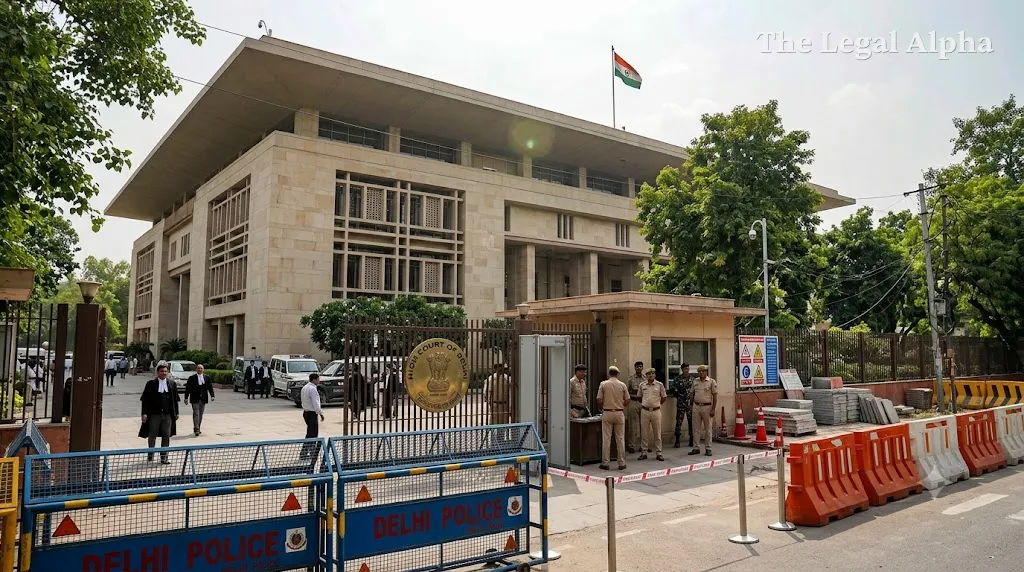
The Delhi High Court declined to direct the Central Government to grant devotees access to offer prayers at a historic mosque situated near the Prime Minister’s residence on Race Course Road (now Lok Kalyan Marg). While hearing a writ petition seeking protection for the religious structure, the court took note of ongoing demolition activities in the surrounding Jaipur Polo Ground area and highlighted the immediate physical safety hazards for visitors. Concurrently, the High Court recorded the Union Government’s undertaking that no coercive measures or demolition will target the mosque structure pending administrative consideration of a protection representation filed by the Delhi Waqf Board.
Legal Topic
Area of Law: Constitutional & Administrative Law / Waqf Law
Sub-topic: Protection of Religious Structures / Public Safety and Interim Injunctions
Core Legal Issue
The matter addresses whether the High Court, exercising its writ jurisdiction under Article 226 of the Constitution, should compel authorities to grant public ingress and egress to a place of worship inside a high-security zone undergoing major civil demolition, balanced against public safety hazards and pending administrative statutory decisions.
The court had to balance the religious access claims asserted over an allegedly notified Waqf property against state-administered safety restrictions, while ensuring the underlying subject matter is preserved during the decision-making process.
What Did the Court Decide?
Justice Anish Dayal refused to pass mandatory directions compelling the government to restore public access for offering prayers, agreeing that visitor safety cannot be compromised during heavy civil works.
Key directives and recorded milestones include:
-
Refusal of Interim Access: The court rejected the petitioner's plea for immediate entry and exit, emphasizing that courts cannot compel authorities to open high-risk work sites to the general public.
-
No Coercive Steps: The High Court took on record the Centre's formal undertaking that no coercive or demolition action will be taken against the mosque structure until the pending representation is adjudicated.
-
Timebound Administrative Decision: The authorities have been tasked with deciding the Delhi Waqf Board's formal representation within a span of four weeks.
-
Next Hearing: The substantive writ petition remains pending, with proceedings scheduled to resume on December 16, 2026.
Key Legal Points
-
Primacy of Public Safety Over Routine Interim Relief: The High Court underscored that physical hazard prevention and potential liability during active demolition supersede intermediate claims for public ingress.
-
Recording of State Assurances: Instead of entering into disputed questions of demolition progress at an interim stage, the court relied on recorded undertakings from the Union Government to safeguard the physical structure.
-
Even-Handed Application of Civil Restrictions: The bench considered that non-discriminatory access bans—covering both a mosque and an adjacent temple in the cordoned zone—demonstrated a genuine site-management concern rather than arbitrary religious exclusion.
-
Exhaustion of Statutory Representation: The judicial process stepped aside temporarily to permit executive consideration of the Waqf Board’s claim before entering a final adjudication.
Relevant Law
-
Constitution of India – Article 226: High Court jurisdiction to issue prerogative writs for enforcement of rights and administrative oversight.
-
Constitution of India – Article 25: Freedom of conscience and the right freely to profess, practice, and propagate religion, subject to public order, morality, and health.
-
The Waqf Act, 1995: Statutory framework governing the identification, notification, maintenance, and protection of waqf properties.
Arguments of the Parties
Petitioner
Counsel appearing for petitioner Syed Ahmed Saud argued that the mosque is a recognized waqf property that has stood on the grounds for decades. The petitioner submitted photographic evidence asserting that active demolition around the precinct had substantially wound down, leaving no active threat. On this basis, the petitioner urged the court to immediately restore devotees' ingress and egress so regular prayers could resume without disruption.
Respondent / Union of India
Counsel for the Central Government, Ashish Dixit, opposed the request for public entry, stating that ongoing clearing and demolition activity rendered the area unsafe for unregulated public movement. The Centre submitted that the restriction was purely administrative and even-handed, pointing out that an existing temple within the perimeter was similarly closed to visitors. Counsel assured the court that the Delhi Waqf Board’s representation regarding the monument would be decided within four weeks and confirmed that the mosque itself would face no coercive demolition action in the interim.
Why Does It Matter?
This development clarifies the court’s approach when balancing the exercise of religious practices with active safety and municipal hazards on state-managed land. By holding that authorities cannot be compelled to permit assembly in active demolition zones, the High Court reinforces the principle that religious access claims remain subject to practical public safety conditions under Article 25 of the Constitution.
At the same time, the ruling demonstrates how interim writ practice safeguards heritage and disputed religious properties: by holding the government to a binding assurance against coercive action, the court preserves the status of the monument without exposing visitors to structural danger while administrative authorities decide the representation.
Legal Takeaway
Writ courts will not compel public access to places of worship if an active demolition or construction environment poses demonstrable risks to personal safety. In such disputes, judicial intervention prioritizes structural preservation through binding undertakings while directing time-bound administrative disposal of underlying statutory claims.
Sources
Primary Source:
Order of the Delhi High Court in Syed Ahmed Saud v. Union of India & Ors. (Coram: Justice Anish Dayal, hearing dated October 29, 2026).
Additional Sources:
Proceedings and submissions reported by Press Trust of India (PTI) and official bar reporting.