Prolonged Custody Outweighs Allegations: Supreme Court Grants Bail to Sandip Ghosh Amid Sluggish Trial Progress
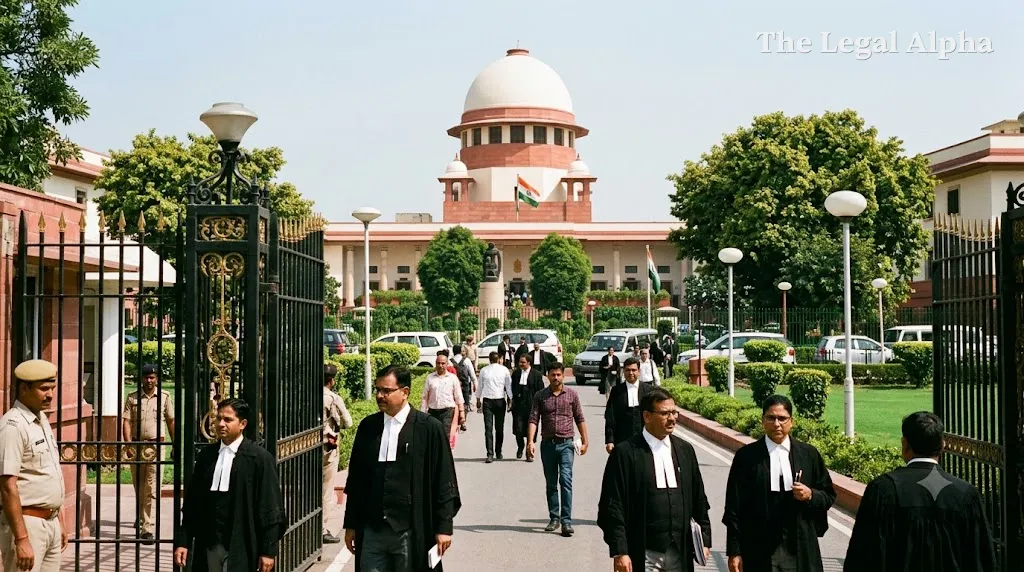
The Supreme Court of India granted regular bail to Dr. Sandip Ghosh, the former principal of RG Kar Medical College and Hospital, in connection with a corruption and financial irregularities case investigated by the Central Bureau of Investigation (CBI).
Ghosh had been detained since late 2024 following allegations of administrative misconduct, fraudulent procurement, and merit score tampering at the institution. After lower courts repeatedly dismissed his pleas for release, an apex court bench comprising Justice M.M. Sundresh and Justice Prasanna B. Varale intervened, observing that Ghosh had already spent over two years behind bars while the prosecution had examined merely seven out of 147 listed witnesses. Finding no immediate prospect of the trial concluding anytime soon, the bench set aside earlier adverse orders and ordered his release on bail.
Legal Topic
Area of Law: Criminal Law & Procedure
Sub-topic: Regular Bail / Right to Speedy Trial / Economic Offences under PC Act
Core Legal Issue
The fundamental legal question before the Supreme Court was whether an accused charged with grave socio-economic offences and corruption can be kept in indefinite pre-trial incarceration when the trial proceeds at an exceptionally slow pace.
Specifically, the Court had to weigh the seriousness of the charges framed by the CBI against the constitutional guarantee of personal liberty and speedy justice under Article 21, particularly where the trial is in its infancy despite prolonged judicial custody.
What Did the Court Decide?
The Supreme Court allowed Ghosh’s criminal appeal and quashed the Calcutta High Court’s order dated February 23, 2026, which had affirmed the trial court’s rejection of his bail.
The bench observed that the sheer volume of remaining witnesses—140 yet to be examined—meant the trial would not conclude within a reasonable timeframe. Consequently, keeping the accused in detention indefinitely would operate as pre-trial punishment.
The Court directed that Ghosh be released on bail subject to terms and conditions to be determined by the designated trial court. The order does not quash the proceedings or express any opinion on the merits of the charges; the CBI’s prosecution will continue on its merits before the trial court.
Key Legal Points
-
Liberty Prevails Over Protracted Incarceration: Extended custody cannot substitute for a speedy trial; where an accused has served substantial pre-trial detention, constitutional protections under Article 21 necessitate judicial relief.
-
Realistic Timeline Assessment: In evaluating bail, courts must evaluate the objective progress of the trial, including the proportion of examined witnesses relative to the total prosecution witness roster.
-
Rejection of Pre-Trial Punishment: Even in high-profile investigations involving public institutions, pre-trial detention cannot be transformed into punitive imprisonment before conviction.
-
Trial Court Oversight: The Supreme Court left the determination of bail conditions—such as passport surrender, travel restrictions, and trial attendance—to the jurisdictional trial judge to prevent tampering or flight risk.
Relevant Law
-
Constitution of India: Article 21 (Protection of life and personal liberty, encompassing the fundamental right to a speedy trial).
-
Code of Criminal Procedure, 1973 (CrPC) / Bharatiya Nagarik Suraksha Sanhita, 2023 (BNSS): Provisions governing the grant of regular bail by superior courts (Section 439 CrPC / Section 483 BNSS).
-
Indian Penal Code, 1860 (IPC): Sections 120B (Criminal Conspiracy), 409 (Criminal Breach of Trust by Public Servant), 420 (Cheating), 468 (Forgery for Purpose of Cheating), and 471 (Using as Genuine a Forged Document).
-
Prevention of Corruption Act, 1988: Statutory offences relating to criminal misconduct by a public servant.
Arguments of the Parties
Appellant (Sandip Ghosh): Counsel for Ghosh contended that the investigation was complete and the CBI had already filed its chargesheet. It was submitted that with over two years spent in custody and only seven witnesses examined out of nearly 150, the trial was crawling, violating the appellant’s fundamental right to personal liberty and a timely hearing. The defence argued that continuous incarceration without trial progress amounted to unjustified pre-trial punitive detention.
Respondent (Central Bureau of Investigation / State): The prosecuting agency opposed the bail plea, citing the gravity of the institutional corruption charges, Ghosh’s influential position as the former head of the medical college, and the risk that witnesses might be influenced or key evidence compromised if he were set free during the ongoing examination of crucial witnesses.
Why Does It Matter?
This ruling reinforces a crucial procedural safeguard in white-collar and institutional corruption prosecutions. Investigating agencies routinely list hundreds of witnesses and voluminous documentary exhibits, which frequently leads to trials dragging on for years or decades.
By setting aside the High Court's refusal and focusing squarely on the trial's sluggish arithmetic—7 out of 147 witnesses over two years—the Supreme Court reaffirmed that no matter how sensational or grave the allegations, the prosecution cannot rely on procedural delays to keep an undertrial in custody. It serves as a stern reminder to trial courts that undertrial detention cannot be treated as an acceptable alternative to a diligent, swift prosecution.
Legal Takeaway
Prolonged pre-trial detention coupled with a slow trial pace creates a strong entitlement to bail, even in complex corruption and economic offence cases. When the prosecution cites a massive witness list but progresses at an incremental pace, the constitutional right to a speedy trial under Article 21 will supersede the severity of unproven allegations.
Sources
Primary Source:
-
Order of the Supreme Court of India in Sandip Ghosh v. Central Bureau of Investigation, Criminal Appeal arising out of SLP (Crl.), decided on October 15/16, 2026 (Coram: Justices M.M. Sundresh and Prasanna B. Varale).
Additional Sources:
-
Records of Criminal Miscellaneous Petition / Bail Orders, High Court at Calcutta (Order dated February 23, 2026).
-
Central Bureau of Investigation Charge Sheet filed under Sections 120B, 409, 420, 468, 471 IPC and Prevention of Corruption Act (August 2024).