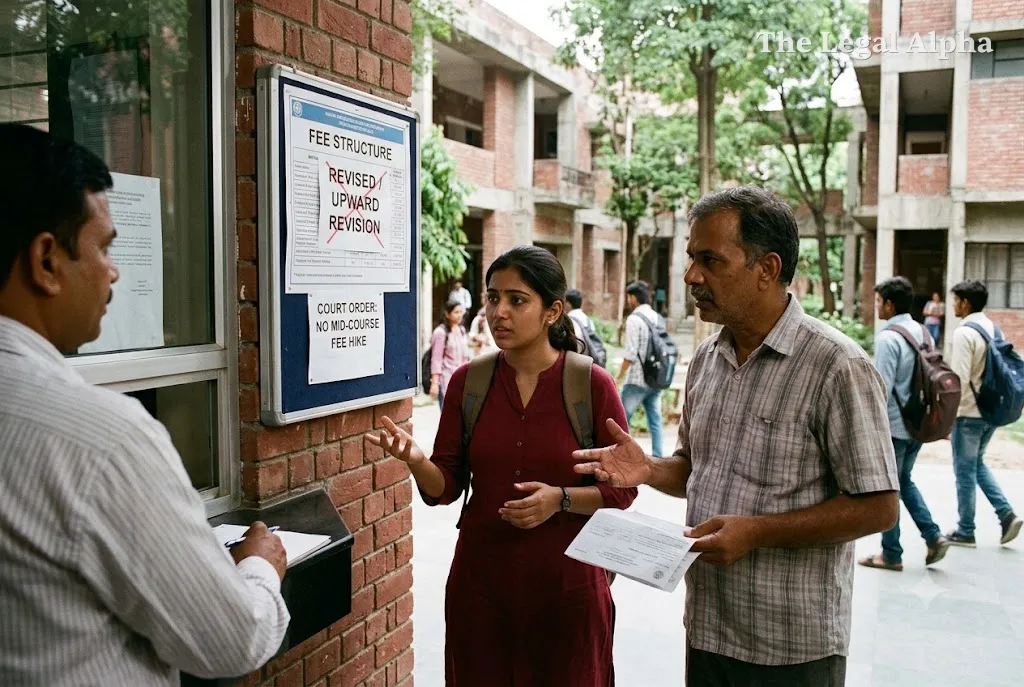
DNA Exclusion vs Long-Standing Paternity: Can a Non-Biological Child Raised by Parents Still Claim Inheritance Rights?

Disputes over family estates increasingly collide with scientific paternity testing in Indian civil courts. When adult siblings or extended relatives initiate partition suits or challenge succession certificates, questions often emerge over whether a child who was raised, educated, and treated as a legal son or daughter for decades can be disinherited solely because a medical DNA test excludes a biological link.
Such questions commonly land before High Courts and civil forums when co-heirs attempt to compel genetic analysis to knock out a claimant’s coparcenary or succession entitlements under personal inheritance laws. The issue has taken on urgency as courts balance hard genetic science against legal presumptions of legitimacy, the social sanctity of the family unit, and settled status built over lifetimes.
Legal Topic
Area of Law: Family and Succession Law
Sub-topic: Inheritance Rights, Presumption of Legitimacy, and Genetic Testing in Partition Suits
Core Legal Issue
The fundamental legal question is whether the scientific exclusion of a biological relationship via DNA automatically strips a child of inheritance and coparcenary rights when they were born during the subsistence of a valid marriage and raised as a legitimate child of the household.
Courts must resolve the conflict between biological fact and legal parentage under statutory presumptions of legitimacy—specifically whether an established social and legal familial status can be revoked retroactively to deny statutory inheritance.
What Did the Courts Decide?
The Supreme Court of India and various High Courts have consistently held that civil courts cannot mechanically order or rely upon DNA testing to dislodge established parentage and succession claims:
-
High Threshold for DNA Directives: Courts cannot direct DNA testing as a roving enquiry or routine evidentiary exercise. A strong prima facie case establishing "non-access" between the married spouses during the conception period is mandatory before science can intervene.
-
Child's Status Cannot Be Frivolously Bastardised: Judicial policy protects children from having their status questioned solely to settle collateral inheritance disputes or property squabbles between adult heirs.
-
Effect of Rebuttal: Where a DNA test is legally admitted and conclusively establishes non-paternity, the presumption of legitimacy can be rebutted. However, courts distinguish between natural intestate succession, coparcenary membership under Hindu law, valid statutory adoptions under the Hindu Adoptions and Maintenance Act, and rights conferred through registered testamentary instruments such as wills or gift deeds.
-
Protection of Long-Treated Relationships: Unless non-access is proven under statutory conditions, a child born within wedlock retains all inheritance rights as a legitimate heir, regardless of speculative allegations by rival claimants.
Key Legal Points
-
Presumption Trumps Suspicion: Under Section 112 of the Indian Evidence Act (and Section 116 of the Bharatiya Sakshya Adhiniyam, 2023), the birth of a child during a valid marriage serves as conclusive proof of legitimacy unless the challenging party establishes absolute non-access between the husband and wife at the time of conception.
-
Strict Prerequisite of "Non-Access": Genetic testing is an exceptional measure. A party disputing an heir's entitlement cannot bypass the burden of proving that the parents had zero opportunity for marital access.
-
Sanctity of Legal and Adoptive Status: Biological parentage is not the sole determinant of succession rights. Validly adopted children or children acknowledged and treated under settled family arrangements hold legally enforceable rights that genetic tests cannot negate.
-
Testamentary Autonomy Overrules Biology: A parent is fully entitled to bequeath self-acquired property to any individual—biological or not—by executing a valid will or settlement deed, shielding the heir from paternity challenges.
Relevant Law
-
Section 112, Indian Evidence Act, 1872 (now Section 116, Bharatiya Sakshya Adhiniyam, 2023): Conclusive presumption of legitimacy of a child born during a valid marriage.
-
Hindu Succession Act, 1956: Sections 8 and 15 governing intestate succession rules for Class I and general heirs.
-
Hindu Adoptions and Maintenance Act, 1956: Section 12, equating an adopted child’s rights, including inheritance, to those of a biological child.
-
Aparna Ajinkya Firodia v. Ajinkya Arun Firodia (2024): Supreme Court ruling laying down strict constraints against directing DNA tests where legitimacy or child privacy is at stake.
-
Nandlal Wasudeo Badwaik v. Lata Nandlal Badwaik (2014): Supreme Court precedent addressing the evidentiary friction between conclusive statutory presumptions and scientifically unimpeachable DNA evidence.
Arguments of the Parties
Challenging Heirs / Opposing Claimants
-
The contesting relatives argued that succession and coparcenary rights under personal laws are founded strictly on biological lineage or valid formal adoption.
-
They contended that once scientific tests exclude biological parentage, sustaining an inheritance claim would allow a genetic stranger to inherit ancestral or family assets to the detriment of legitimate heirs.
The Child / Claimant
-
The claimant submitted that they were born during the subsistence of a valid wedlock and were publicly and privately acknowledged by the parents throughout their lives.
-
They argued that Section 112 of the Evidence Act provides a conclusive presumption of legitimacy that cannot be disrupted unless non-access is strictly demonstrated, and that property rivals cannot bastardise an adult child simply to enrich their own shares in a partition suit.
Why Does It Matter?
This legal dynamic directly affects families managing inheritance planning, joint family properties, and estate distribution across India. It sets a high procedural and substantive barrier against greedy relatives seeking to weaponise modern genetic testing to unseat siblings or cousins from family wealth.
By balancing scientific truth against social reality, Indian jurisprudence reinforces that legal parentage encompasses decades of emotional, custodial, and social acknowledgment, rather than just chromosomes. It provides critical guidance to civil courts to dismiss invasive DNA petitions filed with the ulterior motive of shifting property distribution shares.
Legal Takeaway
A child raised within a valid marriage retains full statutory inheritance rights under the legal presumption of legitimacy, and courts will not permit DNA testing merely to assist collateral heirs in property disputes. Unless a challenger proves complete non-access between the parents at conception, settled legal parentage stands firm against attempts to disinherit an acknowledged child.
Sources
Primary Source:
-
Aparna Ajinkya Firodia v. Ajinkya Arun Firodia, (2024) 7 SCC 773 (Supreme Court of India)
-
Nandlal Wasudeo Badwaik v. Lata Nandlal Badwaik, (2014) 2 SCC 576 (Supreme Court of India)
-
Section 112, Indian Evidence Act, 1872 / Section 116, Bharatiya Sakshya Adhiniyam, 2023
Additional Sources:
-
High Court partition suit jurisprudence on paternity rebuttals and DNA test admissibility (Shivanna v. H.S. Manjula & Anr., Karnataka High Court, 2026)
-
Hindu Succession Act, 1956 & Hindu Adoptions and Maintenance Act, 1956 statutory provisions on inheritance and adopted child parity