Preserving Judicial Detachment: Supreme Court Declines Parliamentary Panel's Invitation to Discuss Simultaneous Polls Bill
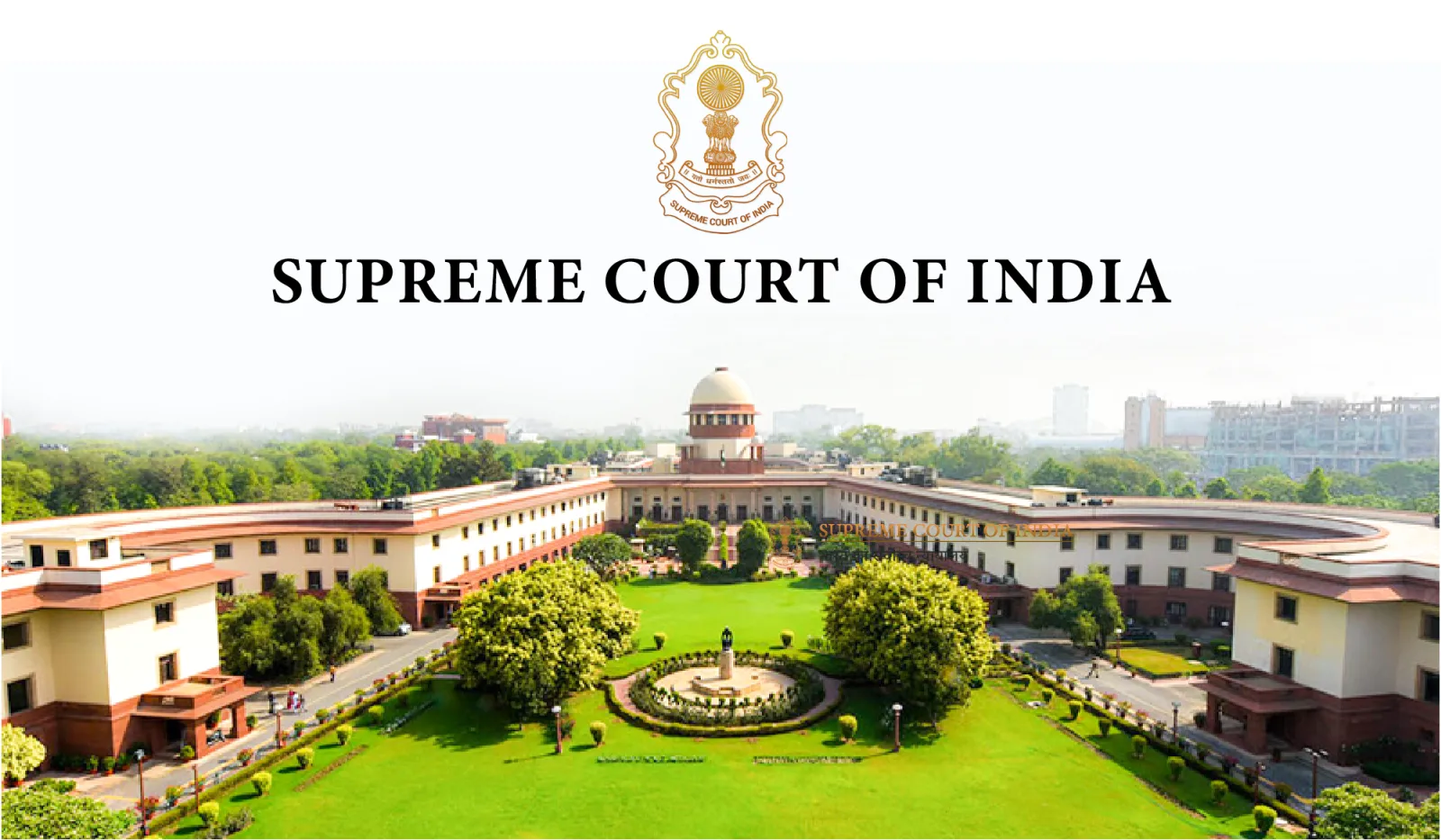
The Supreme Court of India has turned down a formal request to meet with the Joint Parliamentary Committee examining the proposed constitutional amendments for simultaneous elections.
The parliamentary panel, chaired by Bharatiya Janata Party MP P.P. Chaudhary, had proposed an "informal interaction" described as a "Local Study Visit" with the Chief Justice of India and senior apex court judges. Routed through the Union Department of Legislative Affairs on September 28, the proposed interaction was scheduled for October 6.
Following deliberations among senior judges, the Supreme Court administration communicated to the government that holding an administrative-side dialogue was "not expedient or desirable." The court highlighted a foundational institutional concern: because the proposed legislation alters fundamental constitutional mechanics, it could inevitably face judicial challenges before the apex court once passed.
Legal Topic
Area of Law: Constitutional Law
Sub-topic: Separation of Powers / Judicial Independence and Pre-Legislative Review
Core Legal Issue
The controversy centers on whether sitting judges of the constitutional judiciary can engage in extra-judicial, administrative consultations with a legislative committee on a pending bill that may subsequently come before them for judicial determination.
The core constitutional question is whether such pre-legislative interactions infringe upon the doctrine of separation of powers and compromise the neutrality required of the court, potentially exposing future judicial review to claims of pre-judgment or institutional conflict of interest.
What Did the Court / Authority Decide?
The Supreme Court formally declined and cancelled the proposed interaction.
Through an official communication issued by its Secretary General to the Department of Legislative Affairs, the court recorded that senior judges had considered the invitation and concluded that discussing a pending constitutional amendment on the administrative side was unviable.
By declining the meeting, the court:
-
Reasserted that sitting judges cannot participate in pre-enactment policy or legislative consultations.
-
Preserved its judicial aloofness regarding the Constitution (One Hundred and Twenty-Ninth Amendment) Bill, 2024, and the Union Territories Laws (Amendment) Bill, 2024.
-
Left the Joint Parliamentary Committee to continue its review through standard consultative channels without the formal engagement of sitting apex court judges.
Key Legal Points
-
Preservation of Judicial Review: Sitting judges cannot offer informal or advisory views on pending legislation that may later be challenged before them under the court's judicial review jurisdiction.
-
Separation of Powers: The constitutional structure requires functional distance between Parliament's lawmaking responsibilities and the judiciary's adjudicatory role, barring informal institutional overlaps.
-
Avoidance of Judicial Pre-Commitment: Participating in discussions on draft constitutional changes risks creating an apprehension of institutional bias or pre-determination before the law is formally enacted and challenged.
-
Boundary Between Sitting and Retired Judges: While legislative panels frequently seek testimony from legal academics, bar leaders, and retired judges, engaging active judges on the bench compromises the court's role as an independent constitutional umpire.
Relevant Law
-
Article 50 of the Constitution of India: Directs the State to take steps to separate the judiciary from the executive and maintain functional independence across constitutional branches.
-
Articles 13 and 32 of the Constitution of India: Confer power upon the Supreme Court to review statutory enactments and constitutional amendments for consistency with fundamental rights and the constitutional framework.
-
Article 368 of the Constitution of India: Governs Parliament’s constituent power to amend the Constitution, which remains subject to judicial scrutiny under the Basic Structure doctrine.
-
Kesavananda Bharati v. State of Kerala (1973): Established that judicial review, separation of powers, and the independence of the judiciary constitute part of the unamendable Basic Structure of the Constitution.
-
The Constitution (One Hundred and Twenty-Ninth Amendment) Bill, 2024 & Union Territories Laws (Amendment) Bill, 2024: The draft legislative proposals intended to facilitate synchronized elections to the Lok Sabha and State Legislative Assemblies.
Arguments of the Parties
The Parliamentary Committee’s Position
The Joint Parliamentary Committee viewed the proposed October 6 session as an informational "Local Study Visit" and an "informal interaction" aimed at understanding judicial perspectives on administering simultaneous elections. Committee proponents maintained that broad-based consultations with various constitutional and legal experts fall within the traditional scope of committee scrutiny to evaluate practical and constitutional dimensions of major electoral reforms.
Judicial Concerns and Opposition Objections
The Supreme Court took the stance that an administrative discussion between sitting judges and lawmakers regarding a bill likely to face constitutional review is structurally improper. Opposition committee members and senior jurists raised parallel objections, contending that consulting sitting judges on pending legislation sets a problematic precedent, breaches the separation of powers, and compromises the bench's independence should the amendment be challenged in court.
Why Does It Matter?
This development reinforces the operational boundaries between India’s legislative and judicial branches at a time when the "One Nation, One Election" framework represents one of the most substantial structural shifts in the country's electoral democracy.
Had sitting judges participated in closed-door discussions on the bill's mechanics or legality, any subsequent challenge brought before a Constitutional Bench would be susceptible to allegations of prior institutional consultation.
Furthermore, the decision clarifies that the Supreme Court's constitutional guidance to the political branches cannot be sought through informal or administrative backchannels. Where the Constitution envisions apex court advice to the Union—such as under Article 143—it mandates a formal, public, on-the-record Presidential Reference argued by counsel in open court. By drawing this boundary, the judiciary preserved both the integrity of its adjudicative independence and public confidence in its neutrality.
Legal Takeaway
The Supreme Court’s refusal to hold informal discussions on the simultaneous polls bill reaffirms the essential boundary between legislative drafting and judicial adjudication. By declining the parliamentary panel's request, the court protected the doctrine of separation of powers and ensured that any future constitutional review of the proposed electoral amendments remains impartial and untainted by prior institutional involvement.
Sources
Primary Source:
Official Communication of the Supreme Court of India (conveyed by the Secretary General to the Department of Legislative Affairs, Ministry of Law and Justice, October 1, 2026).
Additional Sources:
-
The Constitution (One Hundred and Twenty-Ninth Amendment) Bill, 2024.
-
The Union Territories Laws (Amendment) Bill, 2024.
-
Proceedings and communications of the Joint Parliamentary Committee on Simultaneous Elections.