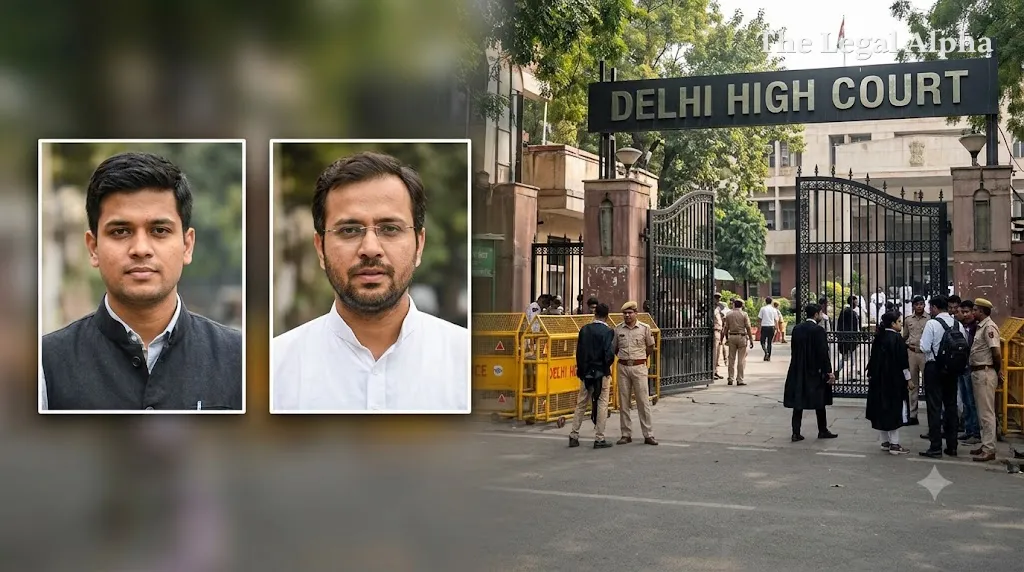
No Partition Without Proven Title: Calcutta High Court Upholds Dismissal Where Co-Ownership and Necessary Parties Were Missing
The Calcutta High Court recently dismissed a first appeal arising from a partition dispute, affirming a trial court's rejection of a property partition suit. A Division Bench comprising Justice Ravi Krishan Kapur and Justice Atarup Banerjee ruled in Safikul Islam Khan v. Dhulo Sk. & Ors. that a plaintiff cannot claim a division of immovable property merely by asserting joint status or relying on conflicting revenue entries. The dispute involved rural plots where the appellant failed to prove underlying title or lawful possession and neglected to implead subsequent purchasers who held recorded interests in the land.
Legal Topic
Area of Law: Civil Law / Property Law
Sub-topic: Partition Suits / Co-Ownership & Non-Joinder of Necessary Parties
Core Legal Issue
Can an individual maintain a suit for partition without affirmatively demonstrating proprietary title and co-ownership over the exact suit schedule property?
Furthermore, can a court grant a decree of partition when subsequent purchasers and co-sharers holding vested interests in the land have been omitted from the array of parties?
What Did the Court Decide?
The Division Bench dismissed First Appeal No. 303 of 2014, upholding the 2014 judgment of the trial court in Title Suit No. 195 of 2014 with no order as to costs. The High Court held that the trial court committed no perversity or legal error in dismissing the action.
The Court observed that:
-
The appellant failed to demonstrate any existing right, title, interest, or possession in the specific 41-decimal suit plot (Plot No. 1665), where the respondents held established shares.
-
Unilateral rectifications before revenue officers or assertions of joint property cannot substitute for concrete evidence of co-ownership.
-
The non-joinder of interested co-sharers and subsequent purchasers was fatal to the suit, as a decree cannot be framed behind the backs of persons whose rights would be directly impacted.
Key Legal Points
-
Right Originates from Co-Ownership: A right to claim partition or separation of shares arises strictly from established co-ownership; property cannot be divided among those who fail to show a legally recognized share in it.
-
Essential Prongs of a Partition Action: A valid partition claim requires verifiable proof of the property’s character, the legal source of the plaintiff's title, identification of all co-sharers, and an intention to sever joint status.
-
Fatal Defect of Non-Joinder: Every person holding a legitimate right, title, or interest in the subject property—including subsequent purchasers—is a necessary party to a partition suit.
-
Evidentiary Weight of Revenue Records: Disputed or corrected revenue entries obtained through summary administrative proceedings do not confer judicial title if inconsistent with long-standing, unchallenged Settlement Records of Rights.
Relevant Law
-
Code of Civil Procedure, 1908 (CPC): Order I, Rule 9 (Effect of non-joinder and misjoinder) and Order I, Rule 10 (Court’s power to strike out or add parties)
-
Specific Relief Act, 1963: Principles governing suits for declaration of title and consequential partition
-
Transfer of Property Act, 1882: Sections governing transfers by co-owners and rights of purchasers
-
West Bengal Land Reforms Act, 1955: Revisional Settlement Record of Rights (RSROR) and evidentiary weight of revenue records
Arguments of the Parties
Appellant (Safikul Islam Khan): The appellant contended that his predecessors transferred fractional shares to him through registered transfer deeds in 1998 and a registered gift deed in 2001. He relied on an order passed in 2008 by the Block Land and Land Reforms Officer (BL&LRO) that corrected the revenue register to reflect his share. The appellant argued that the land remained unpartitioned between him and the respondents, providing a continuous cause of action to seek an equitable division.
Respondents (Dhulo Sk. & Ors.): The respondents argued that an amicable family partition had settled the plots decades earlier, allocating the suit property away from the appellant's predecessors. They submitted that the appellant had neither title nor possession over the specific suit plot. The respondents further contended that subsequent purchasers who acquired portions of the land over several decades were never impleaded, rendering the partition suit defective and legally unmaintainable.
Why Does It Matter?
This decision underscores a recurrent procedural stumbling block in Indian property litigation: attempting to use a partition suit as a shortcut to establish title or circumvent title disputes.
For litigants and property practitioners, the ruling serves as a vital reminder that:
-
A plaintiff must conduct thorough due diligence to establish clear chain of title over the precise schedule of land before filing for partition.
-
Modifying revenue records before local land reform offices does not equivalent to an adjudication of civil title by a competent court.
-
Leaving out subsequent buyers or transferees will invalidate the proceedings, as equity cannot partition a property while ignoring persons with recorded interests.
Legal Takeaway
A suit for partition cannot succeed on assumptions of unpartitioned status or summary revenue entries alone. To secure a partition decree, a plaintiff must affirmatively prove a lawful chain of co-ownership in the exact disputed property and implead every interested co-sharer and subsequent purchaser.
Sources
Primary Source:
-
High Court at Calcutta, Civil Appellate Jurisdiction, Safikul Islam Khan v. Dhulo Sk. & Ors. (First Appeal No. 303 of 2014, arising out of Title Suit No. 195 of 2014), Judgment delivered by Justice Ravi Krishan Kapur and Justice Atarup Banerjee.
Additional Sources:
-
High Court at Calcutta appellate records and case records reported in legal news indices.