NCB Busts Delhi–Kashmir Pharmaceutical Drug Trafficking Network, Four Arrested Under NDPS Act
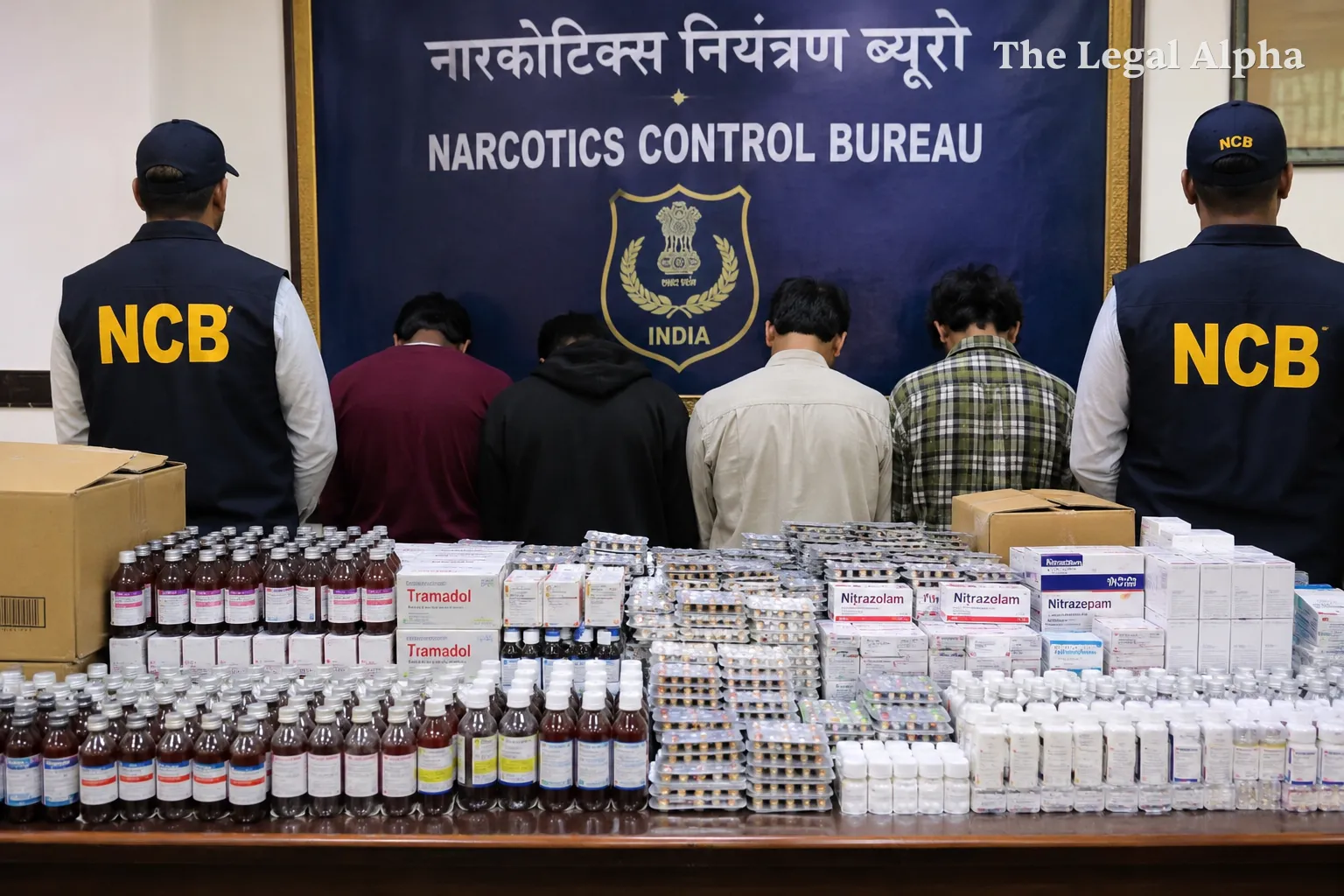
The Narcotics Control Bureau (NCB) has uncovered an interstate pharmaceutical drug trafficking network allegedly operating between Delhi and the Kashmir Valley, arresting four people and seizing more than five lakh tablets, capsules and bottles of pharmaceutical preparations.
The operation was conducted by the NCB's Jammu Zonal Unit in coordination with its Delhi Zonal Unit. Investigators are now examining how regulated pharmaceutical products were diverted from legitimate supply channels and subsequently distributed through an illegal network.
The investigation began after the agency intercepted a Srinagar-bound passenger bus in Udhampur district on November 16, 2026. Subsequent searches and arrests helped investigators trace the suspected supply chain to Delhi, where a large quantity of pharmaceutical preparations was recovered from a rented storage facility in Shahdara.
What Happened?
Acting on specific intelligence, the NCB Jammu team intercepted a passenger bus travelling towards Srinagar near Mada Toll Plaza in Chenani, Udhampur district, during the early hours of November 16.
During the operation, officials recovered approximately seven kilograms of codeine-based cough syrup (CBCS) from a passenger belonging to Bhaderwah in Doda district. The agency subsequently registered a case under the Narcotic Drugs and Psychotropic Substances (NDPS) Act, 1985.
Further investigation led to the arrest of a suspected principal recipient from Anantnag district. The NCB then followed the supply links towards Delhi, where joint teams recovered another 356 bottles of codeine-based cough syrup on November 18.
Investigators subsequently identified a suspected clandestine storage facility operating from rented premises in Shahdara, Delhi. Searches conducted on November 18 and 19 resulted in the seizure of more than five lakh tablets, capsules and bottles containing tramadol hydrochloride, alprazolam, nitrazepam and codeine.
Four individuals have been arrested so far. The agency is continuing its investigation to identify the suppliers, distributors and financial connections associated with the suspected trafficking network.
Legal Topic
Area of Law: Criminal Law
Sub-topic: Narcotic Drugs and Psychotropic Substances Regulation / Pharmaceutical Drug Trafficking
Core Legal Issue
The central legal issue concerns the illegal diversion and distribution of regulated pharmaceutical preparations containing narcotic drugs or psychotropic substances.
The investigation seeks to establish where the substances entered the illegal supply chain, who facilitated their diversion and whether the individuals involved committed offences punishable under the NDPS Act, 1985.
It also raises questions concerning the accountability of persons involved in the movement and distribution of controlled pharmaceutical products outside authorised channels.
What Did the Authority Decide?
The NCB has registered a case under the NDPS Act, 1985, following the initial seizure in Udhampur.
The agency's subsequent investigation resulted in four arrests and the recovery of more than five lakh pharmaceutical units from the suspected storage facility in Shahdara, in addition to the earlier recoveries of codeine-based cough syrup.
However, this is an ongoing criminal investigation, not a judicial determination. No court judgment or finding of guilt has been reported in connection with this particular operation.
The NCB is now pursuing the wider supply chain, including upstream suppliers, downstream distributors and financial links that may have supported the suspected operation.
Key Legal Points
-
NDPS Act Enforcement: The NCB has registered a case under the NDPS Act, 1985, concerning the suspected illegal movement of regulated pharmaceutical preparations.
-
Pharmaceutical Diversion: Investigators are examining how codeine-based cough syrup and other controlled substances were diverted from legitimate pharmaceutical supply channels.
-
Interstate Trafficking: The investigation covers an alleged distribution network connecting Delhi with the Kashmir Valley.
-
Financial Investigation: The agency is examining financial connections and the supply arrangements that may have supported the suspected trafficking operation.
-
Network-Based Enforcement: The NCB is attempting to identify not only the immediate handlers but also the upstream suppliers and downstream distributors.
Relevant Law
Narcotic Drugs and Psychotropic Substances Act, 1985
The NDPS Act establishes the legal framework governing narcotic drugs and psychotropic substances in India.
Relevant legal considerations include:
-
Section 8: Prohibits certain activities involving narcotic drugs and psychotropic substances except for authorised medical or scientific purposes and in accordance with the Act.
-
Section 21: Deals with contraventions relating to manufactured drugs and preparations.
-
Section 22: Provides punishment for contraventions involving psychotropic substances.
-
Section 29: Deals with abetment and criminal conspiracy in connection with offences under the Act.
The applicability of particular provisions will depend on the substances involved, the evidence collected and the specific allegations in the registered case.
Arguments of the Parties
NCB / Investigating Agency
The NCB's investigation is focused on identifying the origin of the diverted pharmaceutical preparations and establishing how they entered the illegal distribution network.
The agency is also examining the involvement of suppliers, distributors and financial intermediaries to prevent further movement of controlled substances through unauthorised channels.
Accused Persons
No detailed defence submissions or statements from the arrested individuals have been reported in connection with this operation. Their individual roles and criminal liability remain subject to investigation and judicial proceedings.
Why Does It Matter?
The operation highlights the regulatory challenges associated with pharmaceutical products that have legitimate medical applications but can also be diverted into illegal markets.
The recovery of more than five lakh pharmaceutical units raises important questions about supply-chain monitoring, storage practices, distribution records and the responsibilities of businesses dealing in regulated medicines.
For pharmaceutical manufacturers, wholesalers and distributors, the investigation reinforces the importance of maintaining proper documentation and ensuring that controlled medicines reach authorised recipients.
It also demonstrates why enforcement agencies must examine the entire distribution chain rather than limiting investigations to individuals caught transporting pharmaceutical products.
The NCB's focus on tracing financial connections and identifying suppliers could help investigators understand how illegal pharmaceutical distribution networks operate beyond individual seizures.
Legal Takeaway
The NDPS Act, 1985, provides the legal framework for dealing with the unauthorised manufacture, possession, transportation and distribution of covered narcotic drugs and psychotropic substances. However, the recovery of pharmaceutical products and the arrest of suspects do not by themselves establish guilt. The prosecution must establish the specific statutory violations and prove the accused persons' individual involvement through legally admissible evidence.
Sources
Primary Source: NCB official information and statement as reported by multiple publications. The original agency statement or case documents were not independently located.
Additional Sources: