Madras High Court Temporarily Puts Witness Evidence on Hold in Sridhar Vembu Divorce Dispute
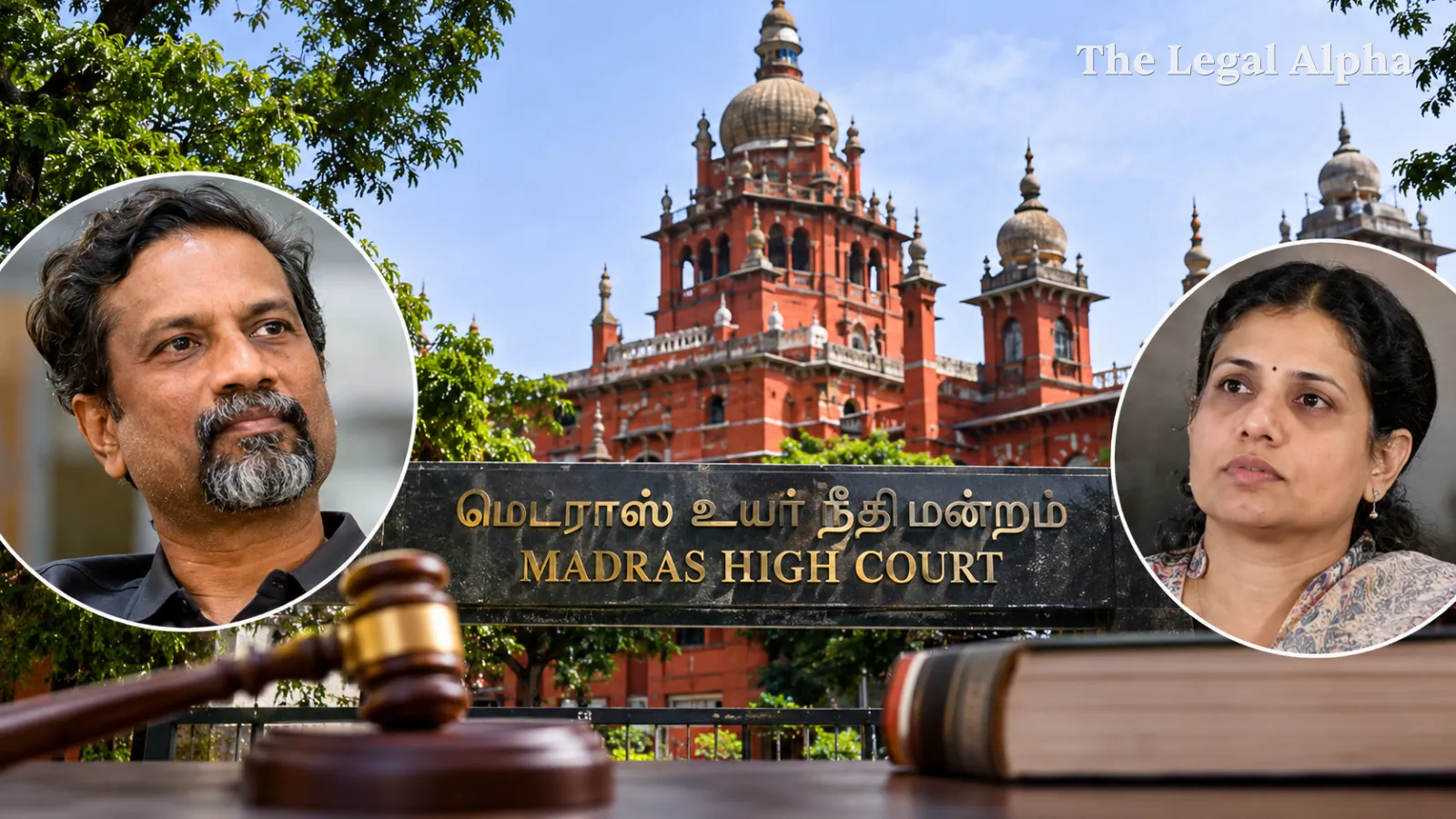
The Madras High Court has directed parties to maintain status quo on the recording of witness evidence in the divorce proceedings involving Zoho Corporation co-founder Sridhar Vembu and his estranged wife, Pramila Srinivasan.
A Division Bench comprising Justice A.D. Jagadish Chandira and Justice B. Karthikeyan passed the interim order on November 19, 2026, while hearing appeals filed by Zoho Corporation and members of the Vembu family.
The appeals challenge an October 30, 2026, order of a single judge directing the Family Court at Chengalpattu to record evidence from witnesses based in Tamil Nadu for use in the matrimonial proceedings pending before a California court.
The High Court has called for the case records and adjourned the matter by four weeks. The latest order temporarily pauses the evidence-recording process while the appeals are considered.
Legal Topic
Area of Law: Civil Procedure and Family Law
Sub-topic: International Judicial Cooperation, Letters of Request and Recording of Evidence for Foreign Court Proceedings.
Core Legal Issue
The central legal question concerns the extent to which Indian courts can facilitate the recording of witness testimony and collection of documents in India when a foreign court requests assistance in proceedings pending before it.
The dispute also raises procedural questions concerning the execution of a Letter of Request issued by a foreign court, the permissible scope of evidence collection and whether the proposed examination of witnesses would amount to pre-trial discovery that is impermissible under Indian law.
What Did the Court Decide?
The Division Bench directed the parties to maintain the existing position concerning the recording of witness evidence. This effectively puts the process on hold until the court considers the pending appeals.
The appeals were filed by Zoho Corporation and members of the Vembu family against the single-judge order dated October 30, 2026.
The appellants raised objections to the proposed evidence-gathering exercise, including the scope of documents sought and the procedure followed for obtaining witness testimony.
The Division Bench called for the relevant records and adjourned the hearing by four weeks.
What has been decided:
-
Status quo must be maintained regarding the recording of witness evidence.
-
The appeals will be considered by the Division Bench.
-
The case records have been called for.
What remains pending:
The validity of the October 30 directions is yet to be finally determined in the appeals. The interim order does not amount to a final decision on the underlying divorce dispute or the admissibility of the proposed evidence.
Key Legal Points
-
Judicial assistance to foreign courts: Indian courts can facilitate the collection of evidence for proceedings pending before foreign courts, subject to Indian procedural law.
-
Scope of evidence collection: The nature and extent of witness examination and document production remain important issues in the present dispute.
-
Letters of Request: Such requests provide a mechanism through which foreign courts can seek assistance from Indian judicial authorities.
-
Procedural safeguards: Witness examination and document production must follow the applicable Indian legal procedure.
-
Interim judicial protection: The status quo direction temporarily prevents the evidence-recording process from proceeding while the appellate court examines the challenges.
Relevant Law
Code of Civil Procedure, 1908
-
Section 78: Provides for commissions issued by foreign courts.
-
Order XXVI Rule 19: Deals with commissions issued at the request of foreign courts for examination of witnesses.
-
Order XXVI Rule 17: Addresses the summoning, attendance and examination of witnesses and production of documents.
-
Order XXVI Rule 22: Governs the execution and return of commissions issued at the request of foreign courts.
International Legal Framework
- Hague Convention on the Taking of Evidence Abroad in Civil or Commercial Matters, 1970.
These provisions formed part of the legal framework considered in the October 30 order.
Arguments of the Parties
Zoho Corporation and Other Appellants
Senior Advocate P.S. Raman, appearing for one of the appellants, argued that Pramila Srinivasan had sought approximately 40 documents from the company without establishing sufficient knowledge of the documents being requested.
The appellants also questioned the procedure adopted for obtaining evidence, arguing that the request should have followed the appropriate international legal channels. They further contended that examining and cross-examining witnesses in the proposed manner would effectively amount to pre-trial depositions, which they argued were not permissible under Indian law.
Pramila Srinivasan
Pramila Srinivasan sought the appointment of a local commissioner to record witness testimony and obtain relevant documents from individuals and entities based in Tamil Nadu.
Her position was that the evidence was necessary for the matrimonial proceedings pending before the California court and that the Madras High Court could facilitate its collection under the provisions of the Code of Civil Procedure.
These are the respective parties' submissions and should not be treated as final judicial findings.
Why Does It Matter?
The development highlights the procedural challenges involved when matrimonial or civil proceedings pending in one country require evidence from individuals and companies located in another.
The dispute is particularly significant because evidence collection may involve third-party witnesses, corporate records and documents connected with financial or property-related issues.
For Indian courts, the matter raises questions about balancing international judicial cooperation with domestic procedural safeguards and the rights of individuals asked to provide evidence.
The appellate proceedings will also be important in determining whether the earlier directions for recording evidence can be implemented and under what conditions.
Legal Takeaway
The case demonstrates that foreign courts may seek assistance from Indian courts to obtain evidence located within India, but such assistance must operate within the framework of Indian procedural law. The Madras High Court's latest order is interim in nature, and the legality of the challenged evidence-recording directions remains subject to appellate consideration.
Sources
Primary Source:
- Madras High Court, Pramila Srinivasan v. Sridhar Vembu, order dated October 30, 2026. Read the court order.
Additional Sources: