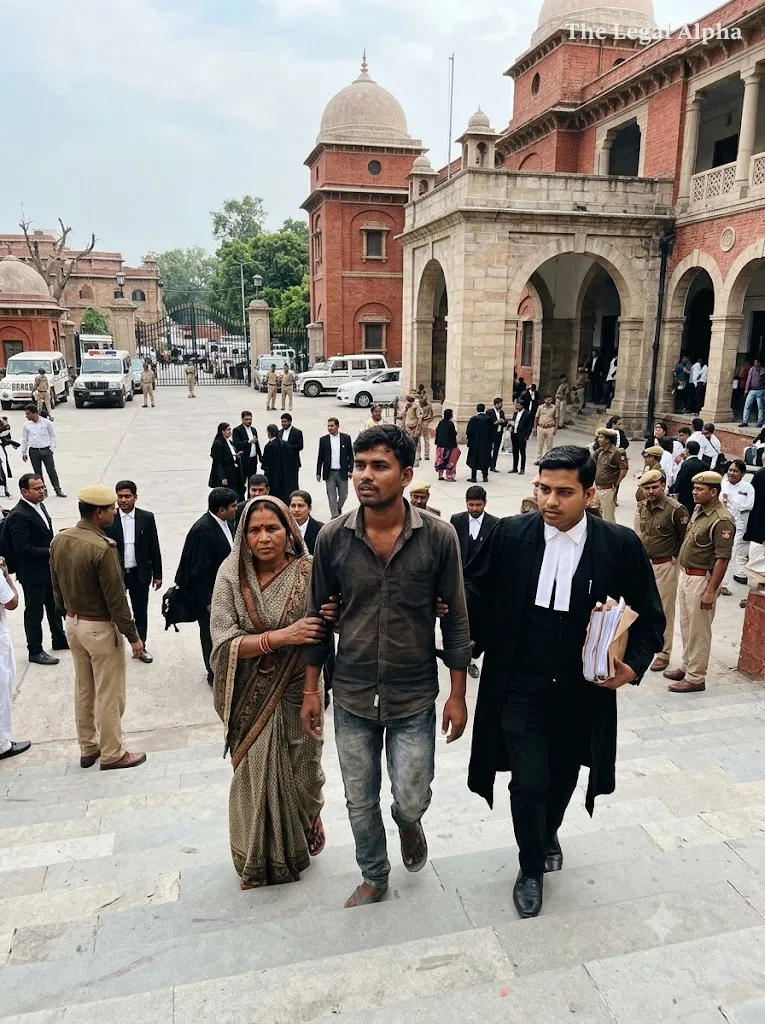
Ladakh Administration Directs Sonam Wangchuk-Founded Institution to Halt School Operations Amid Pending High Court Land Dispute
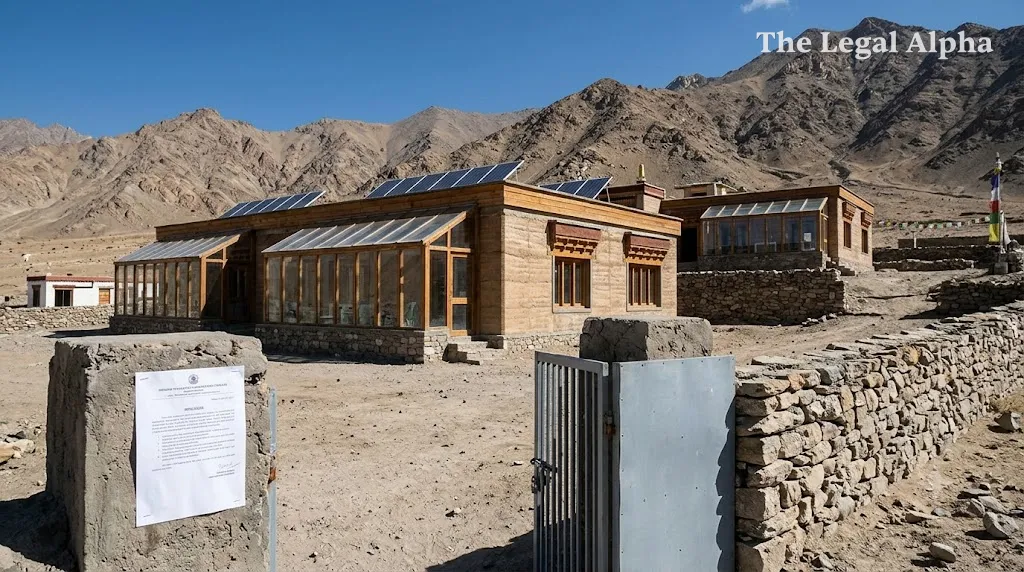
The Union Territory Administration of Ladakh issued an administrative notice to the management of the Himalayan Institute of Alternatives, Ladakh (HIAL), directing an immediate halt to all ongoing and proposed operations at its Desert Flower School in Phyang, Leh. The directive was issued by the Office of the Tehsildar, Leh, and served upon HIAL co-founder and CEO Gitanjali J. Angmo.
The regulatory intervention follows administrative findings that educational sessions and related campus activities commenced without mandatory statutory sanctions and clearances from competent authorities. Furthermore, because the underlying land allocation for the HIAL campus remains actively contested before the High Court of Jammu & Kashmir and Ladakh, the local revenue administration warned that starting new institutional operations risks altering the status quo and prejudicing ongoing judicial proceedings.
Legal Topic
Area of Law: Administrative Law & Land Revenue Law
Sub-topic: Land Allotment Disputes / Sub Judice Restraints and Educational Regulatory Approvals
Core Legal Issue
The controversy centres on whether an entity whose fundamental land allotment has been cancelled by an executive order—and which is currently challenging that cancellation before a constitutional court—can operationalise new institutional or educational facilities on the disputed property prior to judicial determination.
A secondary legal issue is whether administrative revenue authorities can legitimately restrain institutional activities by invoking the doctrine of sub judice and status quo, alongside independent statutory grounds of non-compliance with mandatory educational approvals.
What Did the Court / Authority Decide?
The Office of the Tehsildar, Leh, acting as the local administrative and revenue authority, directed HIAL and its leadership to immediately pause all school-related undertakings.
Key directives in the notice include:
-
Ceasing any further operational steps, classes, or activity rollouts at the Desert Flower School in Phyang.
-
Strictly preserving the status quo on the subject premises pending final disposal of the writ petition before the High Court of Jammu & Kashmir and Ladakh or until further judicial orders are issued.
-
Refraining from any unilateral developments on the site that could alter ground realities or prejudice the pending judicial proceedings.
The high court has not delivered a final verdict on the core land cancellation dispute; the matter remains pending adjudication.
Key Legal Points
-
Preservation of Subject Matter During Litigation: The administration has invoked the requirement to maintain the status quo to ensure that ground developments do not defeat or prejudice the pending writ proceedings concerning the land allotment.
-
Independent Requirement of Regulatory Consents: Setting up educational facilities requires specific statutory permissions, non-objection certificates (NOCs), and managing committee sanctions from designated education and local bodies, distinct from proprietary land claims.
-
Administrative Enforcement Over Disputed Land: Executive revenue authorities retain the jurisdiction to prevent non-permitted constructions or functional rollouts on public or resumed land while legal title remains sub judice.
Relevant Law
-
Article 226 of the Constitution of India: Governs the extraordinary writ jurisdiction of the High Court of Jammu & Kashmir and Ladakh, before which HIAL challenged the administration's cancellation order.
-
Doctrine of Lis Pendens / Preservation of Status Quo: General civil and administrative law principles preventing parties from altering the physical character or legal standing of contested property while a dispute is sub judice.
-
Right of Children to Free and Compulsory Education (RTE) Act, 2009 & State/UT Educational Regulatory Rules: Provisions mandating statutory recognition, certification, and regulatory establishment norms prior to the operation of a formal school.
Arguments of the Parties
The Administration
The Union Territory Administration contended that Desert Flower School initiated classes and activities without securing statutory approvals, consents, and mandatory clearances from designated educational and local authorities. The revenue authorities further noted that because the underlying cancellation of HIAL's land allotment remains actively sub judice, the promoters cannot unilaterally establish operational facts on the ground or create third-party equities that prejudice the pending writ petition before the high court.
The Institution / Promoters
HIAL maintains that its educational operations are part of a legitimate alternative learning model aimed at sustainable regional education. Regarding school approvals, management had formally submitted communications seeking necessary permissions, including a "no objection certificate" for proposed school managing committee members. In the primary dispute, the institute has challenged the territorial administration's cancellation of its land allotment as arbitrary and unlawful, seeking constitutional relief and judicial protection before the High Court.
Why Does It Matter?
This development highlights the practical risks entities face when attempting to expand operational footprints while their primary title or lease remains contested in court. Operationalising educational facilities on contested land creates significant legal friction, especially where enrolled students, parents, and faculty could face sudden administrative disruption if premises are sealed or declared unauthorised.
For regulatory bodies and non-governmental organisations alike, the intervention demonstrates that pending judicial review does not automatically confer an implied licence to commence new operations. Until an interim stay or an affirmative direction is granted by a constitutional court, administrative authorities often treat existing cancellation orders as effective, strictly enforcing compliance and status quo obligations.
Legal Takeaway
Filing a writ petition challenging an administrative cancellation does not grant an automatic right to operationalise new projects on disputed land. Without explicit interim protection from the court and proper statutory approvals from regulatory bodies, promoters face administrative enforcement and stay orders to preserve the status quo.
Sources
Primary Source:
-
Notice dated November 1, 2026, issued by the Office of the Tehsildar, Leh (UT of Ladakh), addressed to the Himalayan Institute of Alternatives, Ladakh (HIAL).
Additional Sources:
-
Administrative reports and proceedings concerning HIAL land allotment writ petition before the High Court of Jammu & Kashmir and Ladakh.