Kerala High Court Warns Civic Bodies of Contempt Over Sluggish Setup of Stray Dog Shelters
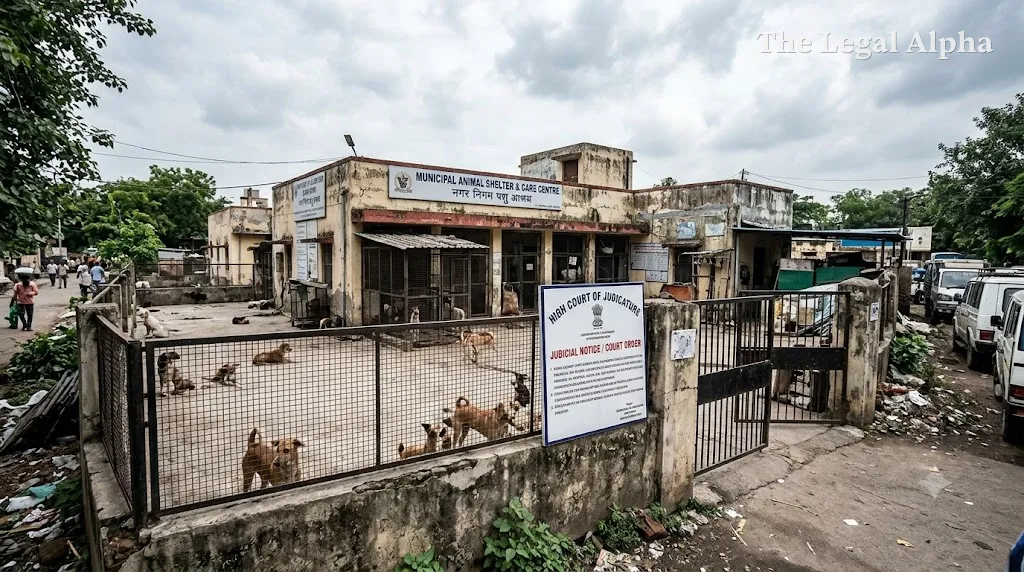
The Kerala High Court has pulled up Local Self-Government Institutions across Kerala for failing to comply with directives concerning the management of community dogs and the creation of shelter facilities. Facing widespread administrative inaction, a Division Bench of the High Court cautioned municipal bodies and panchayats that continuous default in executing court-mandated obligations would invite formal contempt proceedings.
The reprimand comes amid mounting public safety concerns over canine bites and territorial aggressive behavior across the state. While several local authorities reported setting up regulatory monitoring committees, progress on establishing dedicated shelters remains largely stalled due to territorial land shortages and public demonstrations against proposed shelters.
Legal Topic
Area of Law: Administrative and Municipal Law
Sub-topic: Local Self-Government Compliance / Animal Welfare and Public Safety Regulation
Core Legal Issue
The core issue before the High Court centers on whether administrative bottlenecks—specifically the scarcity of civic land and localized resident protests—can legally excuse local self-government institutions from carrying out statutory obligations and judicial mandates governing animal birth control and stray dog management.
At a systemic level, the proceedings address the balance between local bodies' statutory duty to safeguard public pathways and public health on one hand, and their duty to adhere strictly to statutory animal protection frameworks without indefinitely warehousing animals on the other.
What Did the Court Decide?
The Division Bench held that civic authorities cannot rely on neighborhood protests or administrative inconvenience as valid shields against executing binding judicial directives. The court observed that while several local self-government institutions had fulfilled the preliminary requirement of forming monitoring committees, actual on-ground implementation remained starkly inadequate.
To overcome territorial land constraints, the High Court directed local self-government bodies to actively explore establishing shared or cluster-based shelter facilities serving groups of two to three adjoining panchayats. The Bench explicitly cautioned local authorities that continued lethargy in identifying land and establishing operational infrastructure would lead directly to contempt of court action. Furthermore, the court reiterated that under governing animal management frameworks, shelter facilities must serve regulatory and birth control processes rather than become permanent confinement spaces, directing civic authorities to place verifiable records of procedures and post-sterilization release protocols before the court.
Key Legal Points
-
Public resistance and administrative hurdles do not grant local self-government institutions legal immunity from implementing binding court orders and statutory mandates.
-
Cluster-based municipal planning—pooling land and capital resources across adjoining panchayats—constitutes a legally viable administrative remedy to discharge statutory obligations where individual land availability is scarce.
-
Animal Birth Control protocols require strict adherence to capture, sterilize, vaccinate, and release procedures; municipal authorities cannot convert temporary holding or shelter mandates into arbitrary, indefinite confinement.
-
Wilful lethargy or administrative failure by municipal secretaries and local bodies to execute compliance benchmarks exposes designated civic custodians to proceedings under the Contempt of Courts Act, 1971.
Relevant Law
-
Constitution of India: Article 215 (High Court's power to punish for contempt of itself) and Article 243W read with the Twelfth Schedule (powers, authority, and responsibilities of Municipalities regarding public health and regulation).
-
Contempt of Courts Act, 1971: Section 2(b) (Civil Contempt for wilful disobedience to any judgment, decree, direction, or order of a court).
-
Prevention of Cruelty to Animals Act, 1960: Statutory safeguards against unlawful cruelty, abandonment, and unauthorized confinement of animals.
-
Animal Birth Control Rules, 2023: Statutory procedures governing the capture, sterilization, vaccination, shelter requirements, and mandatory release of street dogs into their original localities.
-
Kerala Panchayat Raj Act, 1994 & Kerala Municipality Act, 1994: Statutory duties of local self-government institutions concerning public health, safety, and nuisance prevention.
Arguments of the Parties
Local Self-Government Institutions and State Authorities
Civic bodies submitted that setting up dedicated animal shelters faced insurmountable on-ground obstacles, notably the acute shortage of suitable government-owned land within panchayat limits. Counsel for local authorities further submitted that wherever land was demarcated, severe resistance and protests from local residents prevented contractors and officials from advancing construction.
Animal Welfare Intervenors and Concerned Citizens
Advocates appearing for animal welfare organizations emphasized that municipal management must remain strictly compliant with statutory Animal Birth Control rules, arguing that dogs cannot be kept indefinitely in substandard shelter spaces. Intervenors highlighted procedural irregularities in sterilization drives and demanded verifiable data on capture-and-release protocols, while citizen groups underscored the urgent need to secure public streets from unchecked packs and protect pedestrian safety.
Why Does It Matter?
The High Court’s stance tightens judicial oversight on civic governance, sending an unambiguous signal that local bodies cannot treat public resistance as an administrative exit ramp to avoid judicial directives. By proposing shared shelter clusters, the court introduces an inter-panchayat administrative model that could serve as a blueprint for states grappling with high population density and land scarcity.
For the general public and municipal administrators alike, the ruling clarifies that civic custodians remain directly accountable under law for public safety failures. It balances urban safety demands with statutory animal welfare safeguards, ensuring that municipal drives do not devolve into illegal, ad-hoc confinement drives outside the bounds of central Animal Birth Control regulations.
Legal Takeaway
Civic authorities cannot cite neighborhood protests or land scarcity to justify non-compliance with judicial orders on stray dog management. Local bodies are legally bound to pursue administrative alternatives, including shared regional shelters, or risk facing civil contempt proceedings for failing to maintain public safety and statutory animal welfare standards.
Sources
Primary Source:
High Court of Kerala, Division Bench Order on stray dog management and municipal compliance (Issued October 2026).
Additional Sources:
The New Indian Express (Stray dog shelter: Kerala HC chides LSGs for poor compliance, warns of contempt); Urban Acres Legal & Civic Desk (Kerala HC pushes shared stray dog shelters as Kochi ABC gaps surface); Animal Birth Control Rules, 2023.