Kerala High Court Closes PIL Proceedings Against Waqf Board Reconstitution, Leaves Individual Challenges for Hearing
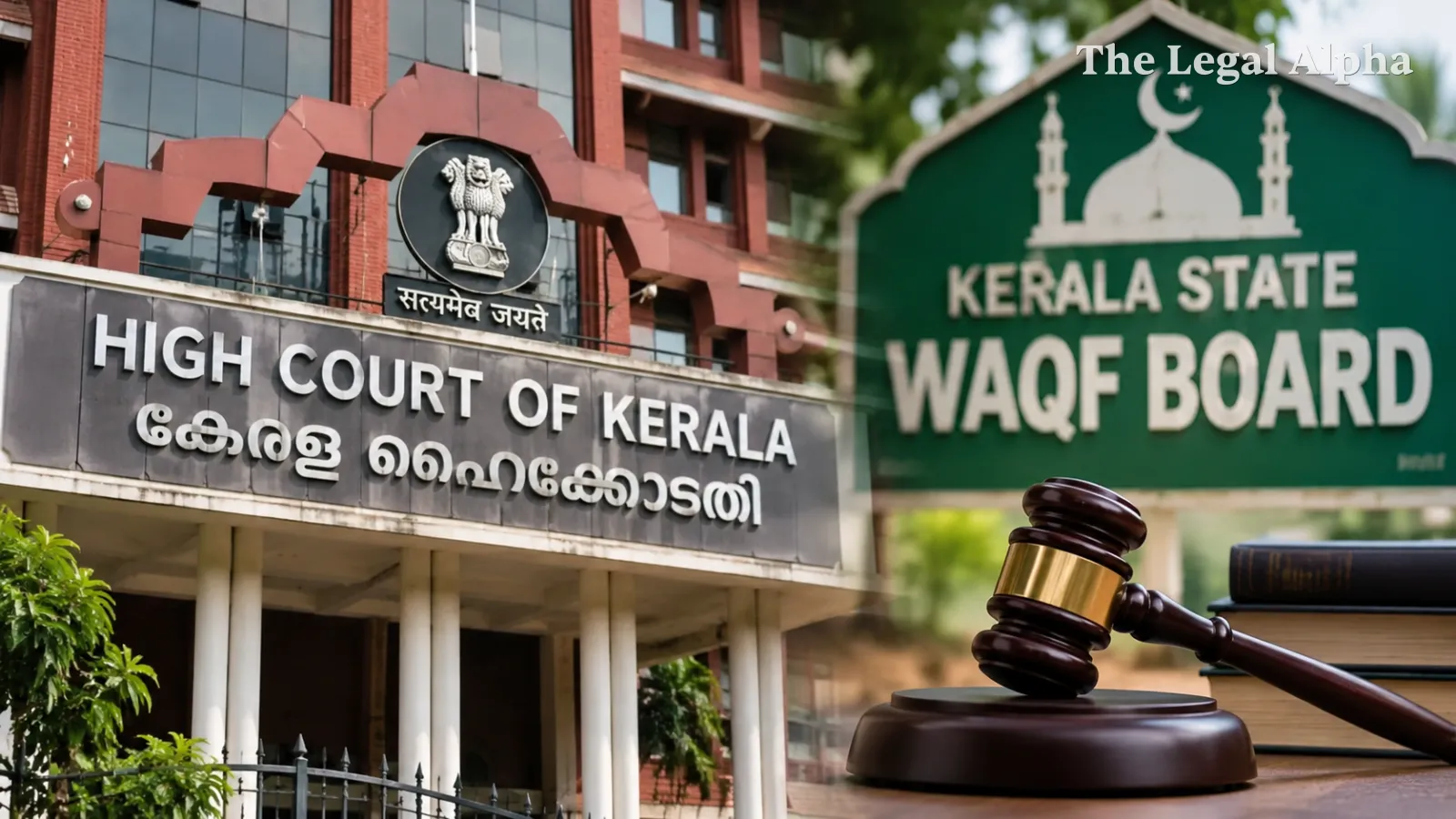
The Kerala High Court has disposed of the public interest litigations (PILs) concerning the reconstitution of the Kerala State Waqf Board, bringing the current round of proceedings before the Division Bench to a close.
The Division Bench observed that the State Government's decision to reconstitute the Board had created a fresh cause of action. Consequently, individuals and parties aggrieved by the reconstitution had already approached the court through separate writ petitions.
The Bench clarified that these individual challenges should be considered by a Single Judge in accordance with the High Court's roster.
The development follows the State Government's October 16, 2026 decision to reconstitute the Waqf Board by nominating nine new members.
Legal Topic
Area of Law: Constitutional Law and Administrative Law
Sub-topic: Public Interest Litigation, Waqf Board Composition and Judicial Review of Government Decisions
Core Legal Issue
The principal legal issue concerns the appropriate judicial procedure for challenging the State Government's decision to reconstitute the Kerala State Waqf Board.
The proceedings also raise questions about the legality of the Board's composition, the State Government's authority to replace previously appointed members, and compliance with the amended Waqf Act, 1995.
A key procedural question was whether the grievances arising from the fresh reconstitution should continue to be examined through the existing PIL proceedings or through separate writ petitions before a Single Judge.
What Did the Court Decide?
The Division Bench disposed of the PIL proceedings after taking note of the fresh cause of action arising from the reconstitution of the Board.
The Court indicated that the grievances of the affected parties should be pursued through individual writ petitions and heard by a Single Judge in accordance with the roster.
The development follows an earlier decision in October when the High Court declined to stay the State Government's reconstitution order. At that stage, the Court noted that the newly constituted Board had already assumed office.
Importantly, the disposal of the PILs does not, by itself, establish that the State Government's reconstitution decision is legally valid. The individual writ petitions provide a separate avenue for examining the grievances raised against the decision.
Key Legal Points
-
The Kerala High Court disposed of the PIL proceedings concerning the reconstitution of the State Waqf Board.
-
The reconstitution created a fresh cause of action, allowing aggrieved parties to pursue separate legal remedies.
-
Individual writ petitions are to be heard by a Single Judge in accordance with the High Court's roster.
-
The State Government had reconstituted the Board on October 16, 2026, nominating nine new members.
-
The earlier refusal to grant an interim stay did not amount to a final determination of the legality of the reconstitution.
Relevant Law
Waqf Act, 1995, as amended in 2025
-
Section 14: Concerns the composition and constitution of the State Waqf Board, including membership requirements.
-
The amended statutory framework is relevant to the challenges concerning the nomination and representation of members.
Constitution of India
-
Article 226: Empowers High Courts to issue writs for the enforcement of fundamental rights and other legal rights.
-
Article 227: Provides the High Court with supervisory jurisdiction over subordinate courts and tribunals.
Arguments of the Parties
Petitioners / Aggrieved Parties
The challenges to the Board's composition have included objections concerning compliance with the amended Waqf Act, the nomination of members from different communities and the State Government's authority to reconstitute the existing Board.
Former Board chairperson K.S. Hamza and member C.K. Usman Haji had separately challenged the government's reconstitution decision and sought interim protection against its implementation.
State Government
The State Government had defended its decision to reconstitute the Board, maintaining in the earlier proceedings that steps had been taken to ensure that its composition complied with the applicable statutory requirements.
The precise submissions made by each party during the latest disposal hearing are not available in the reports reviewed and are therefore not attributed here.
Why Does It Matter?
The development is significant because it separates the procedural disposal of the existing PIL proceedings from the substantive examination of individual challenges against the Waqf Board's reconstitution.
For the State Government, the decision provides procedural clarity regarding the forum in which the fresh challenges are to be considered. However, the disposal of the PILs should not be interpreted as blanket judicial approval of the government's action.
For former Board members and other affected parties, the individual writ petition route preserves an opportunity to seek judicial scrutiny of the reconstitution.
The matter also highlights the importance of distinguishing between a court's decision on procedural maintainability and its determination of the legality of an administrative decision.
Legal Takeaway
The Kerala High Court's disposal of the PILs does not automatically settle the legal controversy surrounding the reconstitution of the State Waqf Board. The substantive grievances are to be examined through individual writ petitions before a Single Judge, leaving the legality of the government's decision open to appropriate judicial consideration.
Sources
Primary Source: Latest Division Bench order disposing of the PIL proceedings — the full text was not independently available in the sources reviewed.
Additional Sources: