Karnataka High Court Holds Body-Shaming and Verbal Abuse Do Not Automatically Amount to Insulting a Woman’s Modesty Under Section 509 IPC
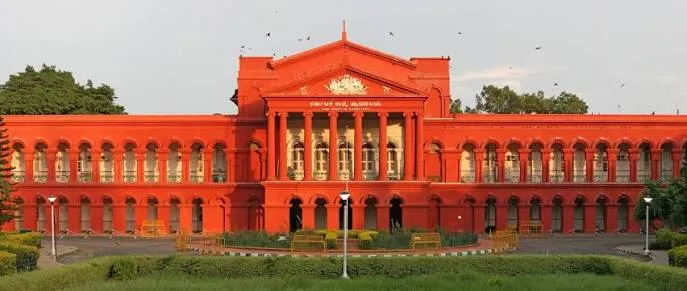
The Karnataka High Court quashed criminal proceedings pending against two women who were accused of body-shaming and verbally abusing another woman in Bengaluru.
A single-judge bench of Justice S.R. Krishna Kumar held that derogatory comments regarding a person’s physical appearance and general verbal altercations, taken on their own, do not satisfy the statutory ingredients necessary to constitute an offence under Section 509 of the Indian Penal Code (IPC).
The criminal proceedings originated from a 2023 First Information Report registered at a Bengaluru police station, which subsequently led to a charge sheet and a trial case before a local magistrate. The High Court intervened under its inherent powers, also emphasizing that identical allegations against a third co-accused in the very same matter had already been quashed in June 2024.
Legal Topic
Area of Law: Criminal Law
Sub-topic: Offences Against Women / Quashing of Criminal Proceedings / Section 509 IPC
Core Legal Issue
The primary legal question before the High Court was whether allegations of body-shaming, verbal abuse, and derogatory statements concerning a woman's physical appearance meet the essential legal ingredients of Section 509 IPC (acts, words, or gestures intended to insult the modesty of a woman), or whether continuing the trial on such allegations amounts to an abuse of the judicial process.
What Did the Court Decide?
The Karnataka High Court allowed the criminal petition filed under Section 482 of the Code of Criminal Procedure (CrPC) and quashed the proceedings in C.C. No. 1060/2024 against the two petitioners.
Justice S.R. Krishna Kumar held that a careful perusal of the complaint, the FIR, the charge sheet material, and witness statements showed that the foundational ingredients required to establish an offence under Section 509 IPC were missing. The bench clarified that while body-shaming and verbal insults may be offensive, penal provisions addressing the modesty of a woman cannot be applied unless the conduct satisfies the specific statutory threshold.
Furthermore, the Court extended the benefit of parity to the petitioners. A coordinate bench had already quashed proceedings against the third accused in June 2024 based on the identical set of allegations arising from the same incident, making the continuation of proceedings against the present petitioners legally unsustainable.
Key Legal Points
-
Strict Requirement of Statutory Ingredients: Section 509 IPC requires a specific intent to insult the modesty of a woman or intrude upon her privacy; generalized insults, offensive comments, or body-shaming remarks do not automatically satisfy this threshold.
-
Criminalization Restraint: Penal provisions designed to safeguard modesty cannot be repurposed to resolve interpersonal disputes or prosecute discourteous and disparaging personal remarks that fall outside statutory definitions.
-
Application of Parity in Quashing: Where multiple accused face identical allegations originating from the same dispute, the quashing of proceedings against one co-accused provides a valid basis for extending identical relief to the remaining accused.
-
Exercise of Inherent Jurisdiction: The High Court will exercise its powers under Section 482 CrPC to terminate criminal proceedings where the admitted allegations in the charge sheet fail to make out the alleged offence on their face.
Relevant Law
-
Section 509, Indian Penal Code, 1860: Punishes words, gestures, or acts intended to insult the modesty of a woman, or intrusions into a woman's privacy (analogous to Section 79 of the Bharatiya Nyaya Sanhita, 2023).
-
Section 482, Code of Criminal Procedure, 1973 / Section 528, Bharatiya Nagarik Suraksha Sanhita, 2023: Inherent powers of the High Court to prevent abuse of the process of any court and secure the ends of justice.
-
Doctrine of Parity: The principle of criminal law ensuring uniform legal treatment for similarly situated co-accused persons facing identical allegations.
Arguments of the Parties
Petitioners
The petitioners submitted that the allegations in the complaint and charge sheet were confined to verbal arguments and remarks concerning physical appearance. They argued that such conduct fails to satisfy the legal definition of insulting modesty under Section 509 IPC. They also urged the Court to apply the doctrine of parity, pointing out that identical proceedings against the third co-accused had already been set aside by the High Court.
Respondent / State
The State, represented by the High Court Government Pleader, drew attention to the charge sheet material and submitted that the allegations disclosed prima facie triable issues for the magistrate court. The de facto complainant, despite being issued formal notice of the petition, did not enter an appearance or contest the quashing plea.
Why Does It Matter?
The decision reinforces the strict boundaries of penal law in cases involving interpersonal abuse. While public awareness around the harmful nature of body-shaming has grown, the judgment highlights that civil wrongs or socially unacceptable remarks cannot be converted into specific criminal offences unless all statutory elements are demonstrably present.
By declining to broaden Section 509 IPC beyond its defined statutory purpose, the High Court prevents the unwarranted expansion of criminal liability to general verbal disputes. The ruling also underscores the procedural significance of parity, ensuring consistent judicial outcomes for co-accused individuals confronting identical charges.
Legal Takeaway
Allegations of body-shaming and verbal insults do not automatically constitute an offence of insulting a woman's modesty under Section 509 IPC unless the statutory elements of the provision are strictly satisfied. In the absence of those core ingredients, criminal proceedings are liable to be quashed to prevent an abuse of court process.
Sources
Primary Source:
High Court of Karnataka at Bengaluru, XYZ & Anr. v. State of Karnataka & Anr., Criminal Petition No. 4343 of 2026 (Neutral Citation: 2026:KHC:50353), Order dated September 16, 2026 (Bench of Justice S.R. Krishna Kumar).
Additional Sources:
LiveLaw News Reportage (October 2026); Bar & Bench Legal Updates (October 2026).