Justice B V Nagarathna Calls for Substantive Gender Equality Beyond Women’s Representation in Public Office
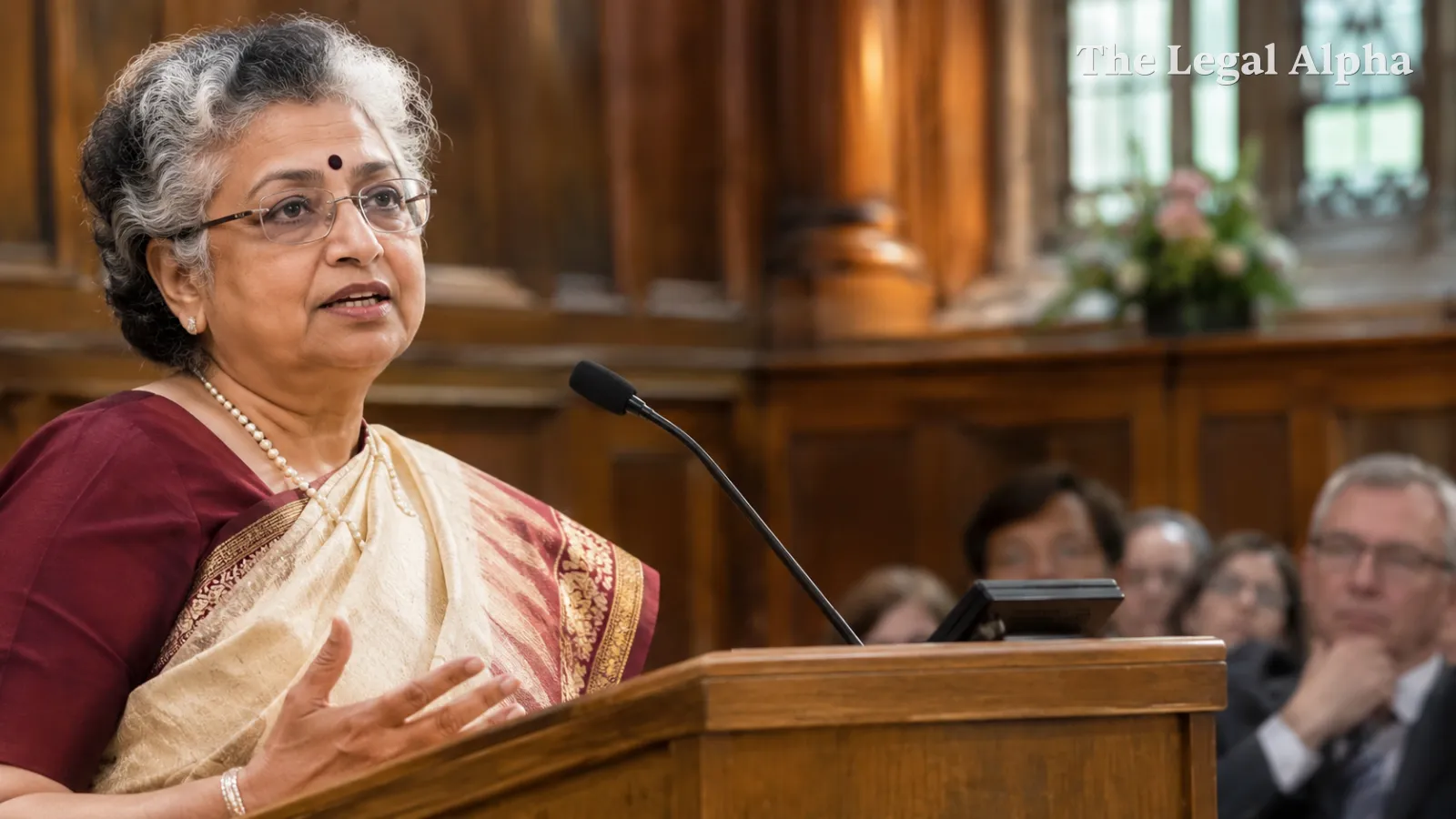
Supreme Court Justice B V Nagarathna has highlighted the gap between constitutional guarantees of gender equality and the realities faced by women across Indian society.
Speaking at the inaugural Cornelia Sorabji Memorial Lecture at the Oxford India Centre for Sustainable Development, Somerville College, University of Oxford, on November 18, 2026, Justice Nagarathna said that the presence of women in senior public positions does not establish that equality has been achieved throughout society.
She drew attention to the barriers that continue to restrict women's access to education, employment, property rights and effective legal remedies. She also highlighted how unpaid domestic responsibilities and care work continue to influence women's personal and professional choices.
Legal Topic
Area of Law: Constitutional Law
Sub-topic: Gender Equality, Women's Rights and Substantive Equality
Core Legal Issue
The central constitutional issue concerns whether formal guarantees of equality are sufficient when women continue to face social, economic and institutional barriers in exercising their rights.
Justice Nagarathna's observations emphasise the difference between equality recognised under the law and equality experienced in everyday life. The challenge is to ensure that constitutional protections translate into meaningful opportunities and freedom for women.
What Did the Judge Say?
Justice Nagarathna stressed that constitutional equality cannot be measured merely by counting the number of discriminatory provisions removed or beneficial laws enacted.
She observed that legal recognition of violence against women has not eliminated the social and institutional obstacles that prevent victims from seeking justice. Fear of stigma, retaliation, financial insecurity and delays in litigation can make the exercise of legal rights difficult.
She also highlighted that economic equality remains incomplete despite legal protections relating to equal remuneration, maternity benefits and women's participation in the workforce.
Key Legal Points
-
Constitutional Equality: Articles 14 and 15 of the Constitution must provide meaningful protection against discrimination and inequality.
-
Access to Justice: Women must be able to seek legal remedies without fear of stigma, retaliation or financial insecurity.
-
Economic Independence: Equal opportunities in employment must extend beyond merely allowing women to enter the workforce.
-
Unpaid Care Work: The unequal distribution of domestic and caregiving responsibilities continues to restrict women's professional choices.
-
Personal Autonomy: Women's rights must include freedom in education, career selection, marriage and property inheritance.
Relevant Law
Article 14 – Right to Equality: Guarantees equality before the law and equal protection of the laws.
Article 15 – Prohibition of Discrimination: Prohibits discrimination on grounds including sex and permits special provisions for women and children.
Article 21 – Right to Life and Personal Liberty: Protects life and personal liberty, forming an important constitutional foundation for dignity and individual autonomy.
Why Does It Matter?
Justice Nagarathna's observations bring attention to an important limitation in India's progress towards gender equality: legal reforms alone cannot eliminate deeply rooted social inequalities.
Her remarks are particularly relevant to policymakers, employers and institutions responsible for ensuring women's participation in public and professional life.
The observations also highlight the importance of creating conditions in which women can exercise their constitutional rights without facing economic dependence, discrimination or social restrictions.
The emphasis on unpaid domestic work further raises questions about how responsibilities within households affect women's access to employment, financial independence and professional growth.
Legal Takeaway
Constitutional equality must extend beyond formal recognition and representation in positions of authority. Justice B V Nagarathna's observations underline that Articles 14 and 15 become meaningful when women can exercise their rights freely, access opportunities equally and make independent choices in both public and private life.
Sources
Primary Source: Address by Justice B V Nagarathna at the inaugural Cornelia Sorabji Memorial Lecture, University of Oxford, November 18, 2026. A full official transcript was not independently available for verification.
Additional Source: The Indian Express – Report on Justice B V Nagarathna's observations.