Judicial Autonomy Versus Supreme Court Oversight: Former Rajasthan Acting Chief Justice Rebuts Misconduct Allegations
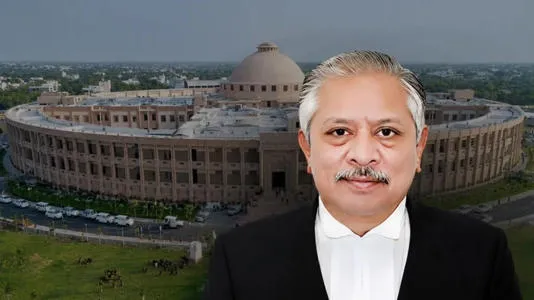
Justice Sanjeev Prakash Sharma, who recently retired as Acting Chief Justice of the Rajasthan High Court, has publicly responded to serious administrative and integrity allegations raised against him by sitting Supreme Court judge Justice Sandeep Mehta.
Justice Mehta had previously addressed multiple letters to the Chief Justice of India and the Supreme Court Collegium, accusing Justice Sharma of misusing administrative power, interfering with judicial inquiry committees, and manipulating case rosters. In response, Justice Sharma firmly dismissed the charges, asserting that a Supreme Court judge has no jurisdiction to meddle in the internal administration of a High Court and attributing the accusations to professional jealousy and personal bias.
Legal Topic
Area of Law: Constitutional Law / Judicial Administration
Sub-topic: High Court Independence and In-House Complaints Procedure
Core Legal Issue
The underlying controversy raises a vital constitutional question: What is the boundary of supervisory authority between the Supreme Court and High Courts in matters of internal court administration? Specifically, it questions whether an individual Supreme Court judge can interfere in or report upon the administrative decisions and roster management of a High Court Chief Justice outside the established institutional in-house inquiry framework.
What Did the Court / Authority Decide?
While formal judicial adjudication has not occurred, Chief Justice of India Surya Kant addressed the communications by noting that any concerns regarding judicial conduct must follow established institutional mechanisms rather than treating allegations as conclusive findings.
Meanwhile, the Supreme Court Collegium recommended the appointment of a regular Chief Justice for the Rajasthan High Court, and Justice Sharma proceeded on leave shortly before completing his tenure on September 26, 2026.
Key Legal Points
-
High Courts are independent constitutional institutions under the Constitution of India and do not operate as administrative subordinates to the Supreme Court or its individual judges.
-
The Chief Justice of a High Court holds exclusive constitutional and administrative authority as the "Master of the Roster" to allocate cases, constitute benches, and manage registry assignments.
-
Allegations concerning the conduct or administrative decisions of sitting High Court judges must be addressed exclusively through the Supreme Court’s institutional "In-House Procedure," ensuring fair process and confidentiality rather than informal internal intervention.
Relevant Law
-
Constitution of India:
-
Article 214 & Article 216: Establishment and constitution of High Courts as independent superior courts of record.
-
Article 223: Appointment and powers of an Acting Chief Justice to discharge the duties of the office of Chief Justice.
-
Article 225 & Article 227: High Court jurisdiction, rule-making powers, and superintendence over subordinate courts.
-
-
Judicial Precedent:
-
C. Ravichandran Iyer v. Justice A.M. Bhattacharjee (1995): Established the protocol that complaints against superior court judges must be routed directly to the Chief Justice of India via internal, confidential mechanisms to safeguard judicial independence.
-
Campaign for Judicial Accountability and Reforms (CJAR) v. Union of India (2018): Reiterated the primacy and exclusive authority of the Chief Justice as the Master of the Roster.
-
Arguments of the Parties
Allegations Raised by Justice Sandeep Mehta
Justice Mehta, in communications sent to the Chief Justice of India and the Collegium, alleged that Justice Sharma misused his administrative powers while serving as Acting Chief Justice. The concerns centered around arbitrary case allocations, interference with internal inquiry committee proceedings involving judicial officers, and administrative actions that compromised institutional propriety.
Response by Justice Sanjeev Prakash Sharma
Justice Sharma refuted every allegation, terming the claims baseless and rooted in professional friction dating back to their elevation as Senior Advocates. He contended that a Supreme Court judge possesses no constitutional or statutory mandate to police the administrative functions or roster management of an independent High Court. He also maintained that roster adjustments were routine administrative decisions driven by case pendency and procedural necessity, demanding an opportunity to formally challenge the assertions.
Why Does It Matter?
This development highlights vulnerabilities in the balance between judicial autonomy and institutional accountability within the higher judiciary. If individual superior court judges bypass standardized disciplinary frameworks to challenge the administrative autonomy of High Courts, it risks undermining the constitutional status of High Courts as autonomous entities. The situation emphasizes the urgent need for adherence to structured, transparent in-house inquiry protocols to protect both institutional integrity and the independence of judicial administration.
Legal Takeaway
High Courts are constitutionally distinct bodies whose administrative leadership is vested exclusively in the Chief Justice as Master of the Roster. Any grievance touching judicial integrity or administrative propriety must be handled strictly through the established institutional in-house mechanism under the Chief Justice of India, rather than through extra-procedural internal disputes.
Sources
Primary Source:
-
Established In-House Procedure for Inquiry against Superior Judiciary Judges (formulated pursuant to C. Ravichandran Iyer v. Justice A.M. Bhattacharjee, 1995 5 SCC 457).
Additional Sources:
-
Interview and Statements of Justice (Retd.) Sanjeev Prakash Sharma, October 2026.
-
Correspondence on Administrative Functioning of the Rajasthan High Court, Supreme Court Registry and Collegium Records (August–September 2026).