Judicature as Narrative Craft: Justice Anish Dayal Highlights Storytelling and Human Context in Court Dockets
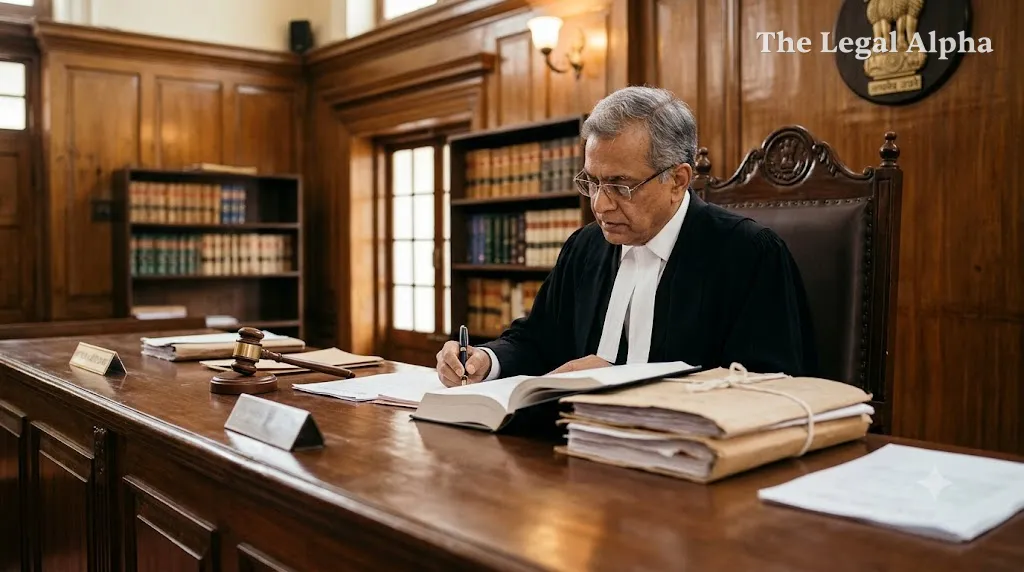
Delhi High Court judge, Justice Anish Dayal, shared notable insights regarding the nature of judicial work during the 11th edition of the "Himalayan Echoes" literature festival in Nainital. In his address, he described judges as great authors who handle between sixty and a hundred legal stories daily. He explained that every court brief contains the foundational elements of literature—characters, a plot, conflict, and a resolution—underscoring that judicial rulings are essentially the final chapters of these real-life narratives.
Legal Topic
-
Area of Law: Judicial Administration and Jurisprudence
-
Sub-topic: Legal Writing and the Judicial Adjudication Process
Core Legal Issue
The underlying theme here does not concern an adversarial dispute between litigating parties, but rather a reflective examination of how judicial decisions are constructed. The central question is: How can a judge weave factual narrative and human reality into a dispute without compromising legal reasoning, analytical precision, and judicial impartiality?
What Did the Court / Authority Decide?
Because these remarks were delivered during an address at a literary festival rather than in a formal court ruling, no binding order was issued; however, Justice Dayal underscored several key perspectives:
-
Emphasized that case files carry intricate, real-life human stories that require judges to distill essential facts carefully.
-
Noted the persistence of archaic expressions and clumsy phrasing in pleadings, urging legal practitioners to refine and modernize legal prose while preserving precision.
-
Highlighted distinguished traditions of judicial writing that balance substantive justice with articulate clarity, referencing historical benches in the Indian judiciary such as Justice V. R. Krishna Iyer.
Key Legal Points
-
Narrative Structure of Rulings: A judicial order is not merely a mechanical application of statutory rules; it is an analytical process that starts by understanding the people and the conflict before reaching a legal resolution.
-
Docket Management and Issue Spotting: Managing a heavy docket of sixty to a hundred cases a day demands sharp analytical focus to isolate the real legal controversy quickly.
-
Clarity and Legal Reason: Avoiding excessive legalese, archaic jargon, and verbose pleadings is vital to making judicial reasoning accessible and protecting litigant rights.
-
The Human Element in Justice: Behind statutory provisions and procedural pleadings lie genuine human struggles that must remain central during adjudication.
Relevant Law
-
Constitution of India: Article 226 (High Court extraordinary writ jurisdiction) and Article 21 (Right to life, fair trial, and access to justice).
-
Code of Civil Procedure, 1908: Order XX, Rules 4 and 5 (Principles governing the judgment, points for determination, and recorded grounds of decision).
-
Supreme Court Precedents: Established guidelines from the Supreme Court of India underscoring that judgments must be clear, well-reasoned, and free of unnecessary linguistic complexity.
Arguments of the Parties
-
Justice Dayal’s Perspective: Law and literature intersect in their shared reliance on human experience and resolution; case records offer deep lessons in factual narrative, placing a duty on judges to manage these stories fairly without getting lost in needless abstraction.
-
Traditional / Formalist View: Counter-arguments within orthodox jurisprudence hold that an overly narrative or literary approach risks diluting technical precision, maintaining that judicial orders should remain dry, formal instruments driven strictly by statutory syllogisms.
Why Does It Matter?
This dialogue reflects growing awareness within the judiciary of the need for plain, accessible legal writing. When judges process dozens of matters each day, the ability to extract core facts and deliver transparent, well-reasoned decisions strengthens public trust in the legal system. It also serves as an important reminder for advocates to abandon outdated legalese in favor of clear, persuasive pleadings.
Legal Takeaway
An effective judicial decision pairs a deep grasp of human facts with sound legal reasoning. Plain language and clear justification remain the strongest guarantees of fair adjudication and public confidence in the courts.
Sources
-
Primary Source: Address by Justice Anish Dayal (Judge, High Court of Delhi) at the Himalayan Echoes Literature Festival, Nainital.
-
Additional Sources: Reporting and proceedings coverage by Press Trust of India (PTI), alongside coverage in national dailies including The Hindu, The Indian Express, and Hindustan Times.