Independent Reporting Cannot Depend on Official Accreditation: Delhi Union of Journalists Moves Supreme Court Over Police Detentions
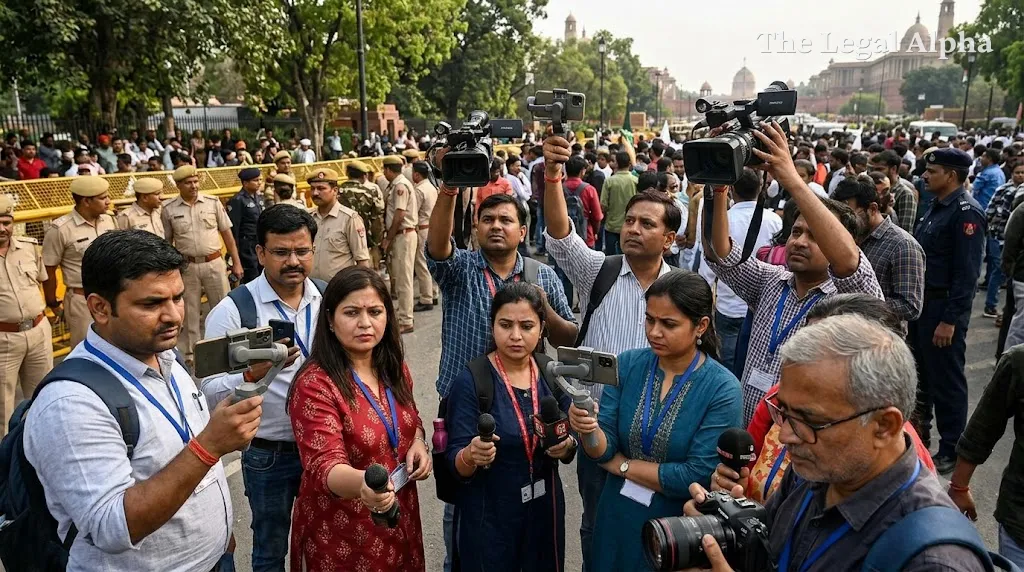
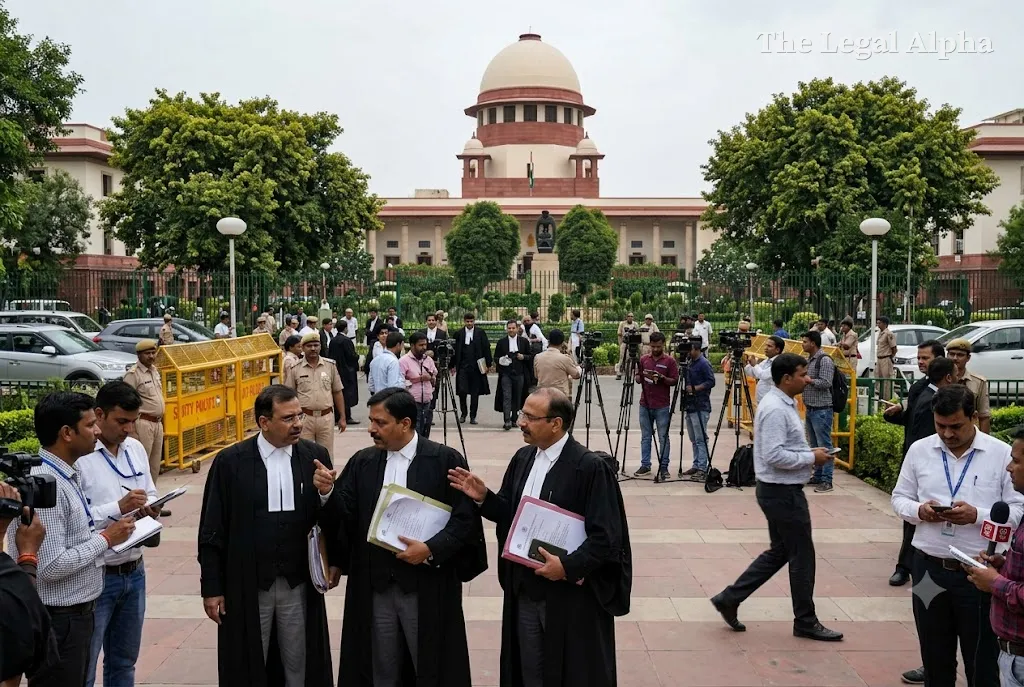
The Delhi Union of Journalists approached the Supreme Court under Article 32 of the Constitution, alleging widespread obstruction, unlawful detention, physical assault, and seizure of reporting gear by law enforcement during recent public demonstrations in the national capital.
The petition arises from incidents during demonstrations surrounding the Chief Election Commissioner in New Delhi, where over thirty reporters, photojournalists, and camera crew—including independent and freelance media workers—were detained or manhandled despite identifying themselves as working press. Filed through Advocate-on-Record Shashank Singh, the plea asserts that field reporters were prevented from performing their duties despite earlier interim protective orders issued by the apex court.
Legal Topic
-
Area of Law: Constitutional Law / Media & Press Law
-
Sub-topic: Freedom of Speech and Expression / Protection of Independent and Freelance Journalists
Core Legal Issue
The petition raises fundamental constitutional questions: whether the rights protected under Article 19(1)(a) extend equally to independent, digital, and freelance journalists, or if on-ground press protections can be restricted only to reporters carrying formal accreditation cards issued by the Press Information Bureau or state departments.
The Court must evaluate whether the indiscriminate detention of journalists gathering news in public spaces constitutes an unreasonable and unlawful prior restraint on public information and a breach of personal liberty under Article 21.
What Did the Court Decide?
The newly filed substantive writ petition by the Delhi Union of Journalists remains pending initial consideration before the top court.
The plea builds upon recent interim proceedings where an urgent vacation bench instructed law enforcement to avoid unlawful detentions of unarmed citizens and expressly directed authorities not to impede media professionals carrying out their duties. The petition seeks concrete judicial intervention, including:
-
A judicial directive affirming that the right to gather and disseminate news does not hinge on possessing formal institutional accreditation.
-
An independent, time-bound judicial or special inquiry into incidents of violence and detention of journalists.
-
Orders for the preservation of CCTV footage and communication logs, immediate return of seized electronic equipment, and clear field protocols to protect female reporters covering public order situations.
Key Legal Points
-
Constitutional press freedom under Article 19(1)(a) belongs intrinsically to the activity of news gathering and dissemination, rather than the corporate structure or institutional accreditation of the person reporting.
-
Official accreditation cards operate primarily as administrative passes for restricted government premises, not as mandatory licenses required to witness, record, and report on public events.
-
Summary detentions of working journalists during lawful field reporting violate procedural safeguards against arbitrary arrest under Article 22 and infringe upon personal liberty under Article 21.
-
Law enforcement agencies have an affirmative duty to safeguard reporters and their recording devices from physical assault and unlawful seizure during civil demonstrations.
Relevant Law
-
Constitution of India:
-
Article 19(1)(a) (Freedom of speech and expression, encompassing the public's right to know and the press's right to report)
-
Article 21 (Protection of life and personal liberty)
-
Article 22 (Protection against arbitrary arrest and detention)
-
Article 32 (Remedies for enforcement of fundamental rights)
-
-
Judicial Precedents: Established apex court jurisprudence recognising the freedom of the press as an essential corollary of free expression (Romesh Thappar v. State of Madras and Indian Express Newspapers v. Union of India).
Arguments of the Parties
The Petitioner (Delhi Union of Journalists): The Union contends that field reporters and independent digital journalists were subjected to arbitrary physical restraint, manhandling, and confiscation of reporting equipment simply for recording public demonstrations. They argue that official government accreditation cannot be treated as a prerequisite for press protections, and police interference directly undermines democratic transparency and contemptuously ignores earlier top-court warnings against impeding journalists.
The State / Law Enforcement Authorities: While formal responses to this specific petition are awaited, authorities have historically submitted that security measures during major demonstrations are deployed to maintain public order, manage unlawful assemblies, and regulate traffic. Police agencies maintain that in fluid law-and-order confrontations, crowd management operations occur without intent to target journalists, citing the need to prevent unverified individuals from inciting public unrest.
Why Does It Matter?
Modern journalism is increasingly carried out by independent commentators, freelancers, digital video reporters, and non-accredited photojournalists who lack corporate affiliations or government-issued press passes.
If the Supreme Court formally rules that operational press protections extend equally to independent media workers, it would dismantle the administrative practice of using accreditation as a selective filter for on-ground scrutiny. Such a judgment would establish enforceable accountability standards for police personnel during mass protests and safeguard the flow of independent civic reporting across India.
Legal Takeaway
Press freedom belongs to the gathering and reporting of information, not administrative accreditations. Law enforcement cannot treat the lack of institutional credentials as an excuse to seize reporting tools or detain journalists covering events in public spaces.
Sources
-
Primary Source: Writ Petition filed under Article 32 of the Constitution before the Supreme Court of India by the Delhi Union of Journalists (DUJ) through Advocate-on-Record Shashank Singh.
-
Additional Sources: Interim directions of the Supreme Court of India (Bench of Justice Joymalya Bagchi and Justice V. Mohana); International Federation of Journalists (IFJ) media statements.