Himachal Pradesh High Court Rebukes District Judge Over Fundamental Errors in Motor Accident Award, Mandates Judicial Training
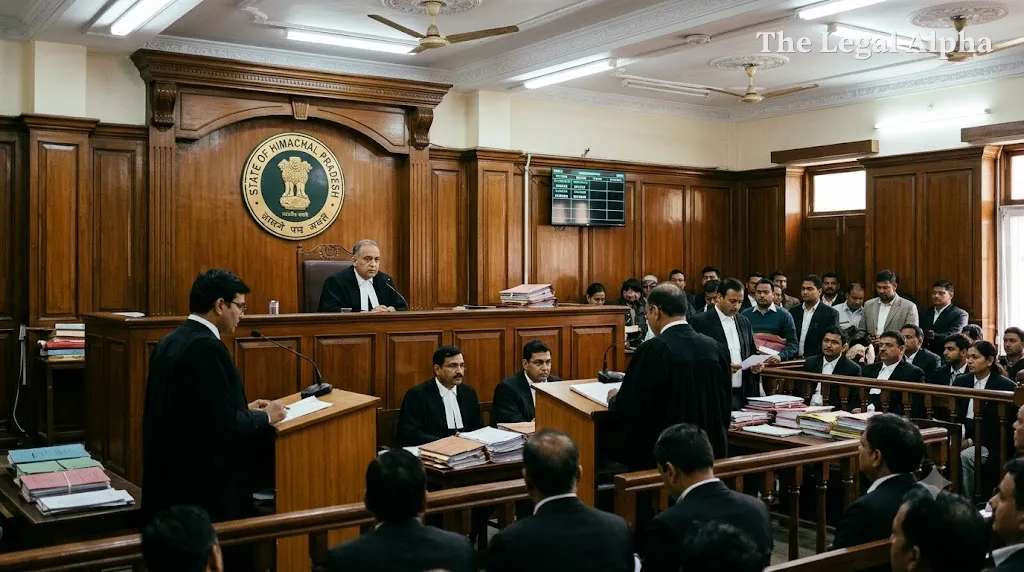
The Himachal Pradesh High Court took strong exception to a verdict delivered by a Motor Accident Claims Tribunal (MACT), ruling that the presiding judicial officer—who presently serves as a district and sessions judge—exhibited a total failure to apply judicial mind and demonstrated an absence of fundamental legal knowledge. The High Court identified egregious oversights in how insurance liability was determined in a fatal motor accident claim, noting that the tribunal had fastened liability onto an insurer using an irrelevant, expired insurance policy while completely misunderstanding the distinction between third-party coverage and comprehensive coverage. Highlighting that such casual decision-making compromises the administration of justice, the High Court directed the officer to attend refresher training at the state judicial academy and ordered the rebuke to be entered into the officer’s service record.
Legal Topic
-
Area of Law: Motor Vehicles & Insurance Law
-
Sub-topic: Motor Accident Claims / Insurer Liability for Gratuitous Passengers
Core Legal Issue
The dispute centered on whether an insurance company can be held jointly and severally liable to compensate the legal heirs of a deceased passenger travelling in a private vehicle under an "Act-only" (statutory third-party liability) policy where no additional premium was paid to cover occupants.
A secondary question arose regarding the tribunal’s reliance on an expired policy from a preceding year rather than evaluating the terms of the policy that was operative on the exact date of the accident.
What Did the Court Decide?
Justice Sushil Kukreja allowed the insurer's appeal and modified the tribunal’s award:
-
Exoneration of the Insurer: The High Court absolved the insurance company of all liability to pay compensation, placing the entire burden of indemnification solely on the owner of the offending vehicle.
-
Rebuke of Adjudication Quality: The court characterized the tribunal’s ruling as "highly objectionable" and "passed in a mechanical manner," deprecating judicial officers who fail to grasp rudimentary statutory frameworks under the Motor Vehicles Act.
-
Institutional Consequences: The Registrar General was directed to place a copy of the judgment into the judicial officer's confidential service record.
-
Mandatory Training: The officer was ordered to undergo a refresher course and periodic training modules specifically focusing on MACT matters at the Himachal Pradesh State Judicial Academy.
Key Legal Points
-
Gratuitous Passengers Are Not Third Parties: An occupant travelling in a private passenger car is classified as a gratuitous passenger and does not automatically fall within the definition of a "third party" under compulsory insurance provisions.
-
Scope of "Act-Only" vs. "Package" Policies: An "Act-only" (third-party liability) policy covers liability incurred in respect of third-party property damage, injury, or death; it does not extend indemnity to passengers inside a private vehicle unless an explicit extra premium is remitted for passenger risk coverage.
-
Evidentiary Relevance of Policy Documents: A tribunal must adjudicate liability exclusively upon the insurance cover note and policy schedule active at the exact time and date of the collision, rather than past or expired policies.
-
Standards for Lower Judiciary: Mechanical adjudication without applying legal principles or examining basic contractual terms diminishes public faith in the district judiciary, which acts as the frontline of the justice system.
Relevant Law
-
Motor Vehicles Act, 1988:
-
Section 147 (Requirements of policies and limits of liability)
-
Section 166 (Application for compensation)
-
-
Binding Precedent: Established Supreme Court jurisprudence in National Insurance Co. Ltd. v. Balakrishnan and New India Assurance Co. Ltd. v. Asha Rani, which demarcated the clear boundary between "statutory/Act-only" policies and "comprehensive/package" policies regarding private car passengers.
Arguments of the Parties
Appellant (Insurance Company) The insurer argued that the tribunal's findings were fundamentally perverse. It submitted that the policy in force on the date of the accident was strictly an "Act-only" policy that did not cover gratuitous passengers in a private car, as no special premium had been contracted or paid. Furthermore, the company highlighted that the tribunal committed a grave factual error by determining liability based on an earlier policy document that had already lapsed before the accident took place.
Respondents (Claimants & Vehicle Owner) The claimants contended that the death occurred due to rash and negligent driving, justifying the compensation awarded under the summary provisions of the Motor Vehicles Act. The vehicle owner resisted sole liability, asserting that the vehicle possessed active insurance at the time of the mishap and therefore the insurer was obligated to indemnify the loss.
Why Does It Matter?
This decision underscores the strict scrutiny appellate courts place on foundational competence within the subordinate judiciary. By directing an officer holding the rank of District and Sessions Judge to undergo remedial training, the High Court sent an unambiguous signal that passing mechanical awards without examining insurance contracts will carry career and institutional consequences.
For insurance litigants and vehicle owners, the judgment reinforces standard insurance law: purchasing a minimum statutory third-party cover does not safeguard a vehicle owner from direct, out-of-pocket liabilities if passengers travelling in the vehicle suffer injury or death. Claimants and owners alike must verify whether a policy contains comprehensive or personal accident endorsements for occupants.
Legal Takeaway
An "Act-only" motor insurance policy does not indemnify the owner against claims arising from the death or injury of passengers in a private vehicle unless an additional premium is paid. Adjudicating tribunals must examine the operative policy rather than lapsed documents, as passing orders without reading policy covenants constitutes a jurisdictional error.
Sources
-
Primary Source: Judgment of the High Court of Himachal Pradesh in the Motor Accident Claims appeal, delivered by Justice Sushil Kukreja (October 2026).
-
Additional Sources: Case records from the Motor Accident Claims Tribunal (Mandi at Sundernagar) arising from the December 30, 2016 fatal accident involving Trharu (alias Keshav); High Court administrative registry directives.