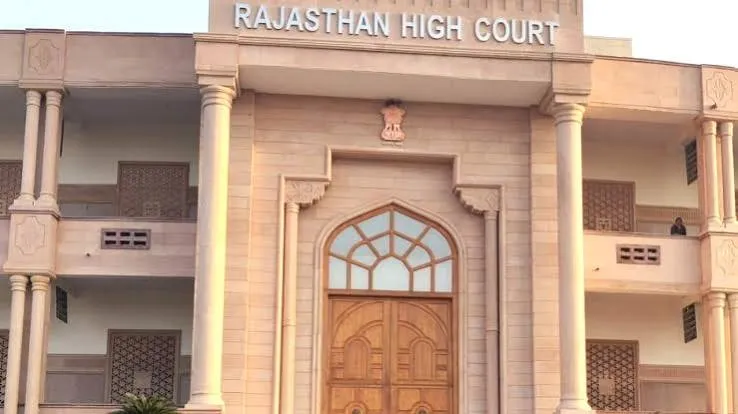
High-Value Assets Do Not Equal Monthly Cash Flow: Madras High Court Upholds ₹1 Lakh Interim Maintenance for Estranged Wife

The Madras High Court affirmed an interim maintenance order directing a husband to pay ₹1,00,000 per month to his estranged wife, dismissing his argument that her ownership of a luxury apartment valued at ₹17 crore and high-end vehicles rendered her ineligible for financial support. The ruling emphasizes the legal distinction between holding illiquid capital assets and possessing the recurring liquid cash flow needed for day-to-day living.
The husband had challenged a Family Court directive awarding temporary monthly maintenance during their pending matrimonial proceedings. He approached the High Court seeking to quash the award on the grounds that his wife was independently wealthy and led an affluent lifestyle backed by luxury cars and high-value real estate. The High Court rejected the revision plea, holding that non-income-generating personal property does not absolve an earning spouse from providing maintenance commensurate with the marital standard of living.
Legal Topic
Area of Law: Family Law / Matrimonial Jurisprudence
Sub-topic: Interim Maintenance / Assessment of Illiquid Assets versus Liquid Cash Flow
Core Legal Issue
The dispute turned on whether ownership of high-value immovable property and luxury personal assets automatically disentitles an estranged spouse from receiving interim maintenance.
The court had to determine whether an estranged spouse must liquidate personal capital holdings to cover living expenses, or whether the earning spouse remains obligated to provide liquid monthly maintenance to sustain the standard of living established during the marriage.
What Did the Court Decide?
The Madras High Court dismissed the husband's civil revision petition and upheld the Family Court's interim maintenance award of ₹1 lakh per month.
The Court observed that owning an apartment—even one with an estimated market value of ₹17 crore—does not generate monthly income if the premises are utilized for personal residence rather than commercial rental. Similarly, holding luxury vehicles incurs recurring operational and maintenance costs rather than providing cash flow to meet everyday expenditures like food, healthcare, and utilities.
The High Court held that interim maintenance is intended to ensure that a spouse is not forced to compromise on the socioeconomic lifestyle enjoyed during the marriage. Finding the husband possessed substantial financial resources and that the marital standard of living was elevated, the Court ruled that ₹1 lakh per month was equitable, reasonable, and necessary pending final disposal of the main matrimonial petition.
Key Legal Points
-
Capital Assets vs. Liquid Income: Ownership of high-value residential property does not equate to disposable income required for monthly sustenance.
-
Lifestyle Parity: An estranged spouse is legally entitled to maintain a standard of living broadly comparable to what was experienced during the subsistence of the marriage.
-
No Duty to Liquidate Capital: A claimant cannot be expected to sell off personal property or deplete long-term capital assets to cover ongoing living expenses during the pendency of litigation.
-
Assessment of Actual Cash Flow: Courts assessing maintenance claims must evaluate actual monthly earnings, business profits, and liquidity rather than merely calculating nominal asset valuations.
Relevant Law
-
Section 24, Hindu Marriage Act, 1955: Governs maintenance pendente lite and litigation expenses, providing relief when a spouse lacks sufficient independent income.
-
Section 125, Code of Criminal Procedure, 1973: Broad statutory benchmark reinforcing the legal obligation to prevent spousal distress and secure dignity.
-
Rajnesh v. Neha (2020): Supreme Court precedent governing the comprehensive criteria for interim maintenance, disclosure of assets and liabilities, and marital lifestyle standards.
Arguments of the Parties
The Petitioner
The husband contended that the interim maintenance order was unwarranted because the wife possessed substantial personal wealth. He highlighted that she owned an apartment valued at approximately ₹17 crore alongside luxury vehicles, arguing that such high-value assets demonstrated complete financial independence and negated any claim of financial dependency.
The Respondent
The wife maintained that high-value real estate and personal vehicles do not generate recurring liquid revenue to pay for daily household expenses, maintenance fees, and sustenance. She submitted that she had no independent regular cash flow and remained entitled to support from her husband to preserve the socioeconomic standard of living established during their marriage.
Why Does It Matter?
This ruling directly addresses a frequent contention raised in high-net-worth matrimonial disputes: conflating balance-sheet net worth with expendable cash income. Spouses opposing maintenance orders regularly cite the claimant's family assets, residential property values, or personal vehicles to argue that no financial distress exists.
The Madras High Court's order reinforces established jurisprudence that maintenance evaluations must center on liquidity and cash flow. It protects financially dependent spouses from being compelled to distress-sell residential assets simply to fund daily survival while court proceedings remain pending.
Legal Takeaway
High property valuations do not substitute for regular cash flow. Unless an asset generates tangible, recurring income, its mere ownership does not bar a spouse from receiving monthly interim maintenance sufficient to preserve their marital standard of living.
Sources
Primary Source:
Madras High Court Order in Civil Revision Petition concerning interim maintenance under the Hindu Marriage Act, 1955.
Additional Sources:
Supreme Court of India directives on maintenance criteria in Rajnesh v. Neha (2020) 8 SCC 781.