Gujarat High Court Questions State over Mining Clearance in Ozat Riverbed Amid Drinking Water Concerns
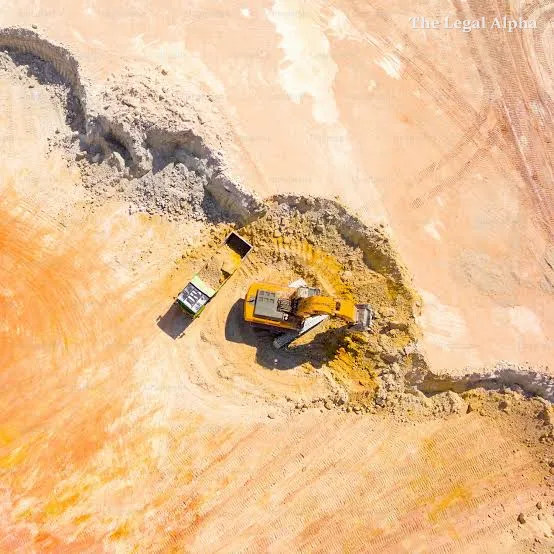
The Gujarat High Court has sought explanations from the Gujarat government after the Vanthali Municipality approached the court to stop commercial quarrying within the Ozat riverbed in Junagadh district.
The civic body filed a Public Interest Litigation challenging the decision of the Commissioner of Geology and Mining to permit riverbed mining despite repeated objections from the state’s own Irrigation Department, which warned that extractions could trigger drinking water shortages in the locality. A division bench comprising Acting Chief Justice M. R. Pathak and Justice Nirzar Desai took note of the conflict between government departments and directed the administration to clarify why mining permissions were pursued in the face of long-standing ecological and water-security objections.
Legal Topic
-
Area of Law: Environmental and Administrative Law
-
Sub-topic: Riverbed Sand & Stone Mining / Public Trust Doctrine / Inter-Departmental Regulatory Approvals
Core Legal Issue
The dispute centres on whether a mining authority can legally grant quarrying leases in an active riverbed when the designated custodian of the water resource—the state irrigation department—has explicitly refused concurrence due to drinking water preservation concerns.
At a broader level, the court is examining administrative accountability under environmental jurisprudence: whether statutory licensing bodies can disregard negative expert appraisals issued by other public departments regarding natural resource protection.
What Did the Court / Authority Decide?
The High Court did not issue a final stay on the policy but issued formal notices and sought comprehensive responses:
-
Directed the state government’s counsel to clarify why the Commissioner of Geology and Mining remained persistent about granting the quarry lease despite opposition from the Irrigation Department dating back to 2016.
-
Ordered the petitioner to implead the Gujarat Pollution Control Board as a party respondent to assess environmental compliance and regulatory clearances.
-
Instructed the state to secure official responses from the Junagadh District Collector, the Irrigation Department, and the Commissioner of Geology and Mining.
-
Scheduled the matter for its next substantive hearing on November 26, 2026.
Key Legal Points
-
Primacy of Water Security Over Commercial Leasing: Inter-departmental clearance mechanisms must account for statutory warnings concerning drinking water scarcity before commercial extraction is sanctioned in river ecosystems.
-
Public Trust Accountability: Municipal bodies acting as local custodians hold standing to invoke the writ jurisdiction of the High Court against state departments whose commercial leases threaten municipal water supplies.
-
Procedural Checks on Mineral Concessions: Where specialized departments (such as irrigation and water resource authorities) register written objections, mining regulators bear an heightened evidentiary burden to justify overriding those findings.
Relevant Law
-
Constitution of India: Article 226 (writ jurisdiction of the High Court) and Article 21 (right to clean water and environment under the right to life).
-
Environment (Protection) Act, 1986: Environmental appraisal frameworks governing minor mineral extractions and sustainable riverbed mining guidelines.
-
Mines and Minerals (Development and Regulation) Act, 1957: Regulatory provisions and state minor mineral concession rules governing the auction and allocation of quarrying leases.
Arguments of the Parties
Petitioner (Vanthali Municipality)
Counsel for the municipality contended that the Ozat riverbed serves as a crucial water resource for the local population. The petitioner highlighted that the Irrigation Department had rendered an adverse opinion, warning that mineral excavation would lead to severe drinking water scarcity. The civic body argued that the mining department acted arbitrarily and in disregard of public interest by approving quarry activities despite these documented warnings.
Respondent (State Government)
The state’s counsel resisted the petition at the preliminary stage, submitting that the local body's litigation appeared motivated by an interest in steering the quarrying lease toward a preferred entity rather than genuine environmental protection. The state maintained that statutory licensing processes govern mineral allocations and questioned the bona fides behind the municipal body's opposition.
Why Does It Matter?
This litigation highlights the recurring friction between revenue-driven mineral concession regimes and local water resource conservation. When different wings of the executive take contradictory stances—one championing resource exploitation and another warning of severe public resource depletion—it exposes administrative fragmentation.
The case reinforces the standard that minor mineral licensing cannot proceed in administrative silos without resolving critical objections raised by water and pollution regulators.
Legal Takeaway
State mining departments cannot arbitrarily sideline adverse ecological and water-security assessments issued by sister authorities like irrigation departments. Where commercial quarrying poses a credible risk to public drinking water supplies, licensing authorities remain subject to judicial review under the Public Trust Doctrine and constitutional environmental guarantees.
Sources
Primary Source:
-
Gujarat High Court: Notice and preliminary proceedings in the Public Interest Litigation filed by Vanthali Municipality concerning Ozat riverbed quarrying (Coram: Acting Chief Justice M. R. Pathak and Justice Nirzar Desai; order dated late October 2026).
Additional Sources:
-
High Court reporting and record filings on Vanthali civic body litigation and mining lease correspondence in Junagadh district (October 2026).