Federal Court Halts Multi-State Voter Inquiries Over Deficient Data and Intimidation Concerns
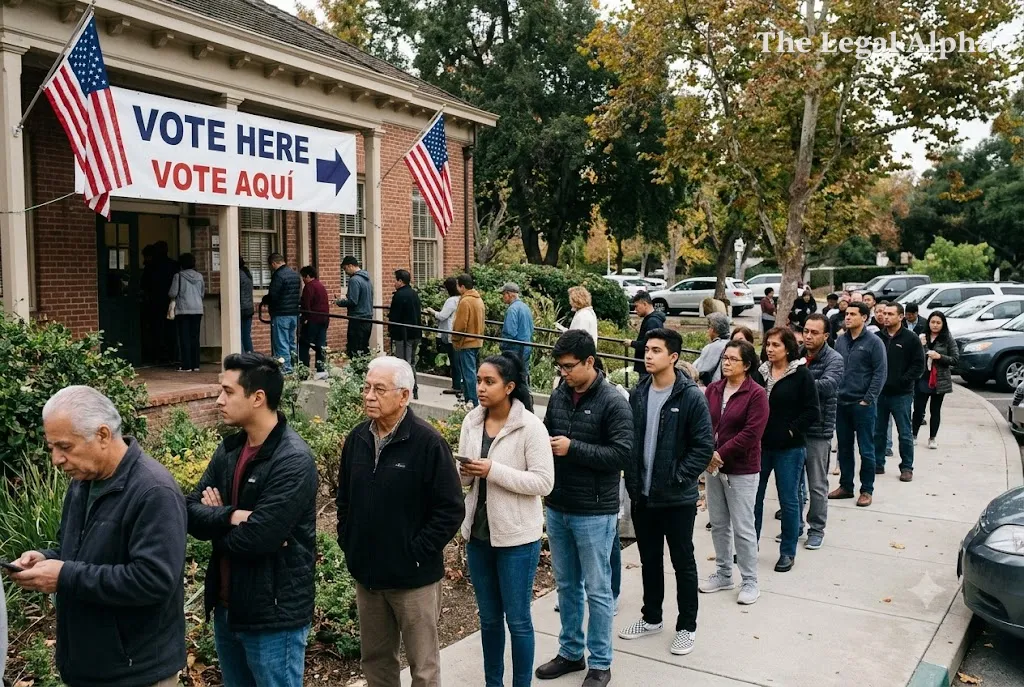
A federal district court in California has temporarily enjoined the federal government from pursuing its multi-state "Unlawful Voter Initiative," an enforcement campaign probing alleged noncitizen voter registration across nine states. Presiding in Oakland, U.S. District Judge Araceli Martínez-Olguín issued the preliminary injunction after determining that the Department of Homeland Security (DHS) relied on flawed administrative records and rushed screenings that subjected lawful voters to unjustified scrutiny. The legal challenge was brought by civic organizations and municipal bodies—including the California Nurses Association, National Nurses United, the Voto Latino Foundation, and the counties of San Francisco and Santa Clara.
To enable federal authorities to pursue an expedited review before the Ninth U.S. Circuit Court of Appeals, the district court stayed the enforcement of its own injunction for a short administrative window.
Legal Topic
Area of Law: Constitutional Law / Election Law
Sub-topic: Voter Intimidation / Executive Enforcement Authority
Core Legal Issue
The dispute centers on whether federal executive agencies may deploy rapid, targeted field investigations and door-to-door inquiries aimed at registered voters when the underlying investigative targets are generated through outdated or unverified government data.
Specifically, the court examined whether conducting aggressive investigative interventions just weeks before an election—grounded in administrative databases with high potential error rates—constitutes actionable voter intimidation and unconstitutionally chills the exercise of the franchise by lawful citizens.
What Did the Court Decide?
Judge Martínez-Olguín granted a preliminary injunction restraining the federal government from conducting investigative actions under the initiative across the nine designated states—California, Connecticut, Georgia, Missouri, Nevada, New York, Pennsylvania, Washington, and Wisconsin—until after the close of polls on Election Day. The court observed that federal agents were instructed during an accelerated enforcement surge to spend as little as 12 minutes evaluating an individual’s citizenship status before deploying field inquiries, creating an unacceptable danger of wrongfully targeting naturalized citizens and eligible electors.
The judge emphasized that the order does not sanction voting by noncitizens, which remains unlawful under federal statutes. Rather, it establishes procedural boundaries on executive inquiries to shield eligible voters from irreparable harm and harassment. To facilitate immediate appellate intervention, the court entered a brief administrative stay of its ruling.
Key Legal Points
-
Evidentiary Thresholds for Voter Inquiries: Law enforcement initiatives interrogating voter qualifications must rest on reasonably verified information; deploying raw, unscrutinized administrative records violates basic due diligence standards.
-
Chilling Effect Constitutes Intimidation: In-person field inquiries directed at eligible voters shortly before balloting generate an objective chilling effect, legally amounting to voter intimidation and irreparable electoral harm.
-
Temporal Limitations Near Elections: Rushed verification procedures conducted in the final weeks preceding voting carry an inherent risk of disenfranchising naturalized citizens whose records lag in federal immigration databases.
-
Preservation of Core Statutory Prohibitions: Enjoining flawed investigative methods does not disturb existing federal prohibitions against noncitizen voting.
Relevant Law
-
National Voter Registration Act of 1993 (NVRA), 52 U.S.C. § 20507: Regulates voter list maintenance and restricts systematic, last-minute removal or targeting programs close to federal elections.
-
Voting Rights Act of 1965, 52 U.S.C. § 10307(b): Expressly prohibits intimidating, threatening, or coercing any person from voting or attempting to vote.
-
18 U.S.C. § 611: Establishes voting by noncitizens in federal elections as an unlawful offense.
-
Administrative Procedure Act (APA), 5 U.S.C. § 706: Proscribes arbitrary and capricious agency actions lacking sound empirical foundations.
Arguments of the Parties
Petitioner / Moving Organizations
The plaintiff unions and advocacy groups argued that DHS relied on fundamentally deficient data matching to generate target lists, failing to verify accuracy before sending armed agents to residents' doorsteps. They submitted that rapid, 12-minute file reviews inevitably swept in fully naturalized citizens whose status updates were delayed in federal systems. They contended that aggressive home visits immediately preceding the election spread fear, discouraged civic participation, and directly interfered with lawful get-out-the-vote and poll-monitoring operations.
Respondent / Federal Government
The federal government contended that the investigations fell squarely within executive authority to safeguard election integrity and enforce federal immigration laws. Officials maintained that noncitizen participation in voter registries undermines public confidence in democratic outcomes and justifies proactive administrative scrutiny. The government asserted that federal agencies possess broad enforcement discretion to investigate suspected criminal violations of federal voter eligibility statutes without judicial interference.
Why Does It Matter?
This ruling establishes an important judicial boundary regarding how aggressively executive agencies can investigate individual voter eligibility within the immediate proximity of an election. By treating rushed, unverified field probes as a form of constructive voter intimidation, the decision places the burden on government agencies to establish the reliability of their underlying databases before initiating intrusive field operations.
For election administrators and civil rights groups, the order reinforces the principle that efforts to police voter lists cannot be executed in a manner that chills lawful democratic participation or subjects eligible, naturalized citizens to doorstep interrogations based on bureaucratic data lags.
Legal Takeaway
Government agencies cannot deploy flawed, unverified records to conduct fast-tracked pre-election field investigations against voters. When investigative procedures risk intimidating lawfully registered citizens weeks before an election, courts will intervene to protect the integrity of the franchise.
Sources
Primary Source:
-
Preliminary Injunction and Stay Order, California Nurses Association et al. v. Department of Homeland Security et al., U.S. District Court for the Northern District of California (Oakland Division), per Judge Araceli Martínez-Olguín.
Additional Sources:
-
Congressional Whistleblower Report on the DHS "Unlawful Voter Initiative," Office of the Senate Minority Leader and Senate Judiciary Committee.
-
Associated Press & Reuters Legal Filings Service, Case Docket Records (N.D. Cal. 2026).