Kerala High Court Clears Police Action Against Sitting Judge After Minor Son's Fatal Mercedes Crash Sparks Public Outcry
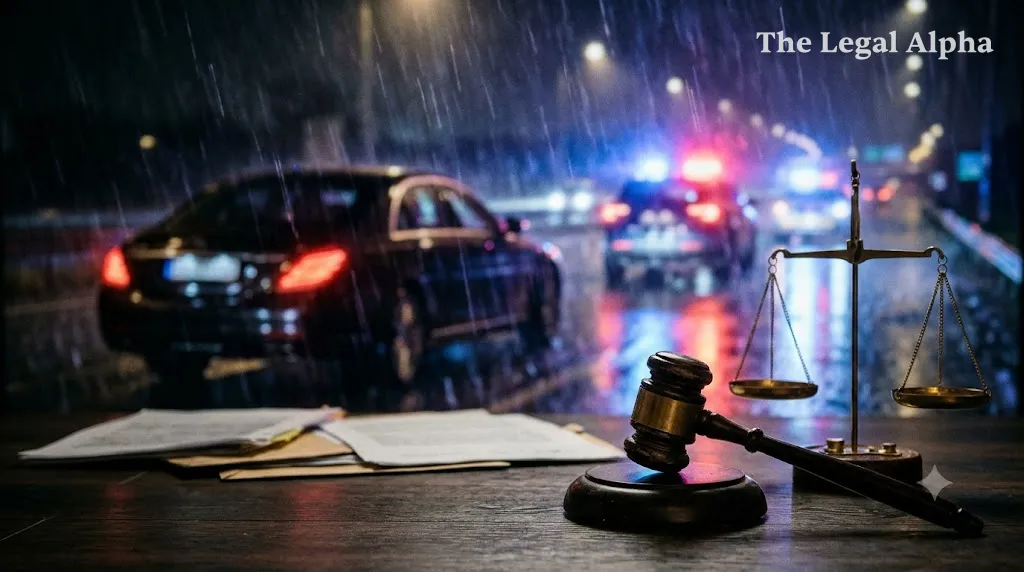
A 17-year-old boy allegedly driving a luxury Mercedes-Benz car at high speed collided with a two-wheeler on Container Road near Cheranalloor in Kochi during the early morning hours, resulting in the immediate death of 55-year-old scooterist Jayabalakrishnan. The vehicle was registered in the name of the teenager's father, an Additional District Judge serving on the Motor Accident Claims Tribunal (MACT).
Following the collision, the minor was initially released on station bail, triggering public protests and allegations from the victim's family regarding preferential treatment due to the father's judicial standing. The controversy intensified when social media videos allegedly depicting the minor speeding were circulated and subsequently deleted. Addressing the jurisdictional and procedural protocols surrounding serving judicial officers, the Kerala High Court granted permission to law enforcement authorities to initiate criminal proceedings against the judge, prompting the police to formally book the judicial officer and move to revoke the juvenile's bail.
Legal Topic
Area of Law: Criminal Law / Motor Vehicles Law
Sub-topic: Parental and Vehicle Owner Liability for Juvenile Driving / Procedural Safeguards for Judicial Officers
Core Legal Issue
The controversy centres on two primary legal questions. First, to what extent does statutory liability extend to a vehicle owner and guardian under Section 199A of the Motor Vehicles Act when a minor without a valid driving licence causes a fatal accident using an adult's motor vehicle?
Second, the case addresses the procedural requirements and administrative clearances necessary before investigating agencies can register a First Information Report (FIR) and pursue statutory penal provisions against a sitting member of the subordinate judiciary.
What Did the Court / Authority Decide?
On the administrative side, the Kerala High Court permitted the Kerala Police to register an FIR and proceed with an investigation against the MACT judge in his capacity as the registered owner of the vehicle. Concurrently, the High Court initiated administrative scrutiny into the judicial officer's conduct, seeking an explanation regarding the circumstances under which the official vehicle or registered luxury vehicle was accessed by an unlicensed minor.
Following the High Court’s clearance, the Cheranalloor Police registered an FIR against the judicial officer under Section 199A of the Motor Vehicles Act. Furthermore, investigators intensified the charges against the 17-year-old to include culpable homicide not amounting to murder alongside rash and negligent driving, while petitioning the competent court and the Juvenile Justice Board to cancel the teenager’s previously granted bail.
Key Legal Points
-
Vicarious and Direct Statutory Liability of Guardians: Under Section 199A of the Motor Vehicles Act, 1988, a guardian or vehicle owner is statutorily presumed guilty when a juvenile commits a motor vehicle offence, unless they prove due diligence or lack of consent.
-
Procedural Safeguards for Judicial Officers: Investigating agencies require administrative sanction or consultation with the High Court prior to initiating coercive criminal action or registering formal complaints against sitting judicial officers, serving to shield judicial independence while preventing immunity from statutory compliance.
-
Escalation of Charges from Negligence to Culpable Homicide: Where high-speed driving by an unlicensed minor demonstrates knowledge that the act is likely to cause death, investigators may invoke culpable homicide not amounting to murder rather than mere criminal rashness.
-
Juvenile Justice Standards and Bail Reassessment: While the Juvenile Justice (Care and Protection of Children) Act prioritises rehabilitation and the presumption of innocence for minors, bail decisions can be subjected to revision if substantive evidence reveals an aggravated danger to public safety or non-cooperation.
Relevant Law
-
Section 199A, Motor Vehicles Act, 1988 (as amended in 2019): Special provisions governing offences by juveniles, holding the guardian of the juvenile or owner of the motor vehicle liable to imprisonment, fine, and vehicle registration cancellation.
-
Sections 105 and 106, Bharatiya Nyaya Sanhita, 2023 / Sections 304 and 304A, Indian Penal Code: Provisions governing culpable homicide not amounting to murder and causing death by a rash or negligent act.
-
Section 281, Bharatiya Nyaya Sanhita, 2023 / Section 279, Indian Penal Code: Rash driving or riding on a public way.
-
Juvenile Justice (Care and Protection of Children) Act, 2015: Governing the apprehension, custody, and bail provisions for children alleged to be in conflict with the law.
-
Judicial Officers Protection Act, 1850 / Relevant High Court Administrative Guidelines: Outlining protections for judicial officers acting in a judicial capacity, contrasting with personal non-judicial civil and criminal liability.
Arguments of the Parties
Complainant and Victim’s Family
The victim’s family and legal counsel contended that the police initially demonstrated undue leniency by releasing the minor on station bail despite the gravity of the fatal collision. They argued that the judge, as the custodian and registered owner of the vehicle, bore direct statutory responsibility for permitting a minor without a valid driving licence to operate a high-powered vehicle late at night. They demanded an impartial investigation free from administrative influence, asserting that statutory mandates under traffic legislation must apply uniformly regardless of judicial status.
State and Defence Position
The state police submitted that procedural requirements necessitated administrative appraisal by the Kerala High Court before naming a sitting judge in a formal criminal complaint. Once the High Court granted permission, investigators took immediate steps to register the offence under Section 199A of the Motor Vehicles Act and review bail conditions before the Juvenile Justice Board. For the defence, it remains open to establish statutory exemptions under Section 199A, specifically whether the minor drove the vehicle without the guardian’s knowledge or consent despite reasonable precautions having been exercised.
Why Does It Matter?
This development reinforces the stringent regulatory framework introduced under the amended Motor Vehicles Act, which makes parents and vehicle owners criminally accountable for offences committed by underage drivers. It underscores that vehicle owners cannot evade statutory presumptions simply by delegating vehicle custody within a domestic setting.
Additionally, the case highlights the delicate balance between institutional safeguards for the judiciary and the constitutional principle of equality before the law under Article 14. By sanctioning the registration of an FIR, the High Court signaled that judicial protections exist to preserve judicial functions, not to insulate officers from ordinary penal accountability as private vehicle owners.
Legal Takeaway
Under Section 199A of the Motor Vehicles Act, permitting a minor to operate a vehicle creates an immediate statutory liability for the registered owner or guardian, who must actively prove lack of consent or reasonable diligence to escape penal consequences. Furthermore, judicial office affords no immunity against general criminal and motor vehicle laws for non-judicial personal conduct.
Sources
Primary Source:
-
Kerala High Court Administrative Directive / Official Communication granting clearance to investigate sitting MACT Judge in the Cheranalloor road accident matter (October 2026).
Additional Sources:
-
The Motor Vehicles Act, 1988 (Section 199A).
-
First Information Report (FIR), Cheranalloor Police Station, Ernakulam, Kerala (October 2026).
-
Official statements from the Ernakulam City Police and proceedings before the Juvenile Justice Board, Ernakulam.