Executive Dominance Cannot Substitute Institutional Independence: Justice Dipankar Datta Rejects Larger Bench Reference in Election Commission Act Challenge, Dismisses ‘Judges Appoint Judges’ Narrative
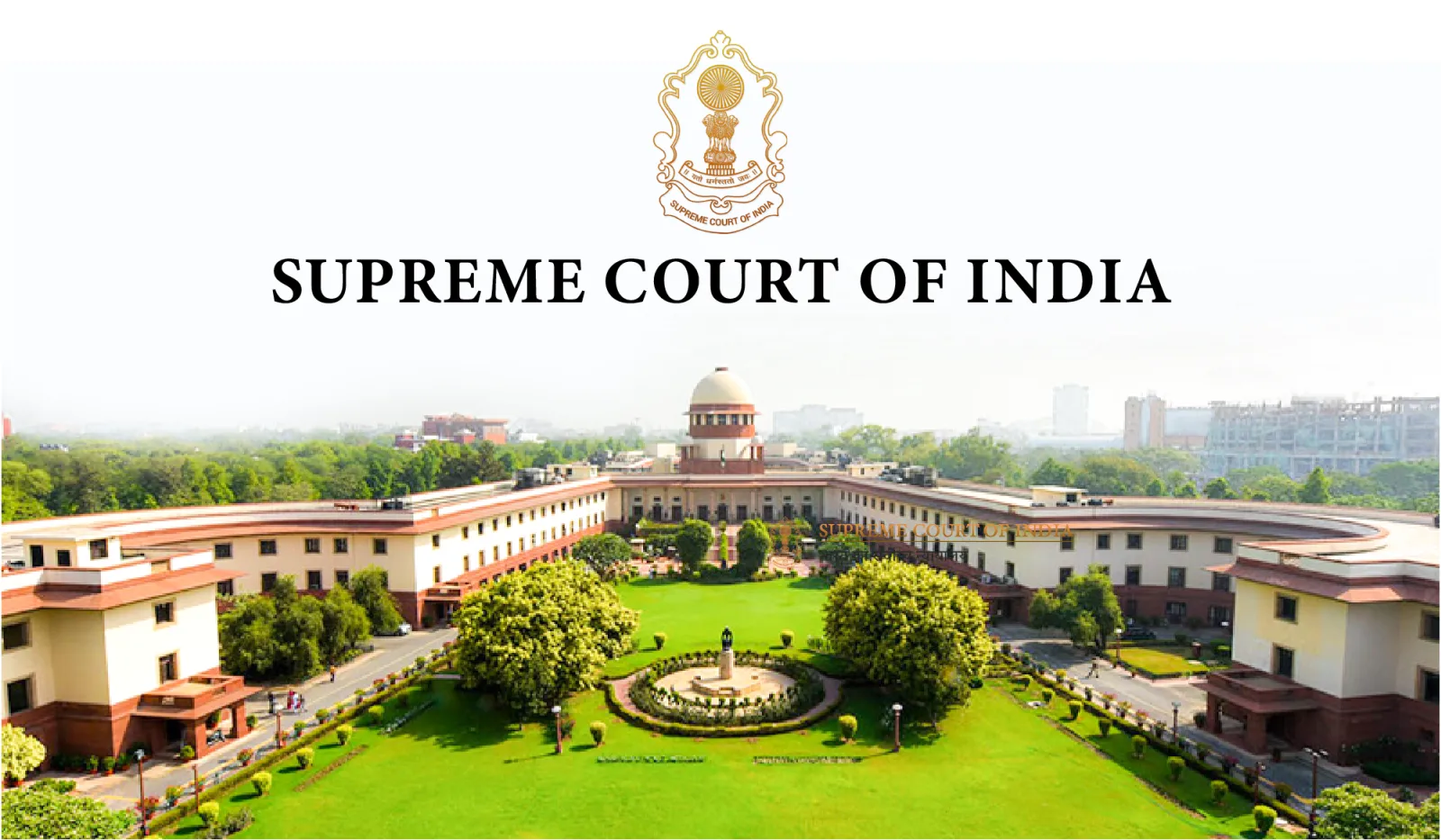
A two-judge bench of the Supreme Court delivered a split verdict on whether constitutional challenges to the Chief Election Commissioner and other Election Commissioners (Appointment, Conditions of Service and Term of Office) Act, 2023 must be referred to a five-judge Constitution Bench. In his separate judicial opinion, Justice Dipankar Datta held that no reference is necessary, explaining that binding precedent has already established that the Election Commission of India must remain insulated from executive control to safeguard free and fair elections.
Justice Datta also directly countered the Union government’s courtroom analogy comparing the executive-led selection committee to the judicial collegium. Addressing the argument that executive presence in election commissioner appointments mirrors judicial primacy in court appointments, Justice Datta termed the phrase "judges appoint judges" a myth, observing that the executive exercises extensive vetting power and routinely compromises collegium resolutions through selective appointments. While his colleague on the bench, Justice Satish Chandra Sharma, took the view that a five-judge Constitution Bench is mandatory under Article 145(3), both judges concurred in directing that the matter be placed before the Chief Justice of India for administrative directions on bench composition.
Legal Topic
Area of Law: Constitutional Law / Election Law
Sub-topic: Appointment of Election Commissioners / Reference under Article 145(3) / Separation of Powers
Core Legal Issue
The primary legal issue before the bench was whether petitions challenging the constitutional validity of Sections 6, 7, and 8(2) of the 2023 Act raise a "substantial question of law as to the interpretation of the Constitution" within the meaning of Article 145(3), thereby requiring mandatory reference to a Constitution Bench.
The controversy stems from the composition of the statutory Selection Committee enacted by Parliament. Under Section 7, the committee comprises the Prime Minister, the Leader of Opposition (or leader of the largest opposition party in the Lok Sabha), and a Union Cabinet Minister nominated by the Prime Minister. The core question is whether testing this executive-majority composition against established constitutional doctrines of free elections and institutional neutrality requires fresh constitutional interpretation, or merely the judicial application of principles already settled in Anoop Baranwal v. Union of India.
What Did the Court / Authority Decide?
Justice Dipankar Datta rejected the Union of India's prayer to refer the petitions to a larger bench. He held that neither constitutional provisions nor judicial precedents bar a two-judge bench from adjudicating the validity of the 2023 Act. Applying settled principles laid down by earlier Constitution Benches—namely, that free and fair elections form an indelible part of the basic structure and that election authorities must remain insulated from executive dominance—is an act of judicial application rather than novel constitutional interpretation.
Justice Datta addressed the Union's reliance on the collegium system, noting that invoking flaws or debates surrounding judicial appointments cannot justify executive supremacy over the election machinery. He observed that the judiciary effectively plays "second fiddle" in appointments due to executive delays and selective notifications.
Because Justice Satish Chandra Sharma concluded that the exclusion of a neutral arbiter like the Chief Justice of India presents a substantial question warranting a five-judge Constitution Bench, the bench remained equally divided on the procedural question of reference. Consequently, both judges directed the case records to be placed before the Chief Justice of India to determine the constitution of an appropriate bench. The substantive constitutional validity of the 2023 Act was not decided and remains pending.
Key Legal Points
-
Application vs Interpretation: Article 145(3) references are not triggered merely because a significant statute is challenged; where previous Constitution Benches have already settled the constitutional principles governing an institution's independence, a division bench has full competence to apply those principles to new legislation.
-
Insulation from Executive Control: Free and fair elections are an established basic feature of the Constitution, necessitating that the Election Commission of India remain insulated from exclusive executive dominance, particularly because the executive branch is itself an interested competitor in electoral contests.
-
Rebuttal of the Collegium Comparison: The argument that the executive should dominate statutory selection bodies because "judges appoint judges" is flawed; the judicial selection process involves extensive executive intelligence vetting, and executive non-action or selective clearance demonstrates that the judiciary does not exercise unchecked control.
-
Institutional Concern Over Delays: Referring cases routinely to Constitution Benches causes prolonged pendency, creating avoidable institutional delays when established legal principles can be applied directly by regular benches.
Relevant Law
-
The Chief Election Commissioner and other Election Commissioners (Appointment, Conditions of Service and Term of Office) Act, 2023: Section 6 (Search Committee composition), Section 7 (Selection Committee structure), and Section 8(2) (power to consider candidates beyond the search panel).
-
Constitution of India:
-
Article 324(2): Presidential appointment of election commissioners subject to laws made by Parliament.
-
Article 145(3): Requirement that cases involving a substantial question of constitutional interpretation be heard by a minimum of five judges.
-
Articles 14 and 19: Guarantees of equality, rule of law, and democratic freedoms forming part of the basic structure.
-
Articles 141 and 142: Binding force of Supreme Court precedents and orders passed to do complete justice.
-
-
Judicial Precedent: Anoop Baranwal v. Union of India (2023) 6 SCC 161 (Constitution Bench ruling that mandated a neutral selection panel including the Chief Justice of India until Parliament enacted legislation).
Arguments of the Parties
Petitioner / Applicant / Appellant
The petitioners—comprising public-spirited citizens and civil society organisations—argued that the 2023 Act effectively negates the constitutional foundation recognized in Anoop Baranwal. They submitted that by substituting the Chief Justice of India with a Union Cabinet Minister on the Selection Committee, Section 7 guarantees the ruling executive a built-in 2:1 majority, reducing the Leader of the Opposition to an ornamental role. The petitioners contended that this statutory design places the supervisor of elections under the direct influence of the executive, violating the basic structure doctrine, democratic governance, and Article 14. They maintained that this does not require a five-judge bench, as the legal principle requiring insulation of the Election Commission is already binding law.
Respondent / State / Opposing Party
The Union of India, represented by the law officers, submitted that the writ petitions raise substantial questions of constitutional interpretation that must be placed before a Constitution Bench under Article 145(3). The Union argued that Parliament has plenary legislative competence under Article 324(2) to frame appointment procedures and is not bound to replicate the interim arrangement formulated under Article 142 in Anoop Baranwal. The government further contended that executive dominance in statutory selection committees is well-recognized in administrative law, and argued that judicial appointment bodies similarly operate without external representation, meaning Parliament’s legislative choice cannot be presumed unconstitutional.
Why Does It Matter?
The division bench's split verdict highlights an ongoing tension between legislative authority and constitutional safeguards over regulatory watchdogs. Beyond the procedural referral, Justice Datta’s observations target a critical defense often mounted by the executive: justifying majoritarian panels by drawing parallels with the judicial collegium. By clarifying that executive vetoes and selective clearances already limit judicial independence in appointments, the opinion prevents the collegium debate from being used as a justification for weakening independence in other constitutional institutions.
The ruling also addresses systemic judicial administration. Justice Datta’s reluctance to make a reference reflects broader institutional concerns that routinely shunting constitutional challenges to larger benches creates years of procedural limbo. Because the two judges could not agree on the referral, the substantive question—whether Parliament can constitutionally exclude neutral arbiters from the appointment of election watchdogs—now rests with the Chief Justice of India to place before an appropriate bench.
Legal Takeaway
A challenge to a newly enacted statute does not automatically require a Constitution Bench if the underlying constitutional standards governing the subject matter have already been declared. Where past precedents establish that an oversight institution must remain shielded from executive dominance, regular benches are fully empowered to measure new legislation against those established constitutional baselines.
Sources
Primary Source
Dr. Jaya Thakur and Ors. v. Union of India and Anr. (with connected writ petitions, including Lok Prahari v. Union of India, W.P.(C) No. 14 of 2024 and W.P.(C) No. 272 of 2024), Supreme Court of India, Neutral Citation: 2026 INSC 1040 (Separate opinions of Justice Dipankar Datta and Justice Satish Chandra Sharma, delivered on September 23, 2026).
Additional Sources
-
Constitution of India, Articles 14, 19, 145(3), and 324.
-
The Chief Election Commissioner and other Election Commissioners (Appointment, Conditions of Service and Term of Office) Act, 2023.
-
Anoop Baranwal v. Union of India, (2023) 6 SCC 161.