Elderly Parents Can Seek Eviction of Relatives: Delhi High Court Upholds Delhi Senior Citizens Rules and Reconciles Shared Household Rights
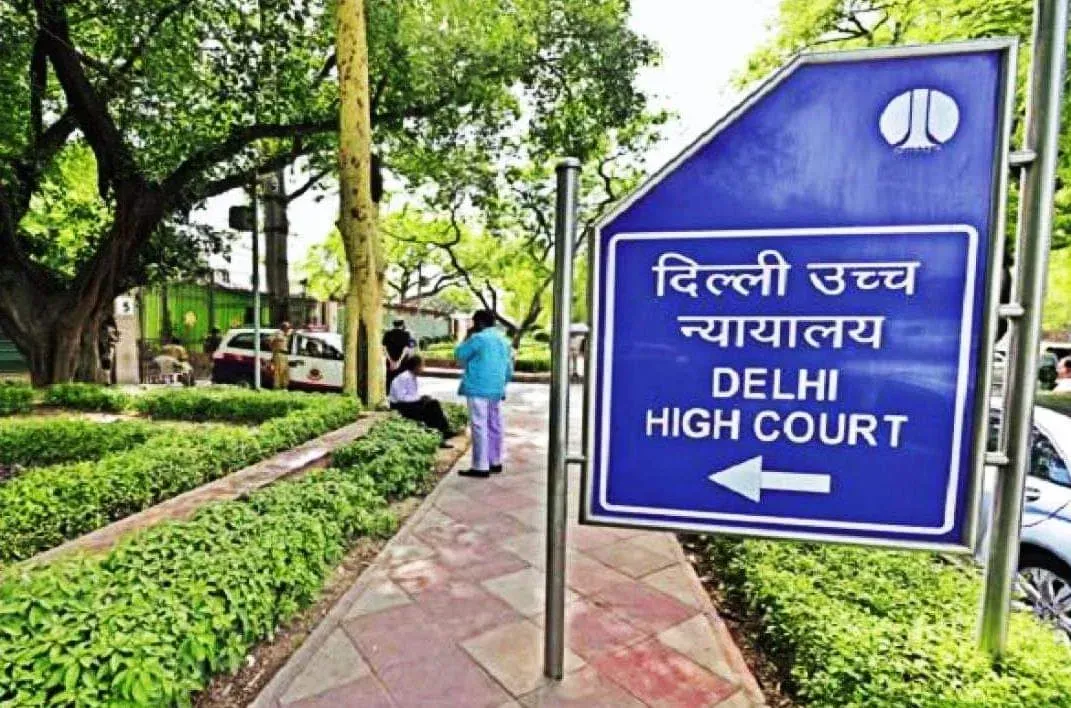
The Delhi High Court upheld the constitutional validity of the local rules that empower District Magistrates to evict adult children and legal heirs from a senior citizen’s home. A Division Bench comprising Chief Justice Devendra Kumar Upadhyaya and Justice Tejas Karia affirmed that the Delhi Government acted well within its statutory powers when creating a summary eviction procedure to safeguard the life and property of elderly parents.
The dispute originated from an acrimonious family conflict in Gautam Nagar, New Delhi. A senior citizen mother-in-law approached administrative authorities under the Delhi Senior Citizens Rules seeking to evict her estranged daughter-in-law on grounds of ill-treatment and constant domestic strife. Although the District Magistrate initially turned down the request, the Divisional Commissioner reversed the decision on appeal in July 2022 and ordered the daughter-in-law to vacate the premises to ensure peaceful living conditions for the elderly homeowner.
The daughter-in-law challenged the eviction order and contested the legality of the underlying Delhi rules before the High Court, asserting that the administration had exceeded its legislative mandate and infringed upon her statutory right to reside in a shared household under the Protection of Women from Domestic Violence Act, 2005. Dismissing her writ petition, the High Court sustained the eviction and held that a daughter-in-law's residence rights cannot be used to trap senior citizens in hostile living arrangements in their own homes.
Legal Topic
Area of Law: Elder Law, Family Law, and Administrative Law
Sub-topic: Protection of Senior Citizens' Property, Summary Eviction Powers, and Harmonisation with Domestic Violence Residence Rights
Core Legal Issue
The primary constitutional question was whether the Delhi Government exceeded the rule-making powers delegated to it under the Maintenance and Welfare of Parents and Senior Citizens Act, 2007, by incorporating an express procedure for eviction under Rule 22(3)(1) of the Delhi Rules, given that the parent central enactment contains no explicit mention of the word "eviction."
The secondary legal question examined how courts and administrative tribunals must resolve conflicts between two protective welfare statutes: an elderly parent's statutory protection of life and property under the 2007 Act and an estranged daughter-in-law's statutory right to reside in a shared household under Section 17 of the Domestic Violence Act.
What Did the Court Decide?
The High Court dismissed the writ petition and confirmed the eviction order passed by the Divisional Commissioner, finding no grounds for judicial interference under Article 226 of the Constitution. The Bench held that Rule 22(3)(1)(i) and (iv) of the Delhi Maintenance and Welfare of Parents and Senior Citizens Rules, 2009, are legally sound and directly flow from the statutory mandate of Section 22 and Section 32 of the parent 2007 Act.
The Bench observed that Section 22 of the parent Act requires State Governments to establish a comprehensive action plan to protect the life and property of elderly citizens. Conferring summary eviction powers upon the District Magistrate is an incidental, necessary, and effective measure to accomplish that statutory goal. The Court also ruled that the words "son, daughter or legal heir" under the rules must receive a purposive interpretation that encompasses family members, including daughters-in-law.
Turning to the specific facts, the Bench highlighted that the daughter-in-law is a gainfully employed Post Graduate Teacher with independent financial means and alternative accommodation in Bahadurgarh. In balancing competing equities, the senior citizen's entitlement to lead the evening of her life in peace within her self-acquired home outweighed the daughter-in-law's claim to remain in the property. However, the Court clarified that removing the petitioner from her mother-in-law's residence does not impair or extinguish her pending matrimonial remedies, maintenance claims, or housing claims against her husband before the Mahila Court.
Key Legal Points
-
Eviction Is an Incidental Statutory Remedy: Even if the parent 2007 Act does not explicitly use the word "eviction," the authority to evict abusive relatives flows naturally from Section 22, which requires the State to safeguard the life and property of elderly parents.
-
Eviction Operates Independently of Maintenance Claims: A senior citizen is not required to file a formal maintenance claim under Sections 4 and 5 before seeking an eviction order under Rule 22(3)(1); property protection and financial support are separate legal avenues.
-
Shared Household Rights Are Not Absolute: While a woman's right to reside in a shared household under Section 17 of the Domestic Violence Act remains protected, it is not an indefeasible right that automatically overrides an elderly homeowner's right to live peacefully free from harassment.
-
Broad Scope of Family Inclusions: Delegated provisions referencing children and legal heirs in senior citizen welfare rules must be interpreted liberally to cover daughters-in-law and other immediate family occupants.
Relevant Law
-
Maintenance and Welfare of Parents and Senior Citizens Act, 2007: Section 4 and Section 5 (Maintenance proceedings), Section 22 (Protection of life and property of senior citizens), and Section 32 (Rule-making power of State Governments).
-
Delhi Maintenance and Welfare of Parents and Senior Citizens Rules, 2009 (as amended): Rule 22(3)(1)(i) and Rule 22(3)(1)(iv) (Procedure for eviction from property/residential building of senior citizens).
-
Protection of Women from Domestic Violence Act, 2005: Section 17 (Right to reside in a shared household) and Section 19 (Residence orders).
-
Constitution of India: Articles 14, 15, and 21 (Fundamental rights) and Article 226 (Writ jurisdiction).
-
Judicial Precedent: S. Vanitha v. Deputy Commissioner, Bengaluru Urban District & Ors. (Supreme Court of India, 2021).
Arguments of the Parties
Petitioner
The petitioner argued that the Delhi Government acted outside its authority by formulating Rule 22(3)(1), asserting that subordinate legislation cannot create an eviction power when the parent Parliament statute does not provide one. Counsel further submitted that Rule 22 mentions only a "son, daughter or legal heir," which should not be stretched to evict a daughter-in-law. On substantive rights, she contended that her pending application for a residence order under Section 19 of the Domestic Violence Act before the Mahila Court barred administrative authorities from summarily dispossessing her from the shared household.
Respondents
The Government of NCT of Delhi maintained that the eviction rules were validly framed pursuant to the express mandate of Sections 22 and 32 of the 2007 Act, which require the State to implement an effective action plan to protect elderly persons. Counsel for the senior citizen submitted that the elderly mother-in-law had endured continuous distress, harassment, and ill-treatment in her own house. They further established that the daughter-in-law had a stable government teaching job, earned an independent income, and owned or had access to separate accommodation, meaning the eviction order was both fair and necessary to protect the senior citizen's health and peace of mind.
Why Does It Matter?
This ruling provides authoritative guidance on a recurring domestic friction point across Indian urban households: disputes where aging parents and estranged daughters-in-law assert conflicting claims over the same residential premises. By validating the delegated eviction power, the Delhi High Court preserves a crucial, fast-track administrative avenue for elderly individuals who might otherwise be trapped in lengthy regular civil eviction suits while enduring persistent domestic hostility.
Equally significant is the Court's application of the Supreme Court's S. Vanitha doctrine. Rather than allowing one statute to unconditionally extinguish the other, the judgment confirms that District Magistrates must engage in a practical balancing exercise. Where a daughter-in-law has separate income, alternative accommodation, or independent legal remedies against her husband, administrative tribunals can rightfully prioritise the elderly property owner's peace of mind without violating the core protections of domestic violence legislation.
Legal Takeaway
The Delhi Senior Citizens Rules validly empower authorities to evict children and daughters-in-law to protect an elderly parent's life and property, even if no maintenance claim has been instituted. A woman's right to a shared household under domestic violence law is not an absolute bar to such evictions, especially where she has independent financial means and alternative accommodation.
Sources
Primary Source: High Court of Delhi, Division Bench Judgment in Punam v. Divisional Commissioner, GNCT of Delhi & Ors., W.P.(C) 11683/2022, Neutral Citation: 2026:DHC:8543-DB, decided on 30 September 2026.
Additional Sources: Maintenance and Welfare of Parents and Senior Citizens Act, 2007; Delhi Maintenance and Welfare of Parents and Senior Citizens Rules, 2009; Protection of Women from Domestic Violence Act, 2005.