Demonstrations Lacking Prior Clearance Not in Accordance With Law, Supreme Court Observes Amid Planned Jantar Mantar Stir
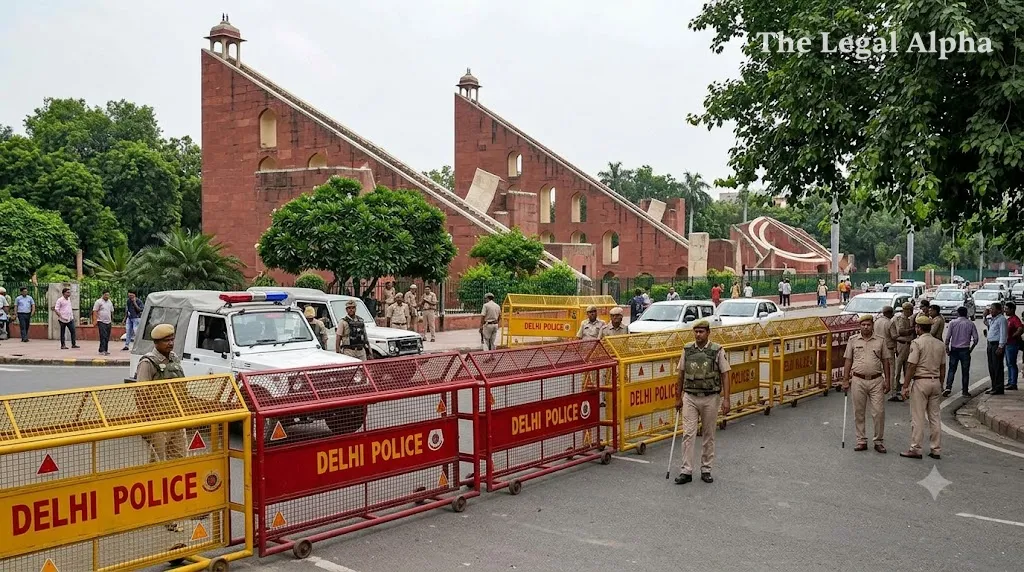
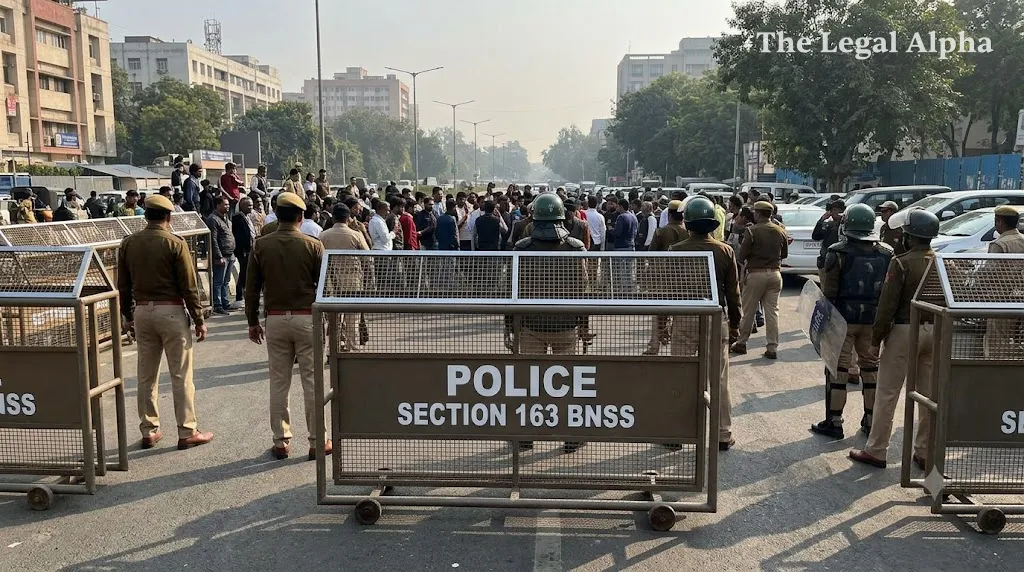
The Supreme Court of India examined sweeping preventive curbs deployed across the national capital in anticipation of a major demonstration scheduled for October 10 at Jantar Mantar. The issue reached the court after extensive public disruptions were reported, including police security arrangements, metro restrictions, and rail cancellations across Delhi.
A bench comprising Justice Joymalya Bagchi cautioned that organizing public demonstrations without administrative clearance departs from lawful procedure. While clarifying that unauthorized gatherings are not automatically treated as strictly illegal per se, the court made clear that participants who gather without valid permissions risk legal prosecution. The bench sought specific details regarding crowd turnout, leadership, and whether valid permission had been applied for and granted, before deciding how the authorities' preventive measures should be calibrated.
Legal Topic
Area of Law: Constitutional Law
Sub-topic: Fundamental Freedoms / Regulation of Assembly and Public Order
Core Legal Issue
The matter centers on reconciling the fundamental freedom to assemble peacefully under Article 19(1)(b) of the Constitution with reasonable state restrictions imposed under Article 19(3) for maintaining public order.
Specifically, the court addressed whether administrative guidelines requiring prior permission for protests at designated demonstration sites like Jantar Mantar render unauthorized assemblies vulnerable to penal action, and whether security agencies can deploy citywide transit curbs when permissions are withheld or unobtained.
What Did the Court Decide?
The Supreme Court declined to pass an immediate unilateral injunction against the state's security measures without assessing the underlying lawfulness of the proposed protest. Justice Bagchi observed that an assembly held without police clearance cannot be termed in accordance with law, exposing demonstrators to potential statutory liability.
The court emphasized a balanced approach: if it were to stay the transit and security curbs, it would simultaneously have to consider restraining the unauthorized assembly itself. Rather than issuing blanket orders, the bench directed counsel to provide concrete information on the organizers' identity, anticipated crowd volume, and the formal permission status to determine whether a proportionate framework could be established.
Key Legal Points
-
Permission Governs Lawfulness: An assembly organized without official permission does not comply with established legal procedure, leaving demonstrators exposed to statutory prosecution.
-
Balance of Rights and Civic Life: The constitutional freedom to protest must be weighed against public convenience and the rights of ordinary citizens to unhindered civic movement.
-
Proportionality in State Response: The scale of state-mandated preventive curbs and security deployments must correspond directly to verified turnout estimates rather than arbitrary disruption.
-
Conditional Judicial Intervention: Courts will not restrain preventive public order measures if doing so facilitates an unpermitted mass assembly.
Relevant Law
-
Article 19(1)(b), Constitution of India: Guarantees citizens the fundamental right to assemble peacefully and without arms.
-
Article 19(3), Constitution of India: Empowers the State to impose reasonable restrictions on the right to assemble in the interests of public order and national sovereignty.
-
Delhi Police Act, 1978 & Protest Guidelines: Prescribe procedural conditions, including mandatory advance notices, for holding public meetings and rallies at designated sites in the capital.
Arguments of the Parties
For the Challengers / Protesters
Senior advocate Gopal Sankaranarayanan contended that administrative authorities had imposed disproportionate restrictions, effectively shutting down key transit infrastructure, including dozens of metro stations and regional trains. The petitioners argued that administrative failure to manage logistics cannot justify locking down the capital or choking the exercise of civil dissent.
For the State Authorities / Delhi Police
The administration maintained that lawful procedural norms mandate prior intimation well in advance—customarily requiring ten days' formal notice—to ensure adequate public order and safety arrangements. The authorities submitted that organizers had failed to secure the necessary statutory permission within the prescribed timeframe and cited past compliance concerns at the same venue to justify the defensive measures.
Why Does It Matter?
This development reaffirms the judiciary's consistent stance on regulatory limits governing public assemblies. While Indian jurisprudence recognizes the right to express peaceful dissent as a vital democratic element, it firmly rejects the premise that protests can operate in total disregard of local regulatory frameworks.
For civil society groups and activists, the ruling underscores that designating a location as a protest site does not confer an unconditional right to hold demonstrations without municipal and police clearance. For administrative bodies, the proceedings serve as a reminder that extensive public lockouts and mass transit suspensions will face scrutiny if they exceed what is strictly necessary to manage crowds.
Legal Takeaway
Peaceful assembly is a protected constitutional freedom, but it remains subject to lawful municipal and police regulations. Organizing a demonstration without securing mandatory administrative permissions removes legal immunity and leaves participants exposed to prosecution.
Sources
Primary Source:
Supreme Court of India Proceedings, Oral Observations of the Bench headed by Justice Joymalya Bagchi (October 2026).
Additional Sources:
Delhi Police Demonstration Regulatory Guidelines; Reports on public transport curbs and transit advisories in the National Capital Territory.