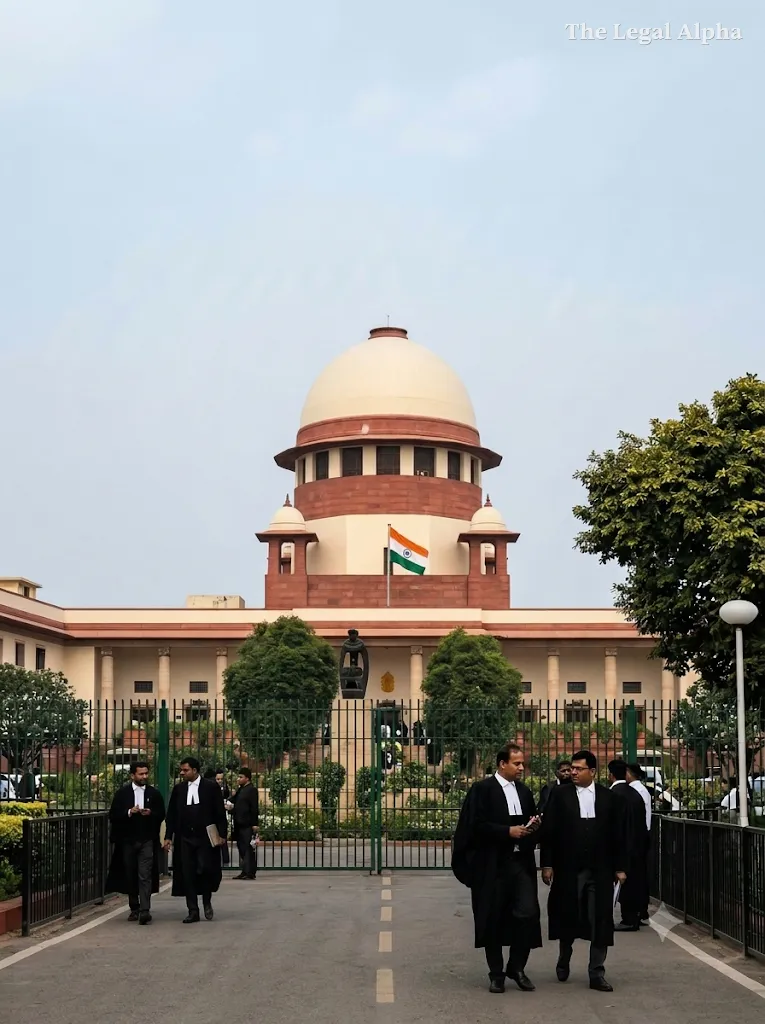
Delhi Special Court Frames PMLA Charges Against Yasin Malik, Engineer Rashid and Five Others in Hawala Funding Probe

A Special Court in New Delhi has framed formal money laundering charges against Kashmiri separatist leader Mohd. Yasin Malik, Member of Parliament Abdul Rashid Sheikh (popularly known as Engineer Rashid), and five others under the Prevention of Money Laundering Act, 2002 (PMLA).
Special NIA Judge Prashant Sharma of the Patiala House Courts concluded that the record discloses prima facie sufficient material to raise a "strong suspicion" that the accused persons received and channelled illicit funds originating from the Pakistani establishment and associated organisations through hawala networks.
According to the Enforcement Directorate (ED), the illicit remittances—amounting to approximately ₹8.95 crore—constituted proceeds of crime generated to advance secessionist ideology and finance subversive, disruptive activities in Jammu and Kashmir. The court's order on charge marks the end of the pre-trial discharge stage and clears the path for a full trial against all seven accused persons and entities.
Legal Topic
-
Area of Law: Criminal Law / Economic Offences & Anti-Money Laundering
-
Sub-topic: Framing of Charges / Prevention of Money Laundering Act (PMLA) / Terrorist Financing & Hawala Transactions
Core Legal Issue
The central legal question before the Special Court was whether the investigative material placed on record by the Enforcement Directorate established a prima facie case raising a "strong suspicion" sufficient to frame charges under Section 3 of the PMLA against the accused.
At this procedural juncture, the court was not required to weigh the evidence for a definitive finding of guilt or conduct a roving enquiry into the defence. Instead, it had to assess whether the alleged receipt and handling of untraceable foreign funds via hawala channels connected the accused to "proceeds of crime" originating from scheduled offences registered under the Indian Penal Code and the Unlawful Activities (Prevention) Act.
What Did the Court Decide?
-
Existence of Prima Facie Case: Special Judge Prashant Sharma held that there is sufficient material on record raising a strong suspicion against all seven accused persons and entities.
-
Framing of Formal Charges: The court formally framed charges under Section 3 of the PMLA (punishable under Section 4 of the PMLA) against Mohd. Yasin Malik, Abdul Rashid Sheikh (Engineer Rashid), Shabir Ahmad Shah, Masarat Alam, Zahoor Ahmad Shah Watali, Naval Kishore Kapoor, and M/s Trison Farms and Constructions Pvt. Ltd.
-
Commencement of Trial: By finding ground to frame charges, the court rejected any discharge claims, setting the stage for the prosecution to summon witnesses and lead formal evidence.
-
Status of Proceedings: The findings remain limited to a prima facie view for the purpose of framing charges; the substantive question of guilt will be determined at the conclusion of the trial.
Key Legal Points
-
Evidentiary Threshold at Charge-Framing: At the stage of framing charges, criminal courts are only required to ascertain whether the allegations and evidence disclose a "strong suspicion" of guilt, rather than establishing proof beyond reasonable doubt.
-
Broad Scope of Money Laundering: Under Section 3 of the PMLA, any involvement with proceeds of crime—including their receipt, acquisition, possession, concealment, or projection as untainted property—attracts liability.
-
Interplay with Predicate Offences: Although the primary terror-conspiracy allegations originated under the UAPA and IPC, the subsequent movement and custody of illegal funds give rise to an independent offence under the PMLA once linked to scheduled crimes.
-
Corporate Entity Culpability: Framing charges against both individual actors and a private corporate entity (M/s Trison Farms and Constructions Pvt. Ltd.) reinforces that corporate vehicles used to move or absorb tainted capital are treated as full accused parties under anti-money laundering law.
Relevant Law
-
Prevention of Money Laundering Act, 2002 (PMLA), Section 3: Defines the offence of money laundering as direct or indirect involvement in any process or activity connected with proceeds of crime.
-
Prevention of Money Laundering Act, 2002 (PMLA), Section 4: Prescribes rigorous imprisonment ranging from three to seven years, along with a fine, for money laundering offences.
-
Code of Criminal Procedure, 1973 (CrPC), Section 228 / Bharatiya Nagarik Suraksha Sanhita, 2023 (BNSS), Section 251: Governs the framing of charges when the court finds ground for presuming that the accused has committed an offence triable by it.
-
Scheduled Predicate Offences:
-
Indian Penal Code, 1860 (IPC): Sections 120B (criminal conspiracy), 121 (waging war against the Government of India), and 121A (conspiracy to wage war).
-
Unlawful Activities (Prevention) Act, 1967 (UAPA): Sections 13, 16, 17, 18, 20, 38, 39, and 40 (terrorist acts, raising funds for terrorism, and membership in terrorist organisations).
-
Arguments of the Parties
Enforcement Directorate (Prosecution)
-
The agency argued that the accused formed part of a coordinated network engaged in receiving clandestine remittances from the Pakistani establishment and foreign terror groups.
-
It submitted that funds were transferred through informal hawala operators and front companies to evade detection and bank scrutiny.
-
The prosecution asserted that proceeds of crime totalling ₹8,94,87,639 were generated and funnelled to orchestrate secessionist operations, street violence, and unlawful activities in the Kashmir Valley.
Defence (Accused Persons & Entities)
-
The defence resisted the framing of charges, maintaining that the investigative material lacked cogent proof connecting them directly to the alleged overseas hawala transactions.
-
It was argued that routine business operations and local asset transactions were being unfairly mischaracterised by the agency as proceeds of crime.
-
Counsel for the accused contended that the prosecution’s case failed to meet even the threshold standard required to presume the commission of an offence under the PMLA.
Why Does It Matter?
This development highlights the enforcement machinery’s increasing reliance on economic legislation alongside national security laws to target the financial infrastructure of insurgent movements. By pursuing money laundering charges, authorities aim to freeze assets and secure custodial convictions based on the trail of illicit financial flows, separate from the trial of the underlying predicate offences.
The case also brings sharp focus onto informal hawala mechanisms. When clandestine money routes are tied to scheduled criminal offences, courts will not hesitate to treat such transactions as laundered proceeds of crime. Furthermore, the prosecution of high-profile political figures and corporate vehicles illustrates that trial courts will apply the standard test of "strong suspicion" strictly on the basis of record material, irrespective of the public standing of the accused.
Legal Takeaway
At the stage of framing charges under the PMLA, the court’s role is confined to verifying whether the investigative material raises a strong suspicion of involvement with proceeds of crime, without assessing whether the allegations are proved beyond reasonable doubt. Clandestine hawala transactions intended to finance unlawful or secessionist activities squarely qualify as money laundering, exposing both individual recipients and corporate entities to full criminal trial.
Sources
-
Primary Source: Order on Charge in Enforcement Directorate v. Zahoor Ahmad Shah Watali & Ors., Court of the Special Judge (NIA), Patiala House Courts, New Delhi (Presided by Special Judge Prashant Sharma).
-
Additional Sources: Case records arising out of the 2017 National Investigation Agency (NIA) terror-funding probe.