Delhi High Court Refuses Bail in Military Secrets Leak Case, Emphasises National Security Over Prolonged Incarceration
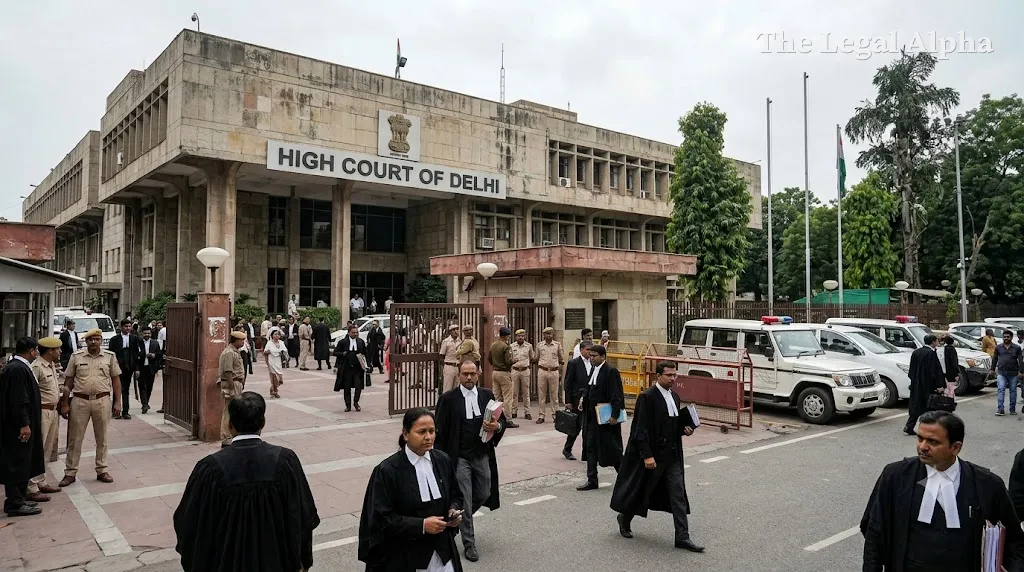
The Delhi High Court has dismissed the regular bail plea of Habib Ur Rahman, who faces prosecution under the Official Secrets Act for allegedly procuring and transmitting sensitive military intelligence documents to an official at the Pakistan High Commission. Rahman sought release on bail citing deteriorating health, the lengthy duration of his pre-trial custody, and delays in the trial.
A Single Judge Bench of Justice Sanjeev Narula declined the plea, holding that the grave nature of allegations concerning state security and the prima facie material implicating the accused outweighed grounds such as medical ailments or prolonged detention. The High Court, however, instructed jail administrators to provide him continuous, specialized medical care in custody.
Legal Topic
Area of Law: Criminal Law / National Security Law
Sub-topic: Regular Bail under CrPC / Espionage and Official Secrets
Core Legal Issue
The principal legal issue before the High Court was whether an accused charged with espionage and transmission of confidential defence secrets is entitled to regular bail on grounds of extended pre-trial detention and medical complications, where a prima facie case involving national security is established.
The court had to balance individual liberty and statutory bail jurisprudence against the state's paramount interest in safeguarding classified defence intelligence against cross-border espionage networks.
What Did the Court Decide?
Justice Sanjeev Narula dismissed the regular bail application. While acknowledging that the mere invocation of severe penal statutes cannot be an automatic ground to withhold bail indefinitely, the Bench observed that the transmission of sensitive military intelligence constitutes an offense of extraordinary gravity.
The court highlighted that evaluating the evidentiary strength of technical intercepts and forensic recovery at this juncture would impermissibly intrude into the trial court's domain. Regarding the applicant's medical conditions, the High Court held that ailments manageable within judicial custody do not necessitate regular release, directing the jail superintendent and medical officers to ensure uninterrupted access to appropriate medical treatment and timely consultations. The court clarified that its observations remain tentative and will not influence the ongoing trial.
Key Legal Points
-
Gravity of National Security Allegations: In cases involving espionage and the unlawful dissemination of classified military intelligence, societal and sovereign interests carry substantial weight against the grant of pre-trial bail.
-
Limits of Scrutiny at Bail Stage: The court hearing a bail petition must refrain from conducting a mini-trial or entering into an exhaustive assessment of evidentiary reliability, focusing strictly on whether a prima facie case exists.
-
Medical Grounds vs. Custodial Treatment: Personal health complications do not automatically warrant regular bail if the state prison medical infrastructure or referred government hospitals can adequately manage the underlying health condition.
-
Balance Between Liberty and Offense Severity: While pre-trial custody is not intended to be punitive, the potential risk to national security and the risk of subverting foreign intelligence probes constitute valid parameters for continued detention.
Relevant Law
-
The Official Secrets Act, 1923: Section 3 (Penalties for spying) and Section 5 (Wrongful communication of information).
-
Indian Penal Code, 1860: Section 120B (Criminal conspiracy) read with related provisions.
-
Code of Criminal Procedure, 1973: Section 439 (Special powers of High Court regarding bail).
Arguments of the Parties
Petitioner / Applicant
The petitioner argued that:
-
He had already spent a substantial period in pre-trial incarceration with multiple witnesses yet to be examined, impairing his right to a speedy trial.
-
His advanced health complications required specialized, stress-free medical oversight that could not be adequately provided inside prison walls.
-
The prosecution had failed to establish an unbroken, direct chain of electronic evidence connecting him to foreign intelligence handlers, making continued custody unnecessary.
Respondent / State
The State contended that:
-
The petitioner actively facilitated an espionage operation involving classified operational documents belonging to the armed forces.
-
Crucial digital records, seized paraphernalia, and witness statements provided a strong prima facie link demonstrating direct clandestine interaction with foreign mission officials.
-
Given the international ramifications and the sensitive nature of military secrets, granting bail carried a serious risk of evidence tampering, witness intimidation, and flight.
Why Does It Matter?
This ruling reinforces the judiciary's strict approach toward bail applications in espionage and defense intelligence breaches. It clarifies that standard considerations for prolonged detention—often sufficient to secure bail in economic offenses or regular penal code violations—are viewed through a far more stringent lens when sovereign integrity is at stake.
Furthermore, the decision underscores the principle that medical conditions alone cannot serve as an automatic route to regular release if prison authorities are capable of delivering adequate clinical care.
Legal Takeaway
When adjudicating bail in cases involving the Official Secrets Act and military intelligence leaks, courts place national security considerations above arguments of pre-trial delay. Medical grounds will only justify bail if the applicant establishes that life-sustaining treatment is impossible within the custodial healthcare system.
Sources
Primary Source:
-
Habib Ur Rahman v. State (Through SHO, PS Special Cell, Delhi), Bail Application, High Court of Delhi (Order delivered by Justice Sanjeev Narula).
Additional Sources:
-
High Court Registry Records & Cause List, Delhi High Court.
-
The Official Secrets Act, 1923 statutory provisions.