Delhi High Court Examines Constitutional Challenge to Meta’s Automated Content Blocking Under IT Rules
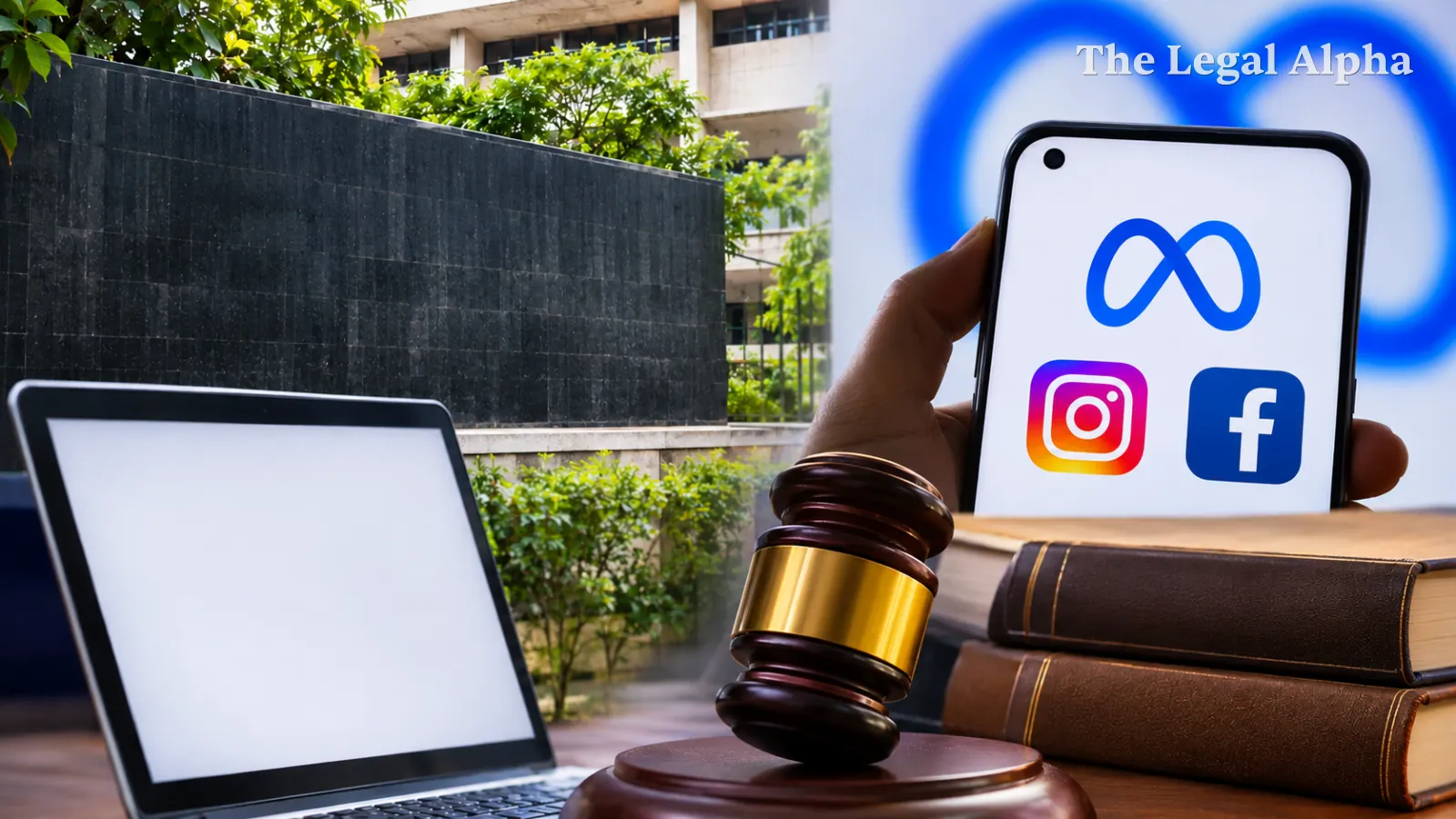
The Delhi High Court has issued notice to the Union Government and Meta Platforms, Inc. in a constitutional challenge brought by LiveLaw Media Private Limited against the automated blocking of online content under the Information Technology (Intermediary Guidelines and Digital Media Ethics Code) Rules, 2021.
The petition, filed by LiveLaw and its Director, Sindhu T.P., questions the validity of Rule 4(4) of the IT Rules, particularly the requirement that major social media platforms deploy automated tools to identify and restrict content considered identical to material previously taken down.
The challenge follows the restriction of three LiveLaw video reports concerning Supreme Court proceedings on Instagram and Facebook in October 2026. Two of the videos were reportedly blocked within fifteen minutes of publication, without LiveLaw receiving any formal blocking order or explanation.
The development raises significant questions about freedom of expression, press freedom, government control over online content and the accountability of social media platforms.
Legal Topic
Area of Law: Constitutional Law and Information Technology Law
Sub-topic: Freedom of Speech and Expression, Online Content Regulation, Intermediary Liability and Automated Content Blocking.
Core Legal Issue
The central legal question is whether the government can constitutionally require social media intermediaries to use automated filtering mechanisms to restrict content without providing the original publisher with an individual notice, reasons for the restriction or an effective opportunity to challenge the decision.
The petition also questions whether Rule 4(4) exceeds the powers delegated to the Central Government under the Information Technology Act, 2000, and whether automated restrictions imposed under the rule violate Articles 14 and 19(1)(a) of the Constitution.
What Did the Court Decide?
The Delhi High Court issued notice to the Union Government and Meta Platforms, Inc., seeking their responses to the constitutional challenge.
The respondents have been granted four weeks to file their counter-affidavits. The matter has been listed for further hearing on 18 January 2027.
The Court has not declared Rule 4(4) unconstitutional or ordered its suspension. The constitutional validity of the provision and the legality of the restrictions imposed on LiveLaw's content remain pending consideration.
LiveLaw did not press its application for interim relief during the hearing, although it sought an early hearing in view of concerns that repeated restrictions could place its Instagram account at risk of suspension.
Key Legal Points
- Constitutional protection of speech: The petition argues that automated blocking of news reports without adequate safeguards infringes the freedom of speech and expression under Article 19(1)(a).
- Limits on delegated legislation: LiveLaw contends that Rule 4(4) goes beyond the authority granted to the Central Government under the Information Technology Act, 2000.
- Lack of procedural safeguards: The rule does not expressly provide publishers with prior notice, individual reasons or an effective opportunity to challenge automated restrictions.
- Risk of excessive censorship: Automated systems may mistakenly identify legally distinct news reports as identical to previously blocked content, potentially restricting lawful journalism.
- Accountability of intermediaries: The petition raises questions about whether platforms can be held responsible for implementing government-mandated restrictions without adequate transparency.
Relevant Law
Information Technology Act, 2000
-
Section 69A – Power of the Central Government to issue directions for blocking public access to information.
-
Section 79 – Conditional exemption from liability for intermediaries.
-
Section 79(3)(b) – Circumstances concerning intermediary liability following legally valid removal or disabling directions.
-
Section 87(2)(zg) – Rule-making power concerning intermediary guidelines.
Information Technology Rules, 2021
-
Rule 3(1)(d) – Removal or disabling of access to unlawful information pursuant to specified court orders or government intimations.
-
Rule 4(4) – Automated tools and technical measures for identifying specified categories of content.
-
Rule 4(8) – Notice and grievance-related safeguards concerning content removed by an intermediary on its own initiative.
-
Rule 7 – Consequences of non-compliance with the Rules.
Constitution of India
-
Article 14 – Right to equality and protection against arbitrariness.
-
Article 19(1)(a) – Freedom of speech and expression.
-
Article 19(1)(g) – Freedom to practise any profession or carry on an occupation, trade or business.
-
Article 21 – Protection of life and personal liberty.
-
Article 13 – Laws inconsistent with fundamental rights.
Important Judicial Precedents
-
Shreya Singhal v. Union of India (2015) – Constitutional safeguards concerning online speech and intermediary liability.
-
Anuradha Bhasin v. Union of India (2020) – Proportionality and restrictions affecting freedom of expression.
-
Brij Bhushan v. State of Delhi (1950) – Constitutional concerns surrounding prior restraint on the press.
-
R. Rajagopal v. State of Tamil Nadu (1994) – Principles concerning press freedom and freedom of expression.
-
Election Commission of India v. M.R. Vijayabhaskar (2021) – Recognition of media freedom to report judicial proceedings.
Arguments of the Parties
Petitioners – LiveLaw Media Private Limited and Sindhu T.P.
The petitioners contend that mandatory automated content-filtering requirements under Rule 4(4) create a mechanism through which lawful journalistic material can be restricted without adequate procedural safeguards.
They argue that the provision exceeds the powers granted under the IT Act and violates constitutional protections, particularly Articles 14 and 19(1)(a).
LiveLaw also questions the absence of disclosure regarding the legal requests that allegedly resulted in restrictions on its reports. It seeks restoration of the affected content and transparency concerning the government's role in the blocking process.
Respondents – Union of India and Meta Platforms, Inc.
During the hearing, Additional Solicitor General Chetan Sharma, appearing for the Union Government, suggested that the petition could be treated as a representation and that the government would issue a reasoned order after hearing LiveLaw.
The petitioners opposed this suggestion, describing such a course as a mere formality.
Meta and the Union Government have been asked to file their counter-affidavits. Their detailed responses to the constitutional challenge remain awaited.
Why Does It Matter?
The case raises an important question about the balance between government regulation of digital platforms and the constitutional protection of independent journalism.
Automated content moderation can help platforms respond to unlawful material at scale. However, when such systems restrict content without transparent explanations or meaningful human review, they can also affect legitimate reporting and public access to information.
The implications extend beyond LiveLaw. News organisations, independent journalists, digital publishers and ordinary social media users could be affected by how the courts interpret the scope and safeguards of Rule 4(4).
The case also places intermediary accountability under scrutiny. If platforms are required to implement government-mandated automated restrictions, the legal framework must address transparency, accuracy and the ability of affected publishers to challenge those restrictions.
The Court's eventual examination of the provision could have wider implications for digital speech regulation and the relationship between constitutional rights and intermediary compliance obligations.
Legal Takeaway
The Delhi High Court's notice marks an important stage in the constitutional challenge to mandatory automated content blocking under the IT Rules, 2021. However, the validity of Rule 4(4) remains undecided. The proceedings will examine whether automated restrictions imposed under government-mandated mechanisms can operate consistently with constitutional freedoms and procedural fairness.
Sources
Primary Source:
-
Information Technology Act, 2000.
-
Information Technology (Intermediary Guidelines and Digital Media Ethics Code) Rules, 2021, as amended.
-
Writ petition and proceedings in Live Law Media Private Limited & Anr. v. Union of India & Ors.
Additional Sources:
Editorial note: The Court has issued notice and sought responses. No final ruling on the constitutional validity of Rule 4(4) has been delivered.