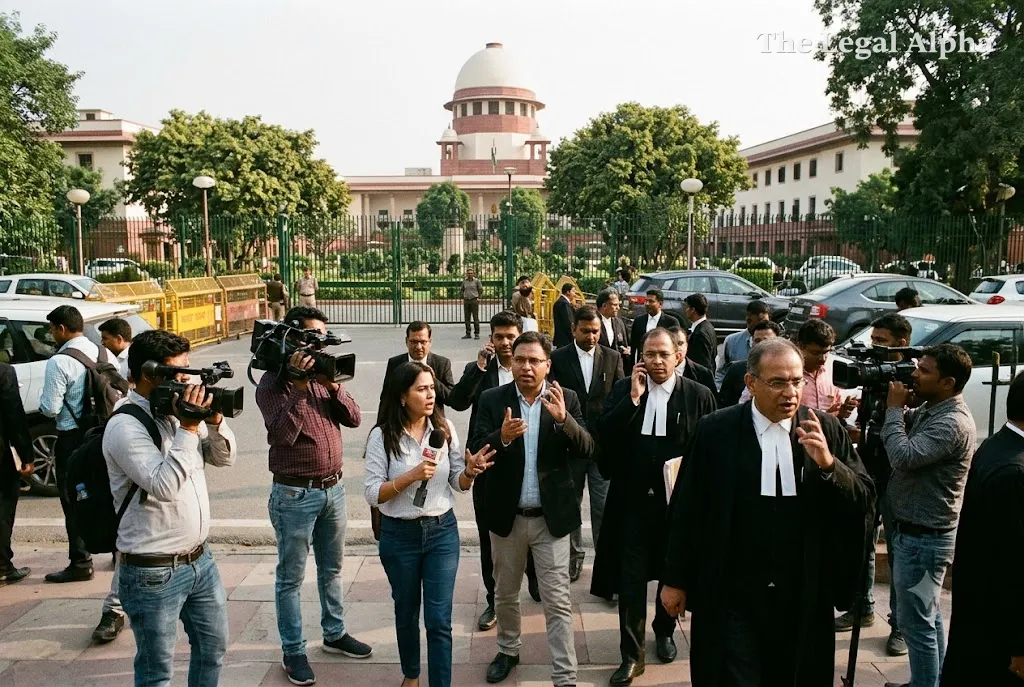
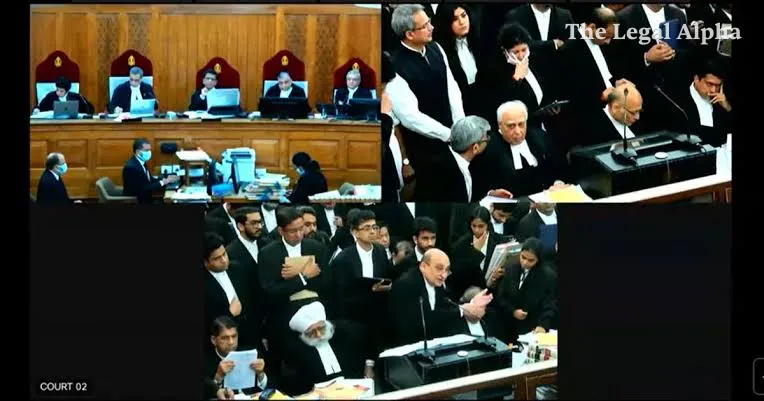
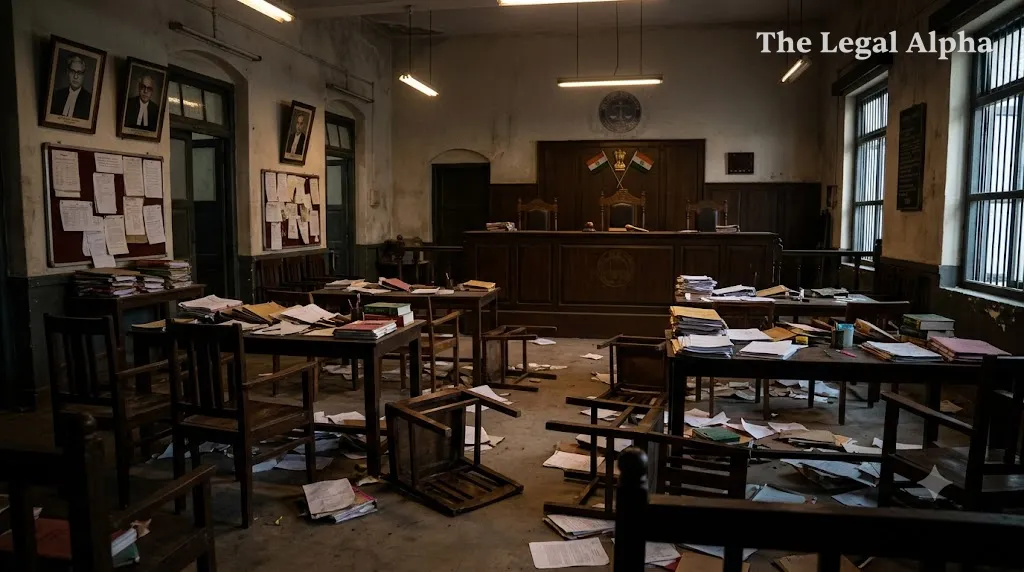
Delhi High Court Declines to Suspend Life Sentence of Gang-Affiliated Shooter Convicted of 2017 Rohini Court Complex Murder
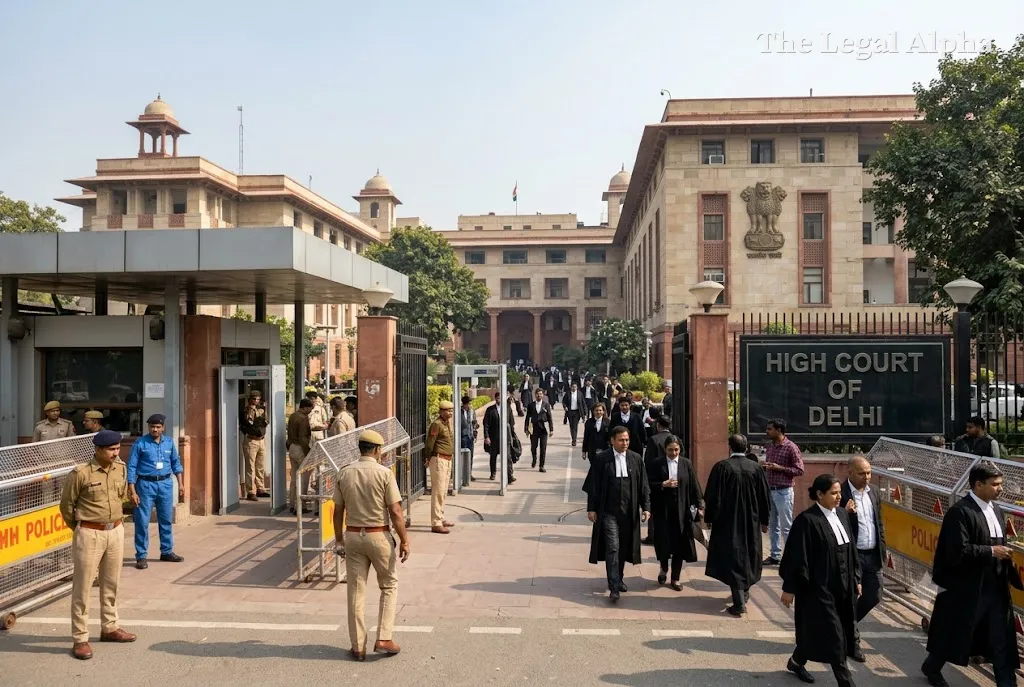
The Delhi High Court has refused to suspend the sentence or grant interim release to an appellant serving life imprisonment for fatally shooting an undertrial prisoner in broad daylight outside the Rohini Court complex in 2017.
Although over 17 years old at the date of the crime, the appellant was tried as an adult following a preliminary assessment due to the heinous nature of the offence and was convicted of murder in January 2026. Police linked the incident to gang rivalry involving the Neeraj Bawana gang, targeting Rajesh Durmuth while he was in the custody of Haryana Police for a court hearing. The convict approached the High Court seeking suspension of his sentence during the pendency of his criminal appeal, but a division bench declined the relief after evaluating the gravity of the attack and his subsequent criminal history.
Legal Topic
Area of Law: Criminal Law / Juvenile Justice
Sub-topic: Suspension of Sentence Pending Appeal / Trial of Children in Conflict with Law for Heinous Offences
Core Legal Issue
The legal question before the High Court was whether a convict—who was aged between 16 and 18 years at the time of committing a heinous crime and tried as an adult—is entitled to a suspension of sentence under Section 389 of the Code of Criminal Procedure (or equivalent Section 430 of the Bharatiya Nagarik Suraksha Sanhita, 2023) solely on the ground of long custodial detention and alleged investigative defects, even when the underlying offence constitutes a targeted murder committed inside a judicial complex against a person in lawful police custody.
What Did the Court Decide?
A Division Bench comprising Justice Prathiba M. Singh and Justice Dinesh Bhatt rejected the application for suspension of the life term.
The Bench underscored the alarming circumstances of the crime, observing that the applicant opened fire in public precincts immediately outside a courthouse and eliminated a prisoner held under active police custody. The court also accounted for the fact that the applicant had criminal antecedents and had allegedly engaged in further offending while out on interim release.
The Bench maintained the conviction order in operation and scheduled the substantive appeal against the trial court's judgment for final hearing in January 2027.
Key Legal Points
-
Preservation of Institutional Security: Courts view armed violence on or around court premises and attacks on individuals in police custody as grave threats to the administration of justice, creating a strong presumption against interim relief.
-
Discretionary Threshold under Section 389 CrPC: Mere duration of incarceration—even exceeding seven years—does not automatically entitle a convict to sentence suspension when the offence is heinous and backed by direct eyewitness and apprehension evidence.
-
Misuse of Interim Liberty: Involvement in fresh criminal activity while on interim bail severely impairs the applicant's claim for judicial clemency or temporary release pending appeal.
-
Evaluation of Procedural and Forensic Lapses: Allegations regarding unexamined forensic samples are evidentiary arguments to be considered at the final appellate hearing, rather than grounds for summary release on bail.
Relevant Law
-
Indian Penal Code, 1860 (IPC): Section 302 (Punishment for murder) and allied provisions regarding armed assault.
-
Juvenile Justice (Care and Protection of Children) Act, 2015: Sections 15 and 18(3), which govern the preliminary assessment and transfer of children aged 16–18 accused of heinous crimes for trial as adults before a Children's Court.
-
Code of Criminal Procedure, 1973 (CrPC) / Bharatiya Nagarik Suraksha Sanhita, 2023 (BNSS): Section 389 CrPC (Section 430 BNSS), governing the appellate court's discretion to suspend execution of sentence and grant bail during the pendency of an appeal.
Arguments of the Parties
The Appellant
Counsel for the appellant argued that the convict had already undergone long incarceration spanning over 7 years and 9 months. It was further contended that there were significant procedural lapses in the prosecution's case, specifically highlighting that gunshot residue samples lifted by investigating authorities were never forwarded for forensic laboratory examination. Additionally, the appellant pointed out that four other individuals arrested in connection with the crime had already been discharged by the trial court.
The State
The Additional Public Prosecutor vehemently opposed the suspension, emphasizing that the appellant had executed a targeted killing of a person in active police custody right outside a court facility. The prosecution presented evidence of the appellant's continued involvement in organized criminal activity, noting that he was arraigned in a fresh criminal case in Jhajjar, Haryana, during the period he was released on interim bail, demonstrating an immediate risk to public safety.
Why Does It Matter?
This ruling reinforces the rigorous standards applied by appellate courts when considering bail for convicts involved in organized gang violence and institutional security breaches. It highlights that the special safeguards under juvenile jurisprudence do not shield older adolescents tried as adults from standard penal consequences once convicted of premeditated killings.
Furthermore, the decision sends a firm message that courts will closely review a convict's conduct during interim liberties: committing another offence while out on bail virtually eliminates the equitable discretion an appellate court might otherwise exercise for sentence suspension.
Legal Takeaway
Prolonged custody and minor forensic deficiencies will not warrant suspension of a life sentence where the crime involves a daring, gang-related murder committed on court premises. Misusing interim bail by engaging in subsequent criminal offences serves as an independent, fatal obstacle to securing release pending appeal.
Sources
Primary Source:
-
Delhi High Court Division Bench Order in Criminal Appeal (Bench of Justices Prathiba M. Singh and Dinesh Bhatt, October 2026).
Additional Sources:
-
Proceedings and reporting on the Rohini Court complex shooting case (October 2026).