Custodians Cannot Give Away What Belongs to the Deity: Supreme Court Voids Temple Land Gift to Tamil Nadu Government
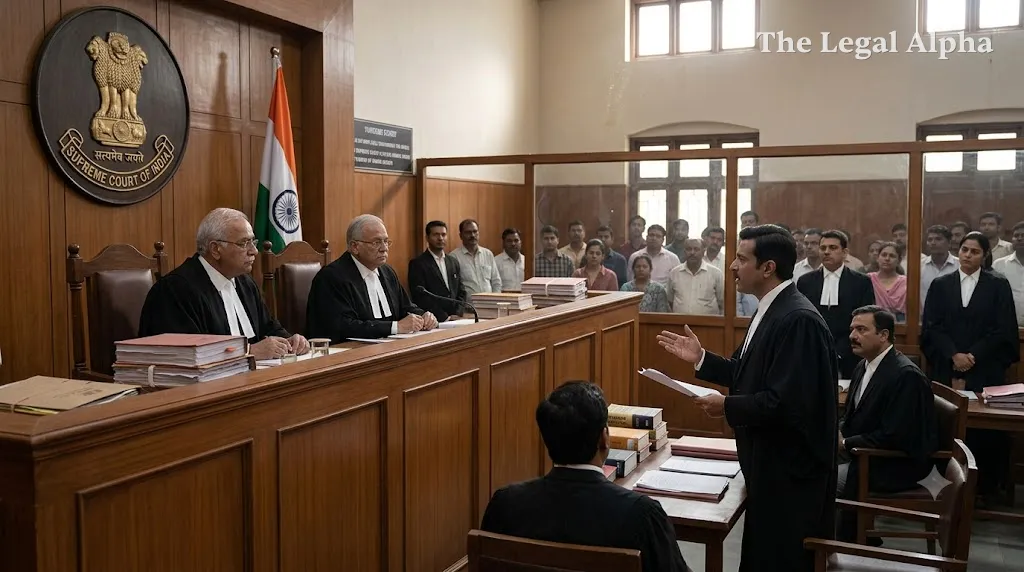
The Supreme Court ruled that a State government cannot legally receive temple land as a gift executed by an interim or temporary trustee.
The dispute concerned a parcel measuring 1 acre and 10 cents in Kodumudi village, Erode district, owned by the Sri Nagapalayam Mariamman-Ponnachiamman Temple. In August 2017, a temporary trustee purportedly relinquished and executed a gift deed conveying the deity’s land to the Tamil Nadu government to build a taluk administrative office. Several worshippers challenged the transfer as an illegal alienation of trust property. Setting aside the alienation, the top court held that temple land is held strictly in trust for the deity and worshippers, and an interim custodian has no authority to gift it away.
Legal Topic
-
Area of Law: Religious & Charitable Endowments / Property Law
-
Sub-topic: Alienation of Temple Property / Powers and Fiduciary Duties of Trustees
Core Legal Issue
Can a temporary trustee or "fit person" lawfully alienate temple property by way of a gift deed to the State government under religious endowment statutes?
The Supreme Court examined whether temple trustees possess alienable ownership over trust holdings or whether they act solely as limited custodians bound by fiduciary duties that prohibit gifting endowed land, even when executed for state administrative purposes.
What Did the Court Decide?
-
Gift Deed Declared Null and Void: The Supreme Court held that the gift deed executed in favor of the Tamil Nadu government was void ab initio, and its subsequent registration carried no legal force.
-
Custodial Status Affirmed: The Court stressed that every custodian holds temple property strictly in trust for the presiding deity and its worshippers, barring any person from treating endowment assets as freely disposable property.
-
State Lease Recognized with Revised Rent: While the transfer of title was voided, the Court noted that public infrastructure had already been constructed. To avoid administrative disruption while protecting trust revenue, the Court permitted the State to occupy the land on lease rather than ownership.
-
Retrospective Rent Adjustment: The bench directed the State to pay an increased monthly rent of ₹31,000 retrospectively from March 8, 2019 (the date possession was taken for construction). Future tenure, renewals, and lease covenants must be fixed by the temple trust strictly under the governing endowment law, prioritizing the deity’s financial interest.
Key Legal Points
-
Absolute Fiduciary Bar on Gifts: A trustee, particularly a temporary custodian, holds no proprietary title to donate or relinquish endowed property.
-
Invalidity of Statutorily Barred Transfers: Any alienation of religious endowment land executed in contravention of statutory conditions—such as statutory sanction requirements under religious endowments legislation—renders the transfer deed and registration legally unenforceable.
-
State Cannot Benefit from Breaches of Trust: A State government cannot exploit an interim trustee’s unauthorized actions to acquire prime endowment lands free of cost.
-
Equitable Relief for Public Infrastructure: Where public offices are built on voided transfers, courts can convert unauthorized occupancies into commercial leaseholds at prevailing rates to protect the temple's continuous revenue stream.
Relevant Law
-
Tamil Nadu Hindu Religious and Charitable Endowments Act, 1959: Sections 34 (alienation of immovable trust property) and 41 (recovery and protection of alienated properties).
-
Indian Trusts Act, 1882 & General Principles of Hindu Law: The established legal doctrine designating the deity as a perpetual minor and juristic person, with property vested in the idol while administrators act solely as managers (shebaits or trustees) without power of unilateral disposal.
Arguments of the Parties
Petitioners (Worshippers / Temple Devotees)
The petitioners argued that the temple's land had been wrongfully surrendered without authority by an interim administrator. They contended that any gift deed of endowed property violates mandatory statutory protections under the Tamil Nadu Hindu Religious and Charitable Endowments Act, 1959, and that the State cannot bypass statutory alienation procedures to acquire temple real estate.
Respondents (State of Tamil Nadu & Revenue Authorities)
The administration initially defended the acquisition on the ground that the land was handed over by the trustee to serve an important public purpose—namely, establishing a taluk administrative office. They maintained that the possession and subsequent construction were carried out in good faith for local governance needs before later acknowledging statutory limits when questioned by the Court.
Why Does It Matter?
This decision reins in a recurring practice across various states where local revenue administrations bypass formal land acquisition procedures by arranging "relinquishments" or "gift deeds" from state-appointed temple managers or fit persons.
By voiding the deed while enforcing commercial rent backdated to the day of possession, the judgment reaffirms that government-appointed trustees are temporary managers, not owners. It establishes a firm legal precedent: state departments cannot claim gratuitous gifts from religious endowments, and any use of temple land for civic infrastructure must be properly leased at commercial market value to benefit the religious institution.
Legal Takeaway
Temple administrators hold endowment properties strictly in trust and have no legal right to gift them away to the State or private parties. Any such transfer deed is null and void, and if the government occupies temple land for public infrastructure, it must hold it as a paying tenant under a lawful lease.
Sources
Primary Source:
Judgment of the Supreme Court of India in M. Periyasamy & Ors. v. State of Tamil Nadu & Ors. (rendered October 2026).
Additional Sources:
-
The Tamil Nadu Hindu Religious and Charitable Endowments Act, 1959.
-
Reporting by Press Trust of India (PTI) and National Law Reporting Services (October 16–17, 2026).